Reorderings: The History of Bhopal’s Transition from Princely to Postcolonial
An approach that sought to blend the city’s unique historico-cultural legacy with aspirations of an emergent state capital remains largely wanting, writes Anshu Saluja.
Details
Bhopal is a burgeoning city in central India. Most people know it today as the capital of Madhya Pradesh, the second largest state in the country in terms of area, and the site of one of the world’s worst industrial disasters. This account goes farther back in time, however, and provides other missing links in Bhopal’s story — its shifting fortunes, transition from the period of princely rule in an overarching colonial context, emergence as the capital of Madhya Pradesh (a province in independent India) and the changes it underwent thereafter.
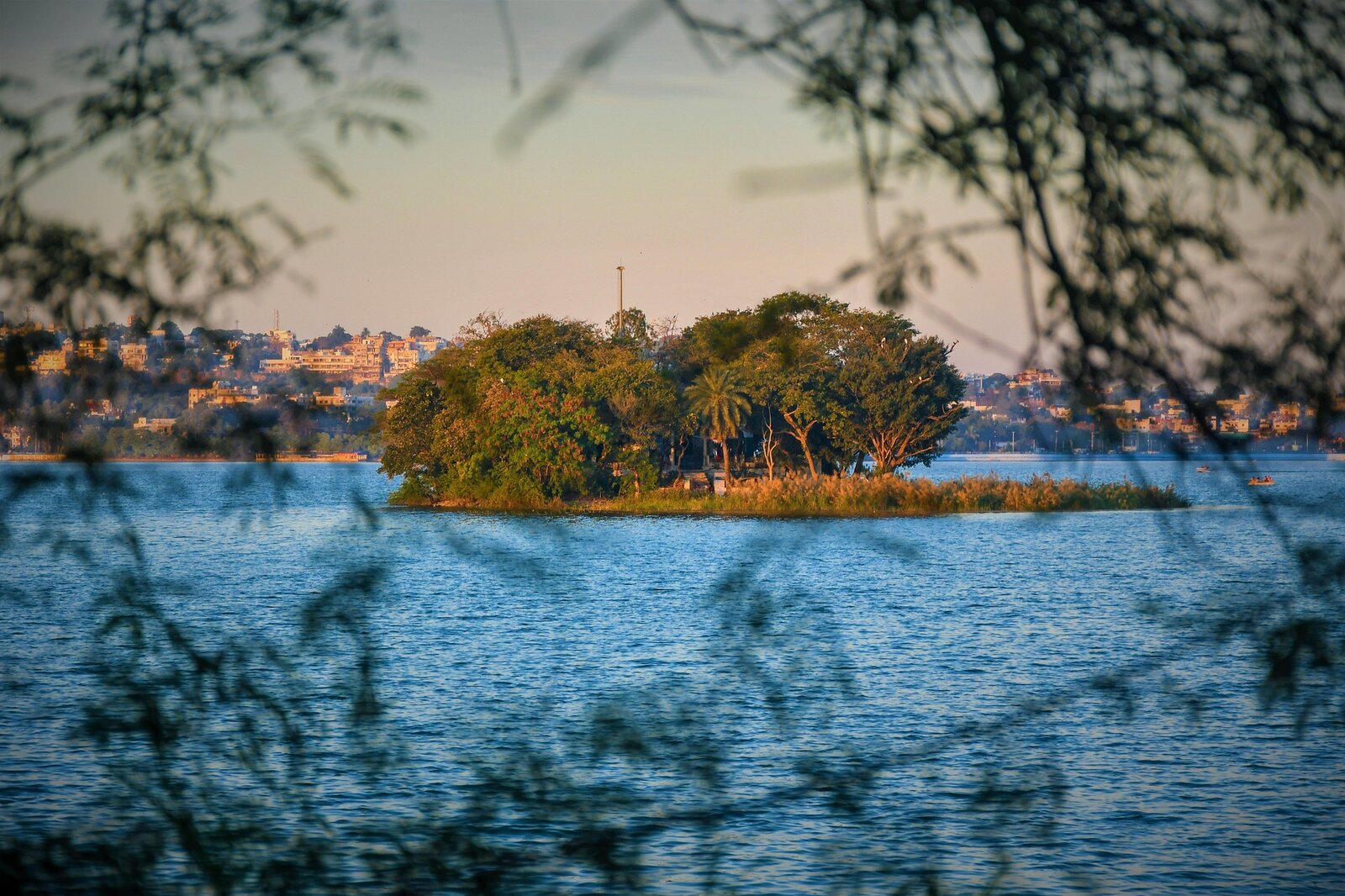
The city of Bhopal is characterised by a coexistence of hills, valleys and lakes. Traditionally, it has been identified as ‘the city of lakes’. The Bada and Chhota Talab (Upper and Lower Lakes) are its defining physical features. The city’s topography is rugged and irregular. The landscape is punctuated by hills and hillocks, sloping to flat plains. The city has warm tropical climate with a winter spell of about four months and receives rains from the south-western branch of monsoon. Originally, Bhopal was surrounded by forest and covered with natural vegetation. However, over the years, the city’s large green stretches have been eroded by steady and unrestrained growth and expansion.
Bhopal ranks among the principal cities of central India. It is well connected with the rest of the country through road and rail networks, although air connectivity is still quite limited. The city has grown and spread out in irregular stretches, due to inconsistent planning, proliferating real estate projects, and a chain of erratic and poorly executed urban development schemes. Their cumulative costs have steadily undermined the city’s natural green cover and adversely impacted the lives of large sections of its residents.
If we trace Bhopal’s chequered historical trajectory, its foundation was laid in 1722 by an Afghan adventurer, Dost Muhammad Khan (Luard 1908). He had served for a time in the Mughal army, before trying his fortunes in central India. In the later days of the Mughal rule, he carved out the small state of Bhopal and by his death in 1726, placed it on a firm footing. Though some traditions hold that Bhopal was founded by a Parmara Rajput ruler, Bhoj, who reigned over parts of western-central India in the eleventh century, not much is available to support the claims that attribute the origins of Bhopal to this medieval ruler. Historically speaking, the founder of Bhopal was Dost Muhammad Khan whose descendants continued to rule over the state for over two centuries, with the title of Nawab. Many palaces, mosques and other buildings, dating back to the days of their rule, still stand in Bhopal, albeit in a decaying state.
An initial lack of foresight, limited vision of planning, neglect of the city’s history and heritage, and communal considerations — all meshed together to varying degrees, framing a discontinuous pattern of expansion. As a result, what we see today is a fragmented urban landscape and not a cohesive, synergetic city.
Eventually, in the early nineteenth century, Bhopal became a protectorate of the British and existed as one of the many subordinate princely states in the Indian subcontinent under British colonial domination. Throughout the period of colonial rule, Dost Muhammad Khan’s successors continued to rule over Bhopal as dependants of the British. In the nineteenth and early twentieth centuries, the state was steered by four remarkable Begums (women rulers), viz. Qudsia, Sikandar Jahan, Shah Jahan and Sultan Jahan. The fourth in line was Sultan Jahan Begum who had three sons. Her two elder sons — Nasrullah Khan and Obaidullah Khan — predeceased her and in 1926, she voluntarily abdicated in favour of her youngest and only surviving son, Hamidullah Khan, who was to be the last Nawab (ruler) of Bhopal.
On the eve of India’s Independence in 1947, Bhopal, like many other princely states, acceded to the Indian Union. The accession of these princely states was not an automatic, seamless process, however. It involved a series of drawn-out, complex negotiations and bargains [Personal Letter to Indian states from the Chamber of Princes (Narendra Mandal) written by Chancellor Chamber of Princes 1946]. Bhopal’s accession too was not without some resistance from the reigning Nawab, Hamidullah Khan. The Nawab signed the instrument of accession to India in August 1947 (Menon 1961; Shrivastav and Guru 1989), but continued to hold power in Bhopal for some time afterwards. The future shape that Bhopal was to take and the course it was to follow within the emergent nation-state of India were still far from clear. The Nawab’s rule ultimately came to an end in 1949. Thereafter, Bhopal became a centrally administered state, placed under the charge of a chief commissioner, appointed directly by and responsible to the central government.
However, aspirations for a democratically elected government could not be kept in check for long. In 1952, elections to the Bhopal State Assembly were held and a popularly elected Congress government came to power with Dr. Shankar Dayal Sharma as the Chief Minister. Sharma later rose to be the country’s President and held office from 1992 to 1997. In Bhopal, his government remained in power till 1956, when existing political and territorial arrangements again underwent a radical shift with the city being made the capital of the central Indian state of Madhya Pradesh. Expectedly, Bhopal was not alone in this race for the coveted status of the state capital. Other cities of the region — Gwalior, Indore and Jabalpur— were key contenders as well. Ultimately, however, the balance rested in Bhopal’s favour.
The population of Bhopal increased sharply in the 1950s and 60s. It rose from 1,02,000 in 1951 to 2,23,000 in 1961 and further shot up to 3,85,000 in 1971. Not surprisingly, it emerged as one of the fastest growing cities in the state of Madhya Pradesh.
Following its declaration as the state capital, Bhopal underwent enormous transformation. It witnessed a precipitous increase in population, attracting a surge of migrants (Jaffrelot and Aziz Wülbers 2012; Rao 2003). Many of them were already in state employment, while others were jobseekers, out to try their fortunes in the newly created state capital. Different administrative offices and departments had to be set up. Existing infrastructural and housing facilities, which were quite limited to begin with, had to be developed to meet the demands of the growing city and its rising population.
Another factor which became crucial to Bhopal’s expansion was the establishment of the Heavy Electricals (India) Limited, later known as the Bharat Heavy Electricals Limited (BHEL) plant there. It started functioning in 1960 – 61, manufacturing electrical machinery and equipment. A growing public-sector industrial unit, it drew workers from different parts of the country. To accommodate the industrial complex, along with a multitude of its employees, a new township, known popularly as the BHEL township, was established on the eastern fringe of the city.
Around the same time, another plant, dealing in hazardous chemicals, was started in Bhopal. This was the pesticide formulation plant of the Union Carbide Corporation, set up in the city in 1969. Later, it became the cause of one of the world’s worst industrial disasters in 1984, leaving behind a bitter trail of death, disease and suffering (Broughton 2005; Mukherjee 2010). The plant was allowed to be established in Bhopal despite warnings of serious threats that it could eventually pose to the city and its residents.
As a result of these cumulative developments, the population of Bhopal increased sharply in the 1950s and 60s. It rose from 1,02,000 in 1951 to 2,23,000 in 1961 and further shot up to 3,85,000 in 1971 (Bhopal Development Plan 1975; District Census Handbook 1991). Not surprisingly, it emerged as one of the fastest growing cities in the state of Madhya Pradesh (Jaffrelot 1999).
The significant changes effected after Bhopal’s declaration as the state capital were guided chiefly by administrative exigencies, and paid scant heed to its specific physical and cultural attributes. An approach that sought to blend the city’s unique historico-cultural legacy with aspirations of an emergent state capital remained largely wanting. Thus, instead of growing in a well-integrated fashion, the city underwent fragmentary development (Saluja 2024).
Undoubtedly, Bhopal’s fortunes shifted dramatically, following the decision to make it the state capital. Thereafter, the city grew and surged forth rapidly, but not all of its spaces and residents could partake in or benefit from the transformations that were wrought. There were significant dissonances, with some of its segments clearly preferred over others for expanding developmental activities and infrastructural facilities. The new capital, instead of emanating from the seat of princely power in north (old) Bhopal or being built in its vicinity, was established to the city’s south as new Bhopal.
An initial lack of foresight, limited vision of planning, neglect of the city’s history and heritage, and communal considerations — all meshed together to varying degrees, framing a discontinuous pattern of expansion. As a result, what we see today is a fragmented urban landscape and not a cohesive, synergetic city.
Bhopal Chronicles (Episode 1): Mapping the City’s Landscape and Growth
In the first episode of the video series, Anshu Saluja introduces the city of Bhopal to the viewers. She discusses the city’s physiography, existing state of infrastructure, administrative arrangements and more.
Bhopal Chronicles (Episode 2): History and Heritage — A Journey into Bhopal’s Past
The second episode outlines Bhopal’s historical background. It describes how the state of Bhopal was founded by Dost Muhammad Khan in 1722. Thereafter, Anshu talks about the rule of the Begums of Bhopal.
Bhopal Chronicles (Episode 3): The Making of Modern Bhopal: A 20th Century Transformation
The third episode unwinds a chain of key developments and processes by which the princely state of Bhopal became a part of the Indian Union and later emerged as the capital of the central Indian state of Madhya Pradesh in 1956.
References
- Bhopal Development Plan-1991. (1975). Town and Country Planning Department Madhya Pradesh. https://mptownplan.gov.in/LU-panel/Bhopal/Bhopal%20Master%20Plan%201991%20English.pdf
- Broughton, E. (2005). ‘The Bhopal Disaster and Its Aftermath: A Review.’ Environmental Health: A Global Access Science Source, 4(6). https://doi.org/10.1186/1476 – 069X‑4 – 6
- District Census Handbook: Village and Town Directory, and Village and Town Primary Census Abstract. 1991. Series-13. Part XII‑A and B. Bhopal: Directorate of Census Operations, Madhya Pradesh. Census of India.
- Jaffrelot, C. (1999). The Hindu Nationalist Movement and Indian Politics 1925 to the 1990s: Strategies of Identity- Building, Implantation and Mobilisation (with Special Reference to Central India). Penguin Books India Pvt. Ltd.
- Jaffrelot, C., & Wülbers, S.A. (2012). ‘Bhopal Muslims: Besieged in the Old City?’ In L. Gayer, & C. Jaffrelot (Eds.), Muslims in Indian Cities: Trajectories of Marginalisation (pp.159 – 188). Harper Collins.
- Luard, C. E. (1908). Bhopal State Gazetteer Volume III — Text and Tables. Superintendent Government Printing.
- Menon, V.P. (1961). The Story of the Integration of the Indian States. Orient Longmans Limited.
- Mukherjee, S. (2010). Surviving Bhopal: Dancing Bodies, Written Texts, and Oral Testimonials of Women in the Wake of an Industrial Disaster. Palgrave Macmillan.
- ‘Personal Letter to Indian States from the Chamber of Princes (Narendra Mandal) written by Chancellor Chamber of Princes, Hamidullah, Nawab of Bhopal’. (1946, December 31). Bundle No. 408, File No. 78, Political Department, Government of Bhopal (Special Branch). National Archives of India Regional Office. Bhopal.
- Rao, U. (2003). Negotiating the Divine: Temple Religion and Temple Politics in Contemporary Urban India. Manohar Publishers.
- Saluja, A. (2024). ‘Whose City Is It Anyway? Place, Community and the Fractured Urban.’ Contemporary South Asia, 32 (4), 580 – 592.
- Shrivastav, P.N.,& S.D. Guru. (1989). Madhya Pradesh District Gazetteers: Sehore and Bhopal. Directorate of Gazetteers, Department of Culture, Madhya Pradesh.
Image courtesy: Surabhi Kulshreshtha, Pixabay
About the author
Anshu Saluja is a faculty member at Azim Premji University, Bhopal.