Branching Out: The Key to Healthy Cities
A new study by Jayanti Ray Mukherjee, Satyajit Oraon and Prachi Gupta reminds us that it’s not just about how many trees a city has that matters, but also what these trees are, writes Nandita Jayaraj.
Details
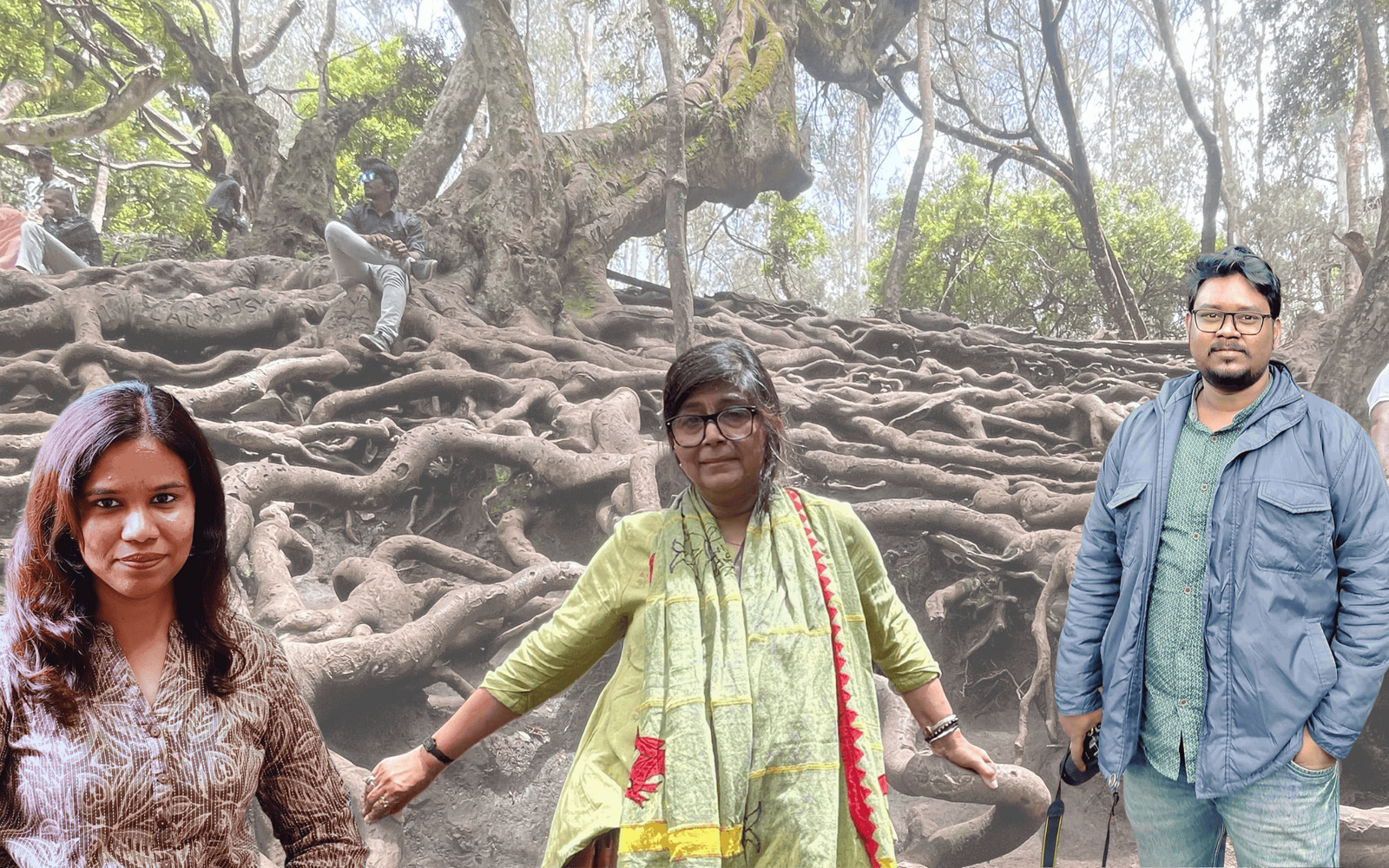
Prachi Gupta, Jayanti Ray Mukherjee and Satyajit Oraon
That our cities don’t have enough green cover is well known. But a recent study published in Current Science by ecologists at Azim Premji University examined the existing tree cover of ten selected cities in India. Their findings emphasise that it’s not just about how many trees, but also about what these trees are, that determines the ecological health of our urban spaces.
Landscapes that are relatively undisturbed by humans would, expectedly, be populated by flora that are most suited for the conditions there. However, as urbanisation began, humans began managing landscapes to serve their needs and developing the tools and technologies needed to do so. They could now selectively grow trees that benefitted them, without having to depend on the cooperation of the natural environment.
Clues from the past
Royal gardens in erstwhile kingdoms of the region included species like Ficus benghalensis (banyan), Ficus religiosa (peepal), and Azadirachta indica (neem) that were beneficial environmentally, spiritually and also aesthetically. On the other hand, “the colonial period was marked by tree plantings along roadsides, in parks, and other public spaces,” write Jayanti Mukherjee and team in the new paper. The intention of the British administration was to make the urban environment more organised and picturesque, enhancing aesthetics, and public health and wellbeing.”
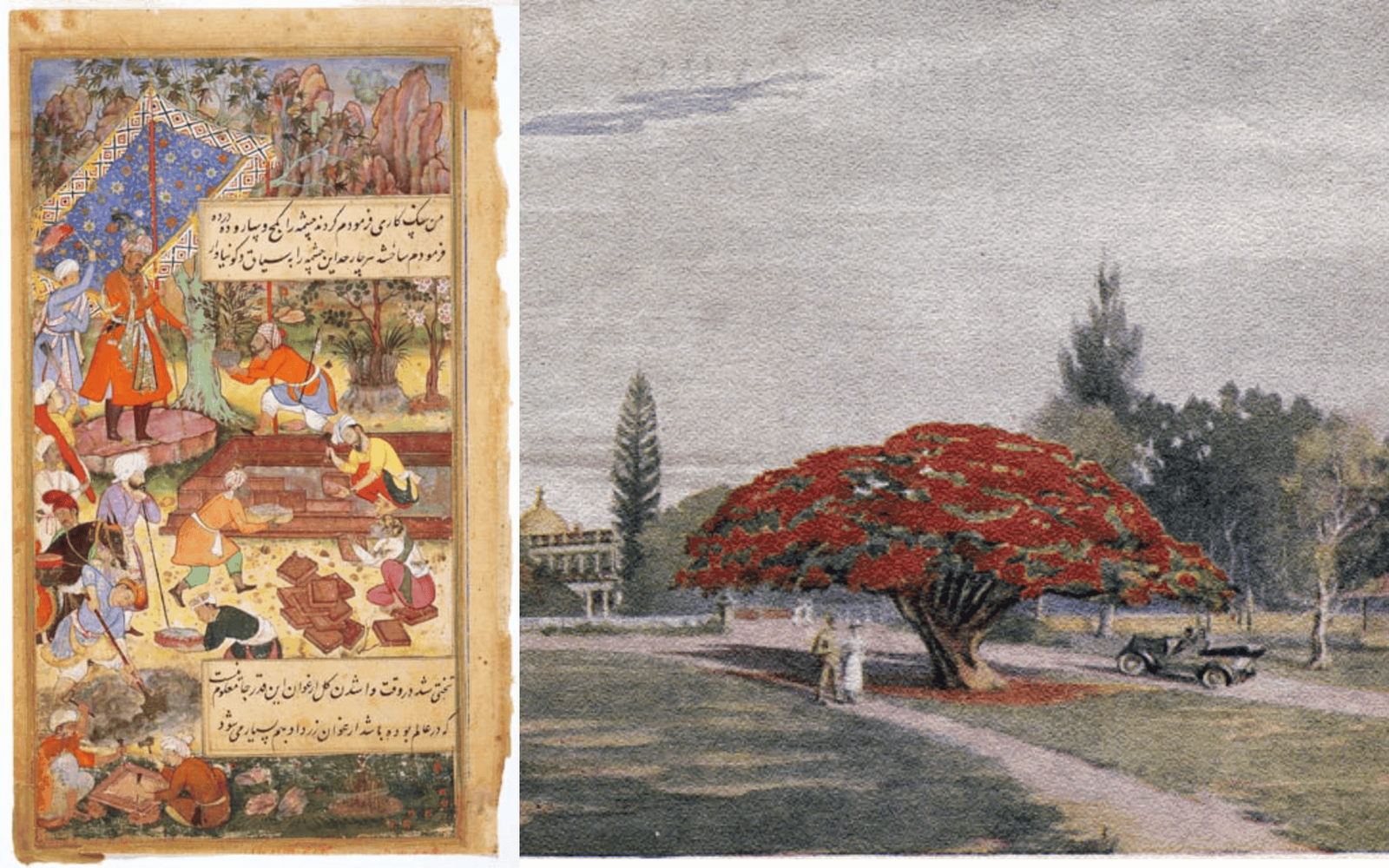
(left) An illustration of Mughal ruler Babur supervising the creation of a garden. (right) A postcard (circa 1920) depicting Cubbon Park in Bengaluru. Credit: Wikimedia Commons
During the British era, a large number of exotic plant species were introduced to the country; some of these, such as Prosopis juliflora (vilayati kikar or Ballari Jali) and Lantana camara, have spread uncontrollably and seem to be negatively impacting our local flora and fauna. Though the royals’ approach to landscape management is considered more ecologically and culturally diverse, they focussed on private estates and royal gardens. The British, in contrast, developed public spaces and infrastructure through tree plantations. With these snippets from history, the paper illustrates how India’s present urban green spaces were shaped over the past centuries.
To conduct their study, the team relied on already published studies and surveys of these cities. This involved long hours of data collation, organisation and rigorous analysis. “If you look at the compilation we made, it will be clear how much hard work went into it,” said Satyajit Oraon, a post-doctoral researcher who was at the time working with Jayanti at the university.
Satyajit and his colleague Prachi Gupta spent many evenings over chai discussing what to include in the spreadsheet and what not to. Eventually, they put together a database of 226 dominant tree species and their features, ranging from their biological names, taxonomic families, whether they were deciduous or evergreen, slow or fast-growing, their flowering and fruiting seasons, their pollination, whether they were native or exotic to India, and their global distributions.
Leafing through the records
Jayanti, who teaches biology at the university, was dejected, though not surprised to find out that Bengaluru today has only 3.28 square metres of green cover per person (per capita green cover), which is lower than all the other cities except for Hyderabad (0.97 square metres). Mumbai, Chennai, Bhopal, Gandhinagar, and Chandigarh were the only cities to cross the 9 square metre minimum per capita green cover recommendation that is commonly credited to the World Health Organisation (WHO). “That was disheartening,” said Jayanti, “especially since a lot of other countries like Singapore are doing really well and are able to increase their green cover alongside their development goals.”
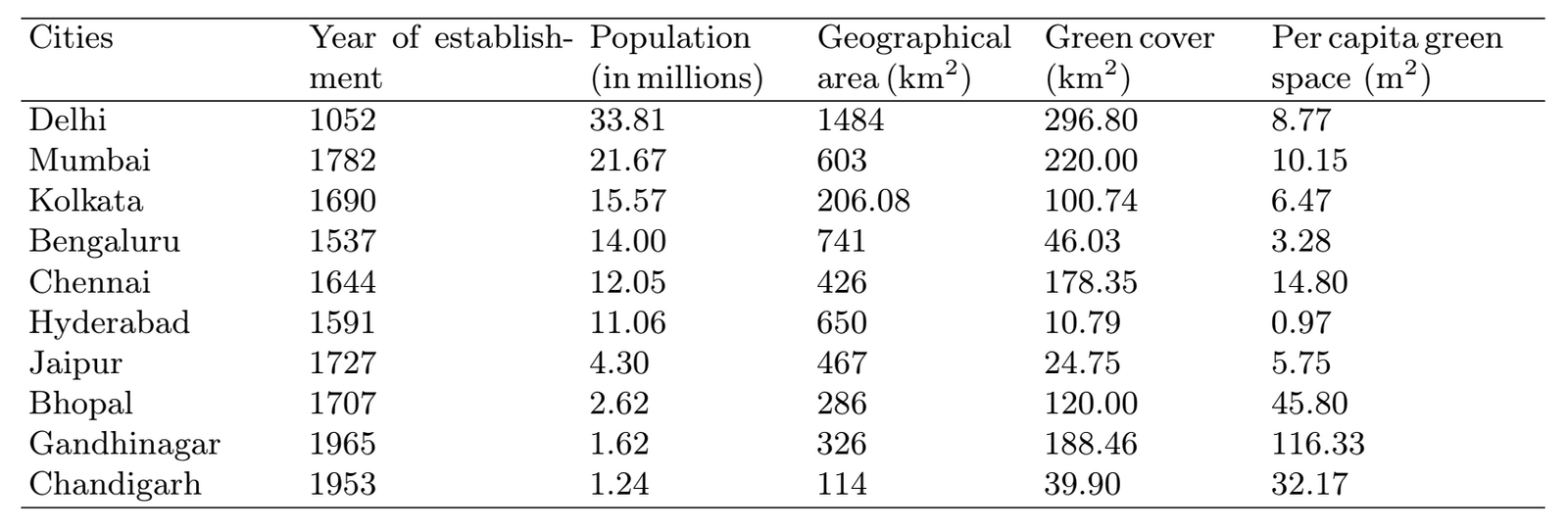
Status of Indian cities according to their population, percentage of green cover and per capita green space. Credit: Current Science, Vol. 129, No.2, 25 July 2025
India’s population in 2025 is a billion more than it was in 1900 and our air, water and soil are getting increasingly polluted with rapid urbanisation. Moreover, climate change has made rainfall patterns erratic. As a result, city planners need to think more holistically than those in the times of the British and the maharajas. “Imagine that I start planting a lot of mango trees and jackfruit trees in a semi-arid region. The city won’t be able to sustain these trees, unless they are irrigated. We have to forcefully make sure they survive,” said Jayanti. “Instead, we can opt for native trees which would be more self-sustainable and resilient in these conditions.”
This logic may explain why Jaipur, a semi-arid city, was found to have the highest percentage of native plant species (83.40 percent) and the lowest of introduced (non-native) plant species (16.60 percent). “In such extreme weather conditions, native species will always do better. Introduced species would be much more vulnerable,” deduced Satyajit.
Smart city planning
Another city that did very well in terms of native species representation was Chandigarh. Jayanti attributed this to the fact that newer cities are putting more thought into planning. At the other end of the scale, Bengaluru had the highest proportion of introduced tree species (55 percent) among the cities studied. For example, Acacia auriculiformis (earleaf acacia), Albizia saman (raintree) and Eucalyptus tereticornis. This is cause for concern, pointed out Jayanti. “Bengaluru went through over 100 days of drought last year (2024). And these exotic species tend to be much more vulnerable compared to native species. We need our urban planners not only to integrate this greenery into the system, but to think about the more locally adapted trees,” she said.
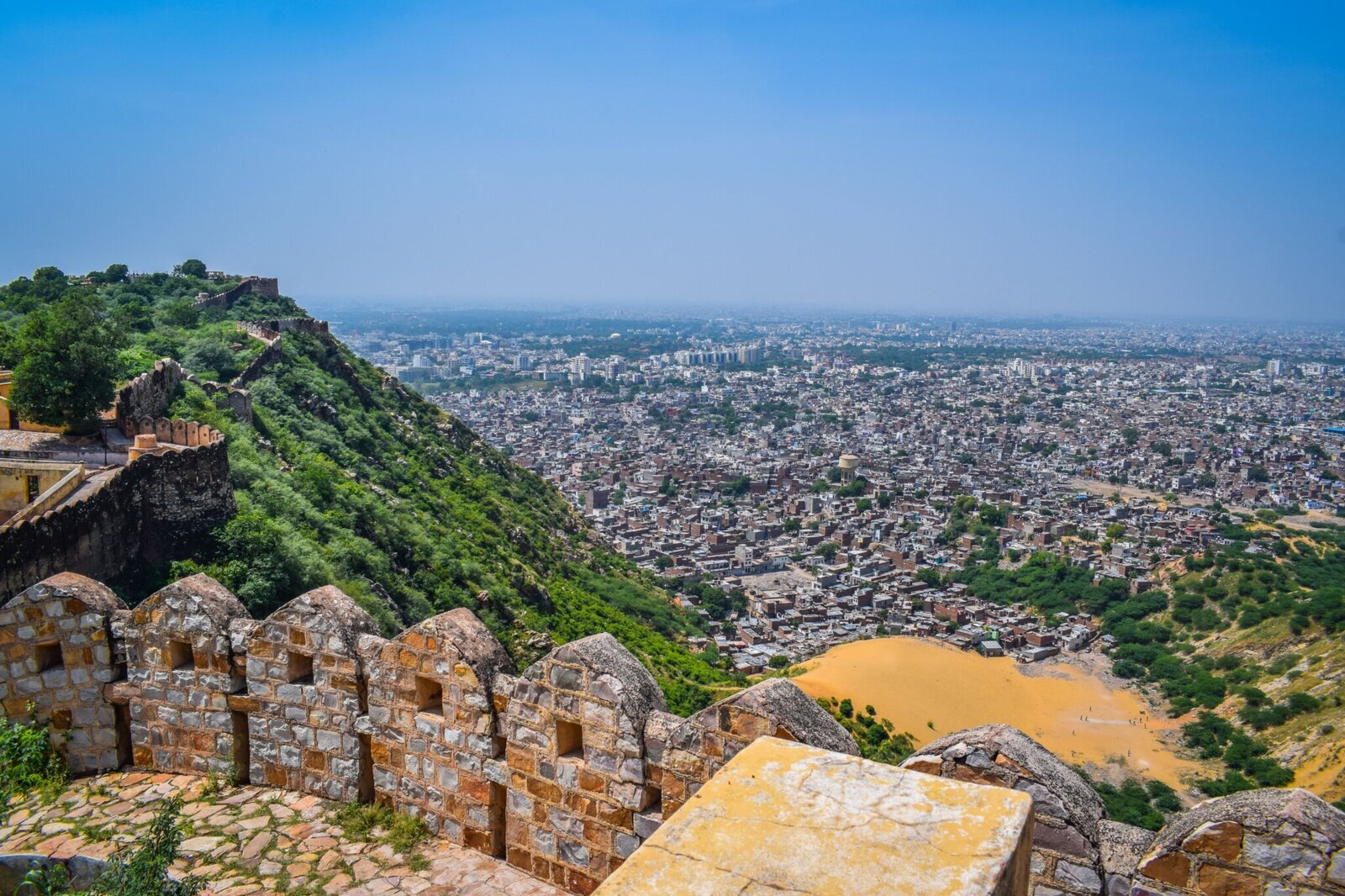
A view of Jaipur, a semi-arid city, which was found to have the highest percentage of native plant species, 83.40 percent. Credit: Wikimedia Commons/Chinmaykp25
Chandigarh also had the highest percentage of fast-growing trees (80.3 percent). While picking fast-growing species appears to serve as a short-cut to increasing green cover, there is a trade-off. Fast-growing trees like eucalyptus and casuarina use up more groundwater and are less tolerant to environmental stresses. In contrast, slow-growing plants such as Butea monosperma (palash) and Morinda citrifolia (noni), can sustain themselves better and are also better carbon sequesterers. In this regard, Chennai had the best balance, with 34.3 percent of slow-growing trees. “If you have a taxonomist or an ecologist on the planning team, they will tell you that you need slow-growing trees to accompany fast-growing ones,” said Jayanti.
“Bengaluru went through over 100 days of drought in 2024. Exotic species tend to be much more vulnerable compared to native species. We need our urban planners not only to integrate this greenery into the system, but to think about the more locally adapted trees.”
The team also looked at how our urban trees are pollinated. Satyajit was alarmed to find during his research that wind-pollinated trees such as Holoptelea integrifolia (Indian elm or chilbil) were often planted near hospitals. Being native to the region and fast-growing, it may seem like a good choice for landscaping, however it is a known cause of allergic reactions as many wind-pollinated trees tend to be. In fact, some studies have shown that it can cause more severe reactions than eucalyptus pollen, which is a common trigger for citizens of Bengaluru.
Jayanti is no stranger to this unexpected side-effect of trees. Growing up in Durgapur, a city in West Bengal that is known to be home to some of the last Indian Grey Wolves, she enjoyed a life with forested patches right in her backyard. “But these too were planned trees, including rainforest trees like Alstonia scholaris (common name: Saptaparni or Chhatim),” she said. “The city looked very beautiful with all these trees, but every October, the air would be thick with pollen, so strong that we would find it hard to breathe. I myself went through this.” According to Jayanti, these situations are easily avoidable by efficient city planning.
Back to roots
By and large, the benefits of urban green cover far outweigh any negatives. Prachi’s favourite example of this is the fig tree, which she reminded is actually a collective name for over 800 species in the Moraceae family. “The biodiversity you see on that tree is fascinating. What looks like a fig ‘fruit’ is actually a structure called a syconium, which contains many tiny flowers inside,” she described. She went on to describe the mindboggling number of ways that a single tree can serve as the basis of existence for birds, bats, rodents, mammals, and above all insects – the most famous example being fig wasps that have, over millions of years, evolved a symbiotic relationship with fig trees. “Whenever I see a fig tree, I am amazed by how many ecosystem services it is providing,” she said.
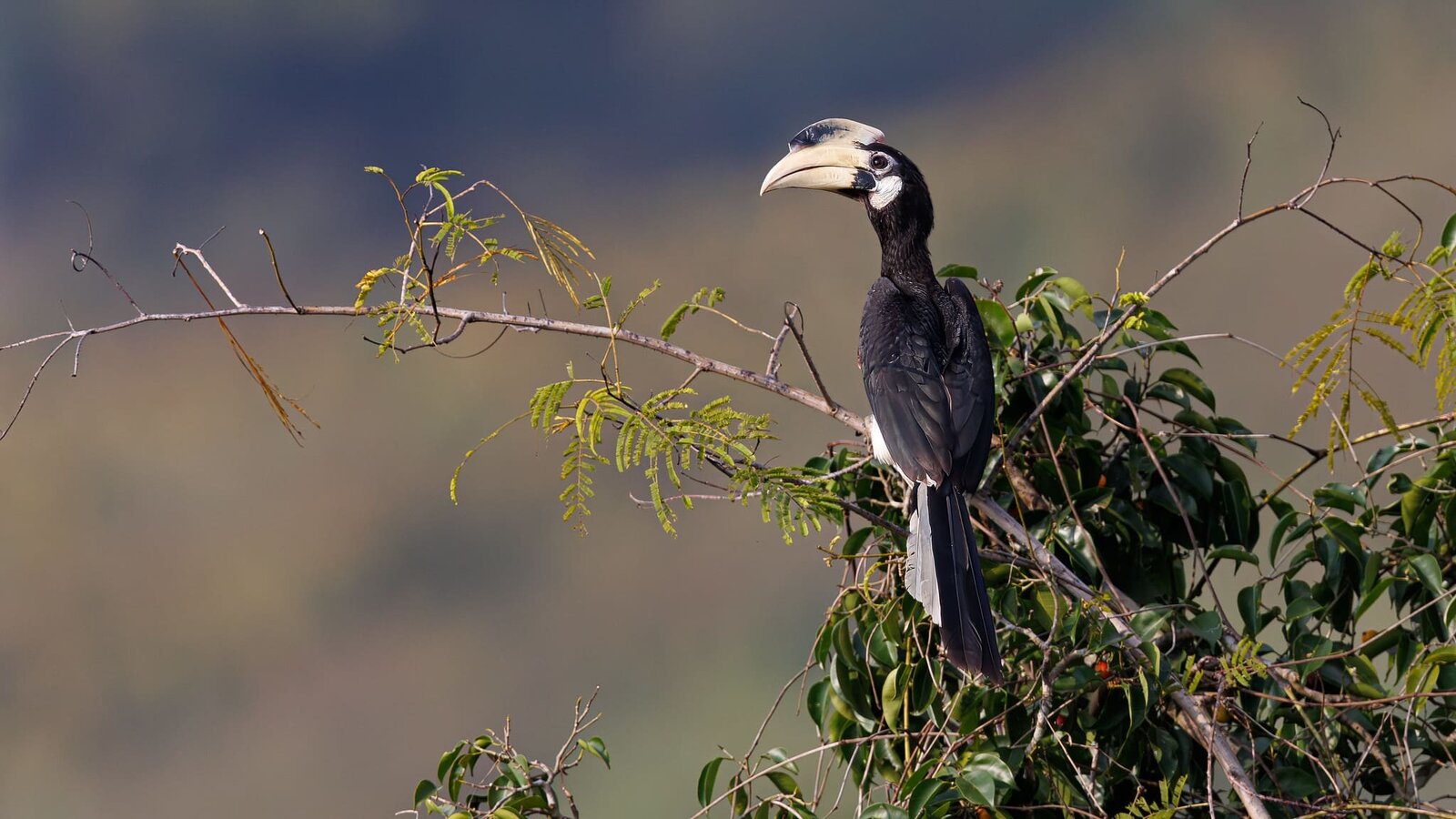
A Malabar Pied Hornbill foraging on a fig tree in Andhra Pradesh. Credit: Flickr/Hari K Patibanda
Satyajit too shares a fondness for ficus trees. He recalled driving around the rural interiors of Sarjapura on his Scooty and spotting at least one large ficus tree in each village. He painted a vivid picture of the sight that would often greet him: “Underneath there may be a small temple, or people sitting and chatting. A cow and a goat graze nearby, some hens roam around. And this is just what is happening beneath the tree. There is so much more happening inside and above it.”
The importance of trees to humans was ingrained in Satyajit right from his childhood. “I belong to a tribal community, so my parents and grandparents were ancient healers. They knew all about plants— from identifying the ones with medicinal properties to extracting medicines from them.” This inspired Satyajit to learn more about the complex mechanisms at play in the plant world, and led him to research various fields within ecology like palynology, taxonomy and more.
Despite the comprehensive database that the team were able to generate from this study, Jayanti hopes to supplement this with fieldwork. “Secondary data is not enough. You have to go to the city and do sampling to see how abundant each species is, and what kind of invertebrates and vertebrates they attract.” Satyajit agreed. “Extensive field surveys are time-consuming but the government should fund these projects because trees are important to city dwellers.”
About the author
Nandita Jayaraj is a science writer and communications consultant at Azim Premji University. She may be contacted at nandita.jayaraj@apu.edu.in