Environment, Climate Change and Sustainability Laboratories
Pioneering environmental research for sustainable solutions
Details
Climate action is multidisciplinary — so is its training
Climate change and environmental health are complex issues that demand a multidisciplinary approach to fully comprehend both the scientific mechanisms of environmental behaviour and the human actions that are accelerating these changes.
The BSc (Hons) in Environmental Science and Sustainability at Azim Premji University is grounded in a strong foundation of environmental science, geospatial, remote sensing and GIS technologies and climate data science as well as approaches of field and qualitative data analysis that investigate the social science drivers of environment and climate change. The Environment and Climate Change Laboratories are crucial and integral to imparting comprehensive science training and skill development to our students. Labs provide a unique perspective to students where they can see the theoretical concepts being implemented — reinforcing their learning.
We are mindful of the changing requirements of the global sustainability landscape and continuously upgrade our laboratories. By providing cutting-edge tools and hands-on training, we ensure that our students are prepared to contribute to building a more sustainable world.
Our laboratories are equipped with state-of-the-art equipment to train students in environmental microbiology, molecular biology, environmental analytics, chemistry, GIS, and machine learning. For example, our instruments can test more than 110 parameters related to water chemistry. These tools allow us to comprehensively study the physical, chemical, and biological characteristics of lakes, ponds and river water systems in urban, rural and industrial regions. Approaches such as these equip our students with the skills they need to positively impact the future.

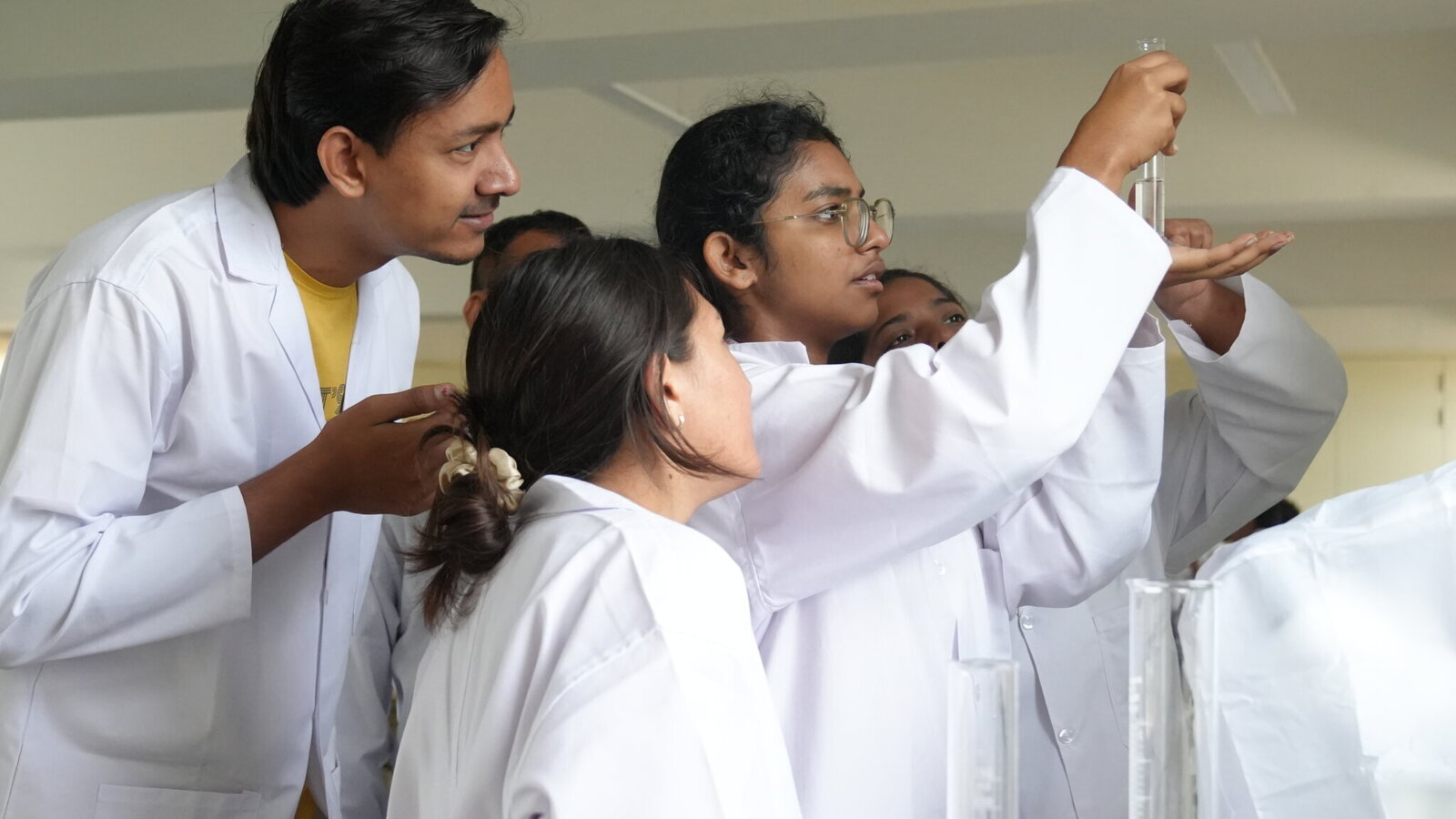
Students studying plankton biodiversity in the water collected from a lake in Sarjapura
Whether the weather be fine
An Automatic Weather Station installed on campus measures meteorological parameters at hourly intervals.The station’s weekly report is available online to our students for use in classroom projects on analysis and visualisation. An air quality sensor installed at the campus also measures the particulate matter (PM10 and PM2.5) in ambient air every minute. Using these data, our students conduct hands-on research to learn how macro-environmental parameters like wind speed, relative humidity, precipitation and temperature influence different air pollution parameters.
From this analysis, our students have discovered diurnal fluctuations in a component of air pollution — fine particulate matter — as a consequence of specific human activities in the landscape around the campus. This intriguing finding is a beautiful example of how hands-on interdisciplinary analysis, linking human activities with environmental outcomes at hyperlocal scales, influence the quality of the air we breathe.
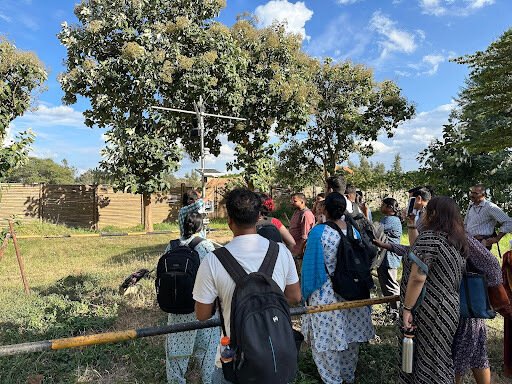
Students and working professionals in an outdoor class on campus, examining the Automatic Weather Station.
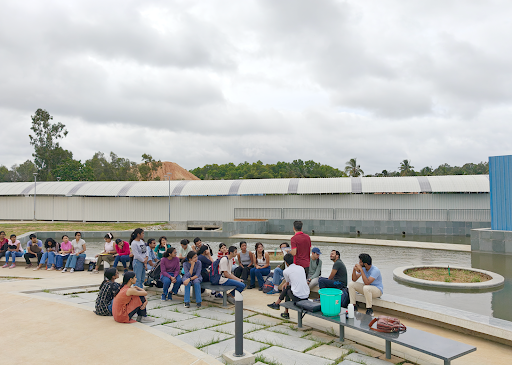
Students learning how to use lake water sampling gear at our in-campus water reservoir
The world is our laboratory
Our students are rigorously trained to fulfil the global demand for trained environmental professionals who are adept at field work, laboratory-based analysis, and interdisciplinary systems thinking to connect the dots between international and national sustainability frameworks such as the Sustainability Development Goals (SDGs), environmental science policy, human activity and real-world environmental parameters of soil, water and air pollution.
Our students are trained in quantitative and qualitative research methods and data analytical methods. They also undergo training in field sampling, utilising equipment such as Niskin bottles, Ekman grabs, and plankton nets. These tools enable the sampling of water and sediments from lakes up to 10 metres deep. Our lab’s sampling capabilities are rapidly expanding, with plans to include a research-grade large-volume air sampler soon.
All laboratory practicals are done on real-world samples, reflecting the intricate and multifaceted nature of environmental and climate change studies.

Different soil types collected by our students from field for analysis of their nutrient content
A lab, or a fancy kitchen?
While our laboratory may, on first sight, resemble a kitchen — with appliances like a mixer grinder, refrigerator, convection oven, microwave oven, hotplate, oven mitts, knives, and aprons — we strictly prohibit bringing food and drink inside the laboratory, unless they are intended for acid digestion and analysis.
While kitchen appliances and lab instruments might seem similar, the latter are built for precision, offering much more control over parameters such as temperature, humidity, and mixing speed. This level of control is key when it comes to conducting experiments you can repeat and verify.
Sometimes, the same scientific principles that guide lab experiments can also lead to fun challenges. Imagine being given five samples of liquid — four from lakes and one from a clear carbonated drink. How would you figure out which one is the fizzy drink without tasting, touching, or smelling them? That’s exactly the puzzle we gave to our students! The trick was in measuring the free carbon dioxide and pH levels of each sample. Natural water usually contains no more than 20 mg of CO₂ per litre, while carbonated drinks can have up to 6 grams per litre — quite a difference. It was a fun experiment, and everyone enjoyed the moment of discovery when we identified the “odd one out.”
Community engagement
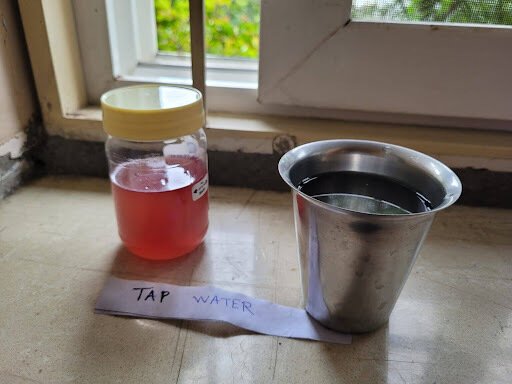
Testing of water samples brought by the members of resident welfare association across Bengaluru during a workshop.
Beyond serving our students, the University is deeply committed to community engagement. We host working professionals, policy makers, resident associations, NGOs and civil society members for workshops on air and water quality and management.
Several city residents working on a range of aspects from rainwater harvesting to lake and river restoration, and organic farming, have benefited from our training workshops. These initiatives also expose our students to the issues and solutions faced by diverse organisations beyond the boundaries of our University and provide invaluable practical experience, as well as opening up important internship, research and placement opportunities for our students.
In data we trust
Climate studies depend on skilful analysis of long-term data patterns of changes in climatic parameters, vegetation, water and other aspects over several decades. We are also mindful that many employers also seek applicants trained in data analytic capabilities.
The computer science laboratories at the University are equipped with state-of-the-art proprietary and open-source software where students can learn GIS, remote sensing, geospatial data analysis and climate analytics and visualisation.The University also has high-capacity workstations that can process big data — climate, environmental and social — to uncover patterns.
Out of sight but not out of mind
The microscopic world of microbes, including bacteria and fungi, plays a vital role in global nutrient cycling, and their diversity is a key indicator of ecosystem health. Our labs provide hands-on training in fields like classic and emerging fields, from environmental microbiology to e‑DNA. For example, one of our students is currently working on an exciting research project exploring how soil carbon and nitrogen levels influence the population of methane-producing bacteria in soil. This research has globally significant implications, as methane is a potent greenhouse gas, and agriculture is a major contributor to methane emissions.