On the banks of the Yamuna — the saga of Krishna Bhakti
Jamuna Kinare, the series finale of Bhakti Republic, explores the historical, cultural, and spiritual landscapes of Krishna Bhakti in North India and Bengal, where this devotional movement has thrived for centuries. Joining host Amit Basole is historian and scholar Varuni Bhatia, faculty in history at Azim Premji University.

Details
The series finale of Bhakti Republic plunges into the torrent of Krishna Bhakti — an enduring tradition of love and devotion centered on picturing and evoking Krishna’s effervescent childhood and romantic adolescence. This episode explores the historical, cultural, and spiritual landscapes of North India and Bengal, where this devotional movement has thrived for centuries. To guide us through the kaleidoscopic topography of Krishna Bhakti, host Amit Basole invites a special guest. Historian and scholar Varuni Bhatia teaches history at Azim Premji University and, in addition to many papers, has authored a book, Unforgetting Chaitanya: Vaishnavism and Cultures of Devotion in Colonial Bengal.
While Bhakti stands for unalloyed love for the divine, Krishna Bhakti differs from other Bhakti traditions by focussing on the playful, youthful Krishna, whose divine pastimes are celebrated with immense tenderness and reverence, particularly in the region of Brindavan, near Mathura in present-day Uttar Pradesh. For many, Brindavan is the heart of Krishna devotion, where his presence is felt through sacred stories and lore passed down over centuries.
On the banks of the Yamuna, Radha is intrinsically linked to Krishna. Radha is simultaneously a devotee, a lover, and the paradigm of devotion to Krishna, that all must try to achieve, but few are able to. So pervasive is this connection that in the streets of Brindavan, devotees greet each other with the chant Radhe-Radhe, often not even mentioning the name of Krishna, but implying their ineffable union.
Prema rasa is the essence of pure love that forms the core of Krishna Bhakti. The bhakta’s adoration of Krishna is all-encompassing, often leading to the renunciation of worldly duties and attachments. Jayadeva’s Gita Govinda, a 12th-century lyrical poem that narrates the love saga of Krishna and Radha, evokes this devotion. Through this and other works, Krishna’s playful interactions with the gopis (milkmaids) of Brindavan have become central to the devotional and aesthetic traditions of Krishna Bhakti.
Chaitanya, the 15th-century mystic from Bengal, is credited with rediscovering Brindavan as Krishna’s sacred playground. In Chaitanya’s vision, Brindavan became not just a geographical place, but a spiritual realm where devotees could connect deeply with the divine. Varuni explains how Chaitanya’s vision of Krishna Bhakti spread beyond Brindavan, influencing devotional practices across Bengal and other regions.
Over time, Krishna Bhakti has cast a democratic footprint, drawing followers from all backgrounds — men and women, high-caste and low-caste, Hindus, and even Muslims. This inclusiveness is illustrated powerfully by the stories of not only of well-known and celebrated poet-saints like Mirabai and Surdas, but also lesser known figures such as Ras Khan and Taj Begum, whose devotional poetry defines the cultural fabric of the tradition.
Throughout this anecdote-studded narrative, Amit and Varuni emphasise that Krishna Bhakti is not merely about devotion. It is about a personal, intimate relationship with the embodiment of godhead. Built on unconditional love and surrender, this relationship has anchored the faith of devotees over centuries, and etched itself into the social ethos of India.
Jamuna Kinare invites you to relish the opulent redolence of Krishna Bhakti, where divine love looks beyond the boundaries of birth or social standing, where devotion transcends time and place, and where the simple act of loving Krishna is an experience both spiritual and aesthetic.
Credits
Akshay Ramuhalli, Bijoy Venugopal, Bruce Lee Mani, Gorveck Thokchom, Narayan Krishnaswamy, Prashant Vasudevan, Sananda Dasgupta, Seema Seth, Shraddha Gautam, Supriya Joshi, and Velu Shankar.
Listen to other episodes in Bhakti Republic
-


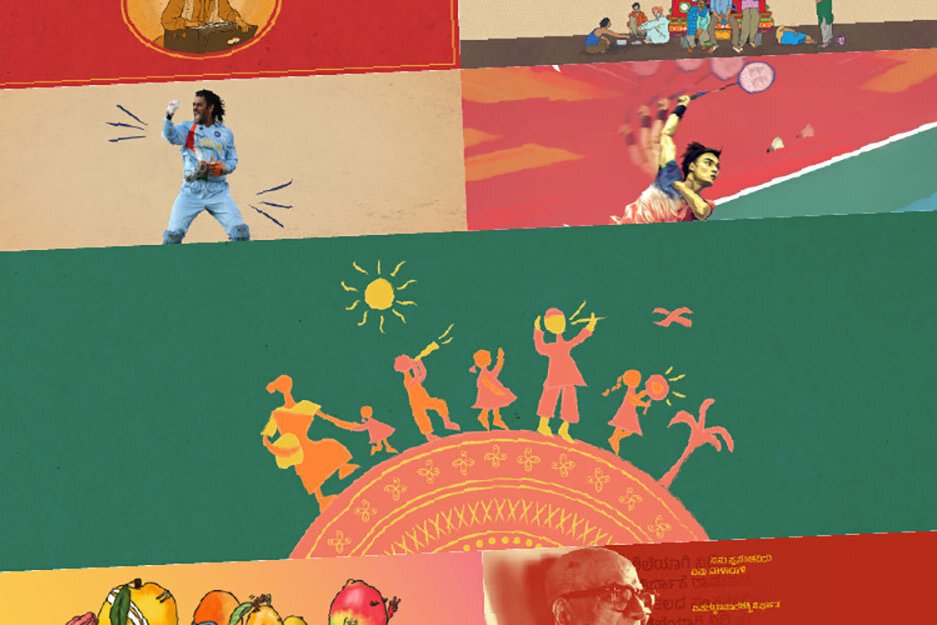
Saara Jahan Hamara — In 1950’s Bombay
We begin our journey in the film studios of 1950’s Bombay (then not yet known as Bollywood) where lyricists like Sahir Ludhianvi, Majrooh Sultanpuri, Shailendra, and others are using the power of their poetry to awaken people to the spirit of Constitutional Values
-
Bombay Talkies — Cinema and Social Change
By the 20th century, cinema halls had mushroomed all over the city of Bombay and the industry attracted actors, dancers, singers, and songwriters. Songs were an inseparable part of these films, piggybacking on the tradition of Gujarati and Marathi theatre. The stage was set for a new breed of poets to write their way into history.
-
The Body As Temple — The Vachanas Of The Sharanas
In the third episode of Bhakti Republic with Amit Basole, we journey to 12th century Karnataka, where the Sharanas, ardent devotees of Shiva, spread their message through vachanas, verses composed and sung in simple Kannada, which are infused with profound thought
-
Kayakave Kailasa — A Musical Rendition Of The Vachanas
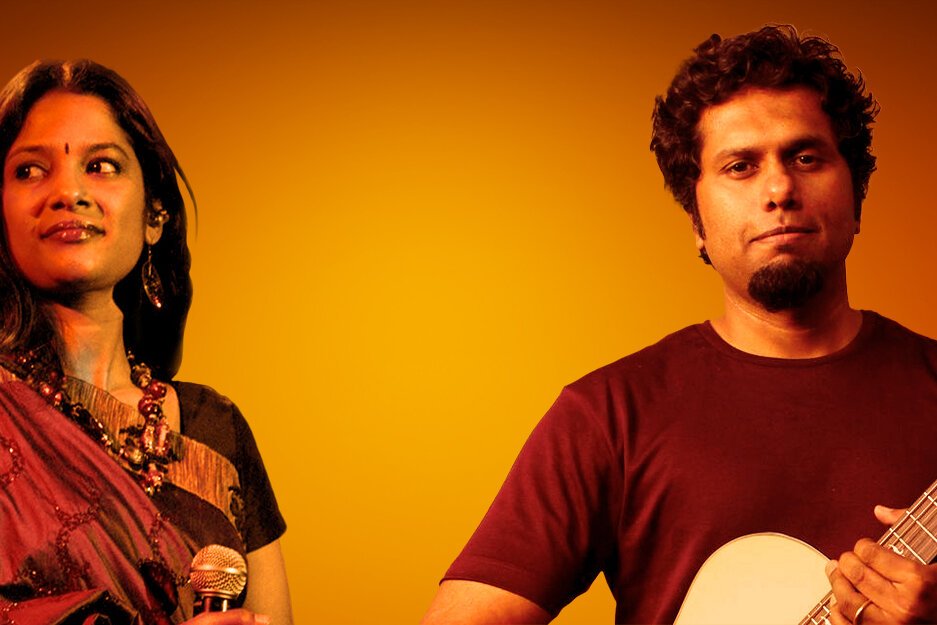
M. D. Pallavi sings the vachanas accompanied by Bruce Lee Mani on guitar. Enjoy this unique compilation produced by Radio Azim Premji University as a companion to Bhakti Republic with Amit Basole
-

Kathauti Mein Ganga — In Benaras with Kabir and Ravidas
Join Amit Basole for the second episode of this series, in which we explore how the histories of the values enshrined in our Constitution find resonance in the poetry of the Bhakti tradition
-
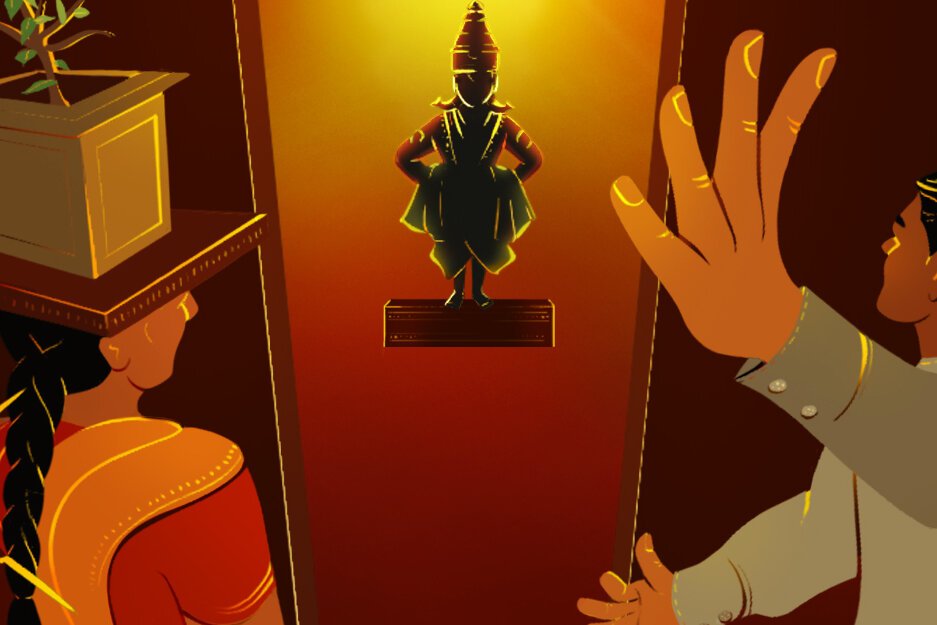
When Varkaris March To Pandharpur
In the fourth episode of our series Bhakti Republic, Amit Basole continues his exploration of constitutional values in the poetry of the Varkaris through anecdotes and readings, against a background of original music performances
-
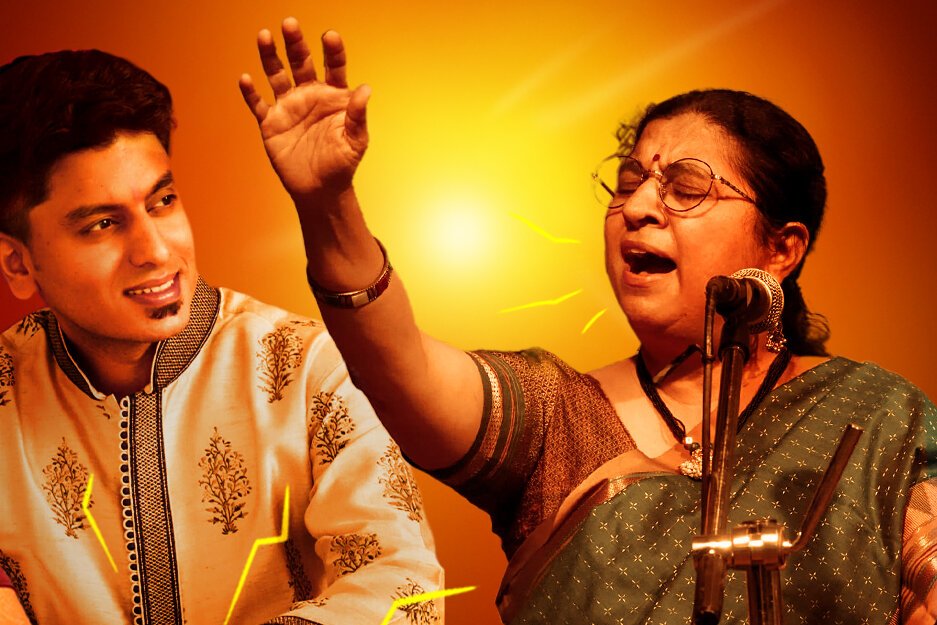
The Path To Pandharpur — Music for Bhakti Republic
Listen to The Path To Pandharpur, an original music album produced by Radio Azim Premji University for the series Bhakti Republic. Performed by Anjali Malkar, Bruce Lee Mani, and Junuka Deshpande with Karthik Bhat and Noel Prashanth , it is available for free listening on your favourite streaming services
Acknowledgements
Songs and audio clips used in this episode
- YouTube: Meera Bhajans — M.S. Subbulakshmi | Mai Haricharan Ki | Chakar Rakho Ji | Carnatic Classical Songs
- YouTube: sanware aijaiyyo (jamuna kinare mora gaon) by Pt. Vasantrao Deshpande
- YouTube: Mathura Basi Kunwar Kanhaiya Taj Muhammad & Shad Muhammad Niazi Qawwal
- YouTube: मोहे पनघट पे | Mohe Panghat Pe — HD Video | Mughal-E-Azam (1960) | Madhubala | Lata Mangeshkar
- YouTube: Bahut kathin hai dagar panghat ki by Habib Painter
- YouTube: Bhala hua mori matki phuti re by Abida Parveen
YouTube: Taj Begum — Dhamar - YouTube: Bharati Gourago Loiya | ভারতী গৌরাঙ্গ লইয়া
- YouTube: Brindabono Bilasini Rai Amader, Sham Tomader — Parbati Das Baul
- YouTube: Mansur Fakir−Amar Nitai Chander Bazare
- YouTube: Ekla Nitai (একলা নিতাই) by Satyaki Banerjee (সাত্যকি ব্যানার্জি)
More audio resources
- YouTube: KALAM E BABA AUGHAT SHAH WARSI (RA) in qawwali .…@ warsi anjuman
- YouTube: ALI WARIS WARSI QAWWAL.. KALAM HAZRAT AUGHAT SAHA WARSI (R.H)
- YouTube: kalam E Aughat shah Warsi
- YouTube: RAHIM — A BHAKTI POET AT THE MUGHAL COURT | Jaipur Literature Festival 2021
- YouTube: Kaha Milega Shyam — Sarita Ojha | SHREE SHYAM BHAJAN
- YouTube: Shri Gusainji Ali Khan Pathan ki vartaji
- YouTube: Krishna Ji I Maulana Hasrat Mohani I मक्का, मथुरा और मास्को को मानते थे मौलाना हसरत मोहानी।
- YouTube: Mohe Panghat Pe Nandlal I Ustad Vilayat Khan And Ustad Bismillah Khan | Thumari | Jugalbandi |
- YouTube: Taj Begum — bhaktcharita
- YouTube: Taj Begum — Suno Dil jaani mere dil ki kahani
- YouTube: Taj Begum — Holi
Resources
Interview
- TheWire: John Stratton Hawley on his book ‘Krishna’s Playground’
Books
- Unforgetting Chaitanya: Vaishnavism and Cultures of Devotion in Colonial Bengal by Varuni Bhatia
- Surdas: Poet, Singer, Saint by John Stratton Hawley
- Three Bhakti Voices: Mirabai, Surdas and Kabir in Their Time and Ours by John Stratton Hawley
- Sur’s Ocean (Sursagar) Edited by Kenneth E. Bryant and translated by John Stratton Hawley
- Upholding the Common Life: The Community of Meerabai by Parita Mukta
- Sundar ke swapn: arambhik adhunikta, Dadu panth aur Sundardas ke kavita by Dalpat Singh Rajpurohit
- Journey through the Twelve Forests: An Encounter with Krishna by David Haberman
- Acting as a Way of Salvation: A Study of Raganuga Bhakti Sadhana by David Haberman
- The Final Word: The Caitanya Caritamrita and the Grammar of Religious Tradition by Tony K. Stewart
- Bange Baishnab Dharma by Ramakanta Chakraborty
- Folklore, Religion, and the Songs of a Bengali Madman: A Journey between Performance and the Politics of Cultural Representation by Carola Erika Lorea
Journal Articles
Naim, C M. “The Maulana Who Loved Krishna.” Economic and Political Weekly 48, no. 17 (2013): 37 – 44.
Films
- YouTube: Meera (Hema Malini)