
Grassroot Women Leaders engage with Local Governance: The Story from Barwani District of Madhya Pradesh
By Ritwika Mitra | Nov 2025
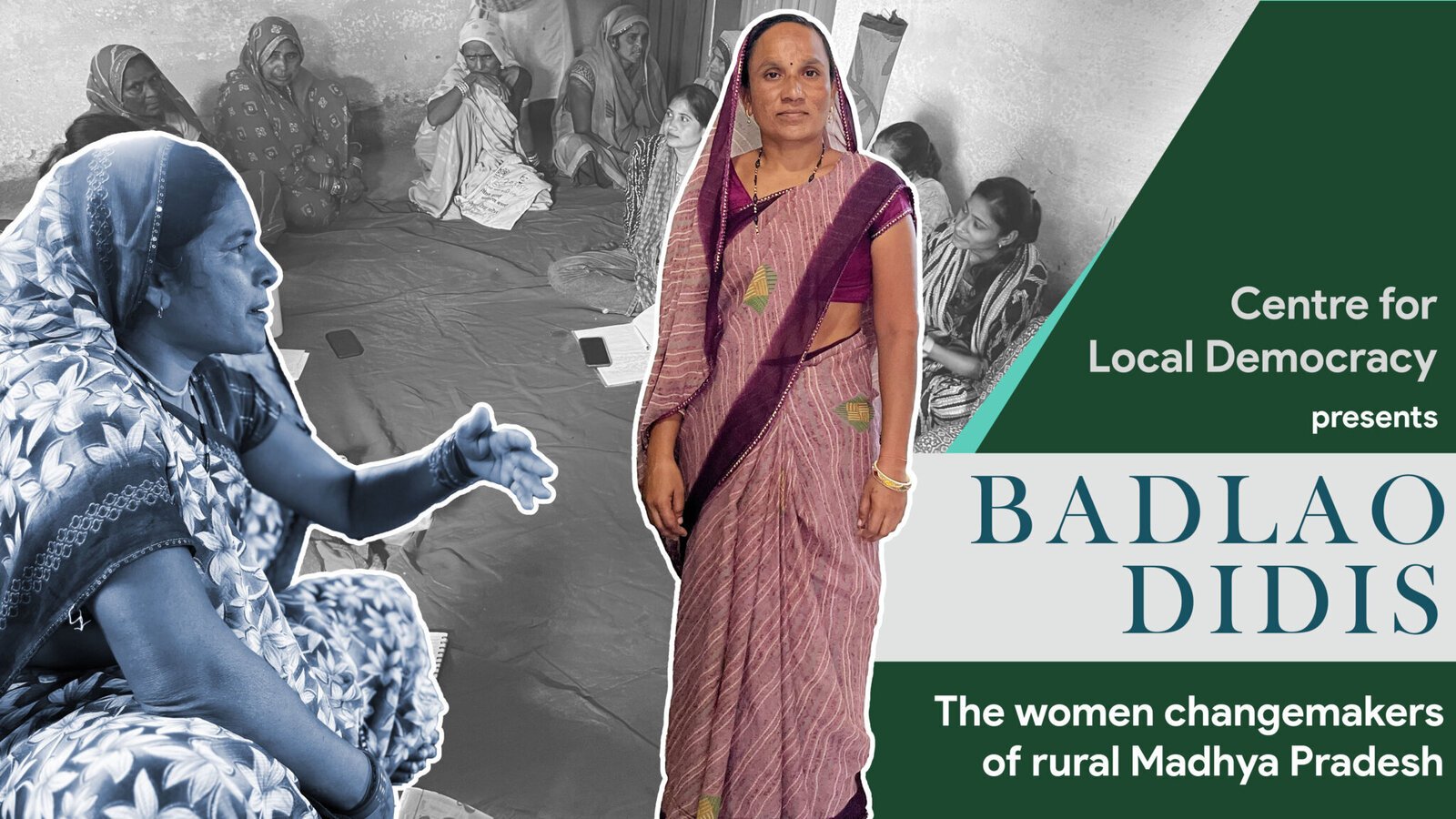
Meet Badlao Didis of Madhya Pradesh who are engaging with local governance to improve infrastructure and services.
Details
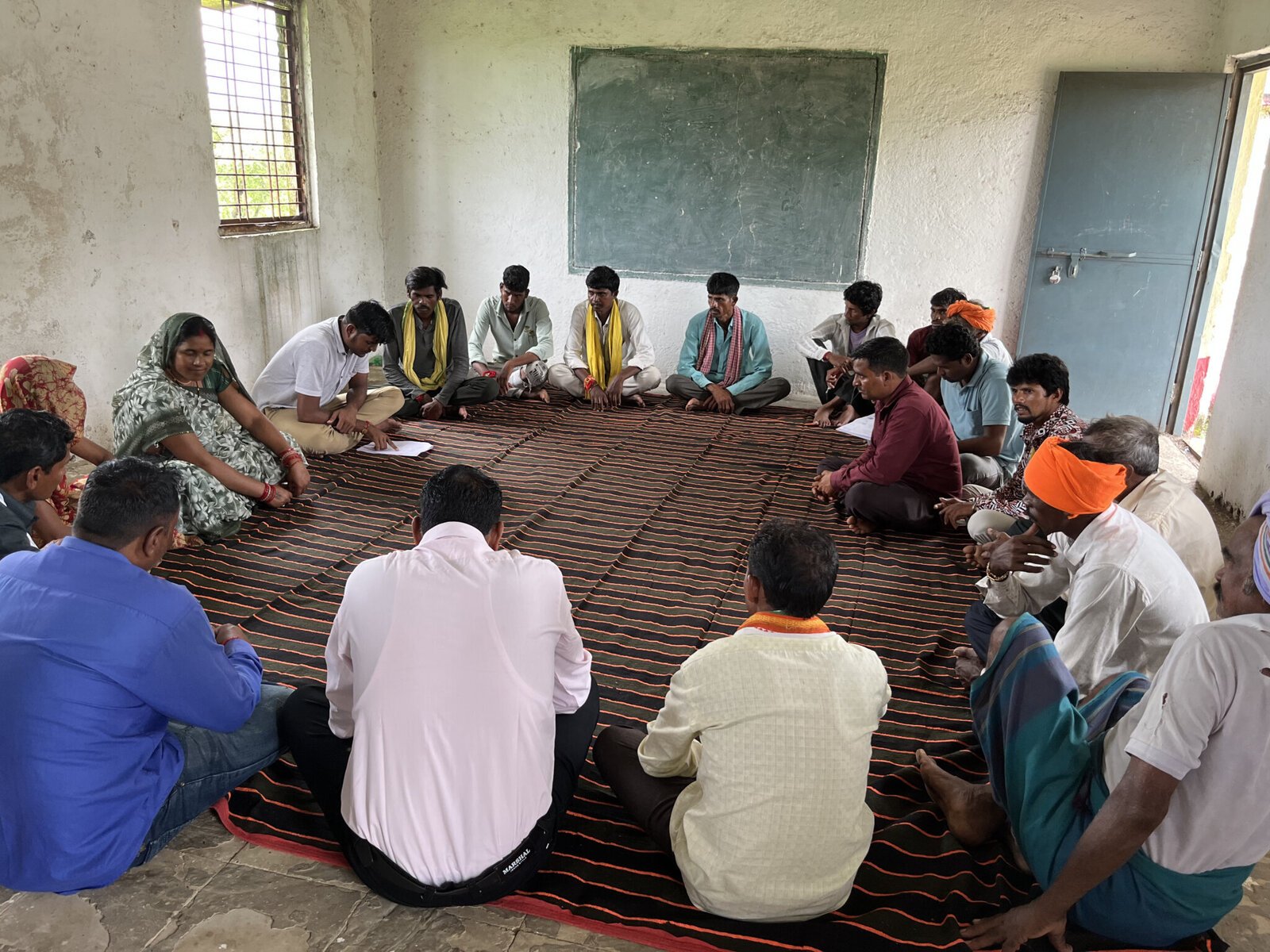
RAJPUR, Madhya Pradesh: It is around 11.30 am on a Thursday and people — mostly women — are seen steadily streaming into the Gram Panchayat office in Bhagsur village in Madhya Pradesh’s Barwani district. The newly appointed Saachiv or the secretary begins the Gram Panchayat Coordination Committee (GPCC) meeting, where local issues would be deliberated on, with a round of introductions from the attendees.
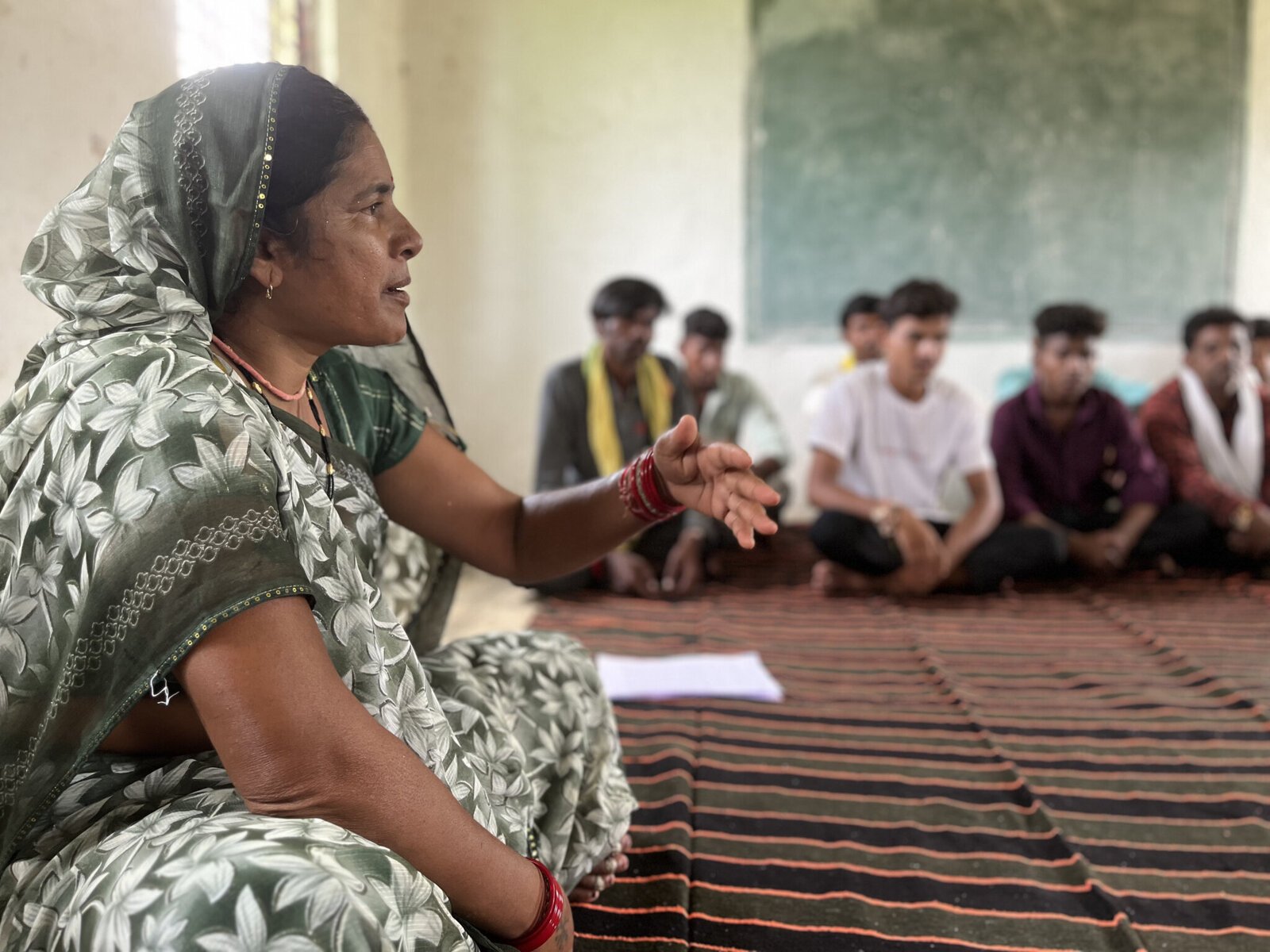
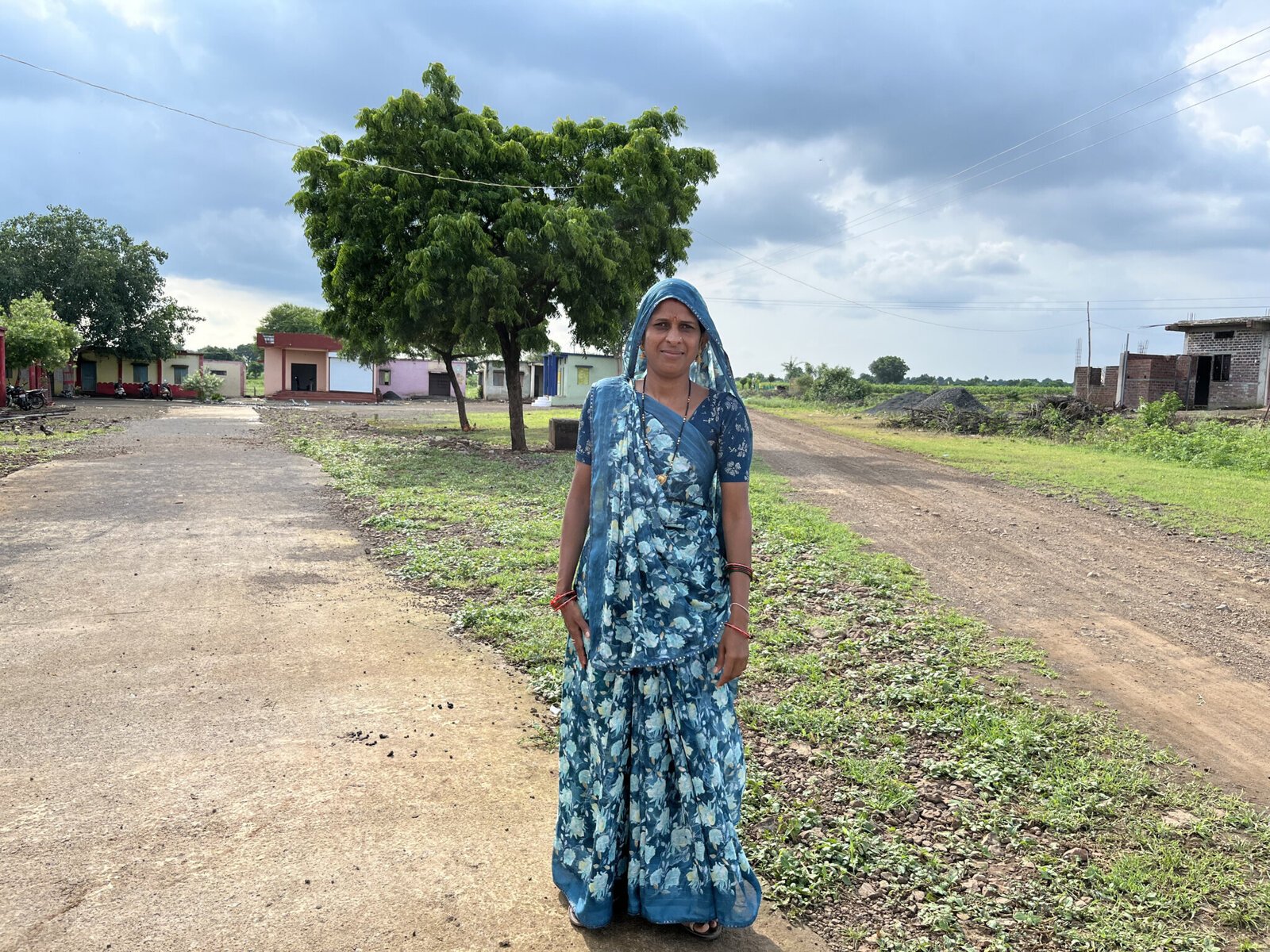
When the Sarpanch’s husband comes in and announces he will be filling in for her on the day due to her ill health, the women protest about her frequent absence at meetings. Soon, the session turns lively. As the meeting progresses, two women take charge of expressing the problems that they are navigating. Rekha Romre, 32, and Seema Nargave, 31 — both Badlao Didis (women change makers)— deeply engage in keeping the meeting on track. As Rekha’s young daughter tugs at her sari for attention to open a bag of chips, she complies before returning to the meeting and raising some points about the condition of the anganwadi at the village and the dire need for improvement.
The GPCC aims to improve local development by bringing together different stakeholders, including Gram Panchayat members, Self-Help Groups (SHGs) and other local-level functionaries, providing a structured platform for implementing development works in the villages. In fact, the GPCC serves as an instrumental platform in integrating the community-led initiatives into the larger and more formal Gram Panchayat Development Plan (GPDP). It also encourages local participation and coordinated efforts of the stakeholders.
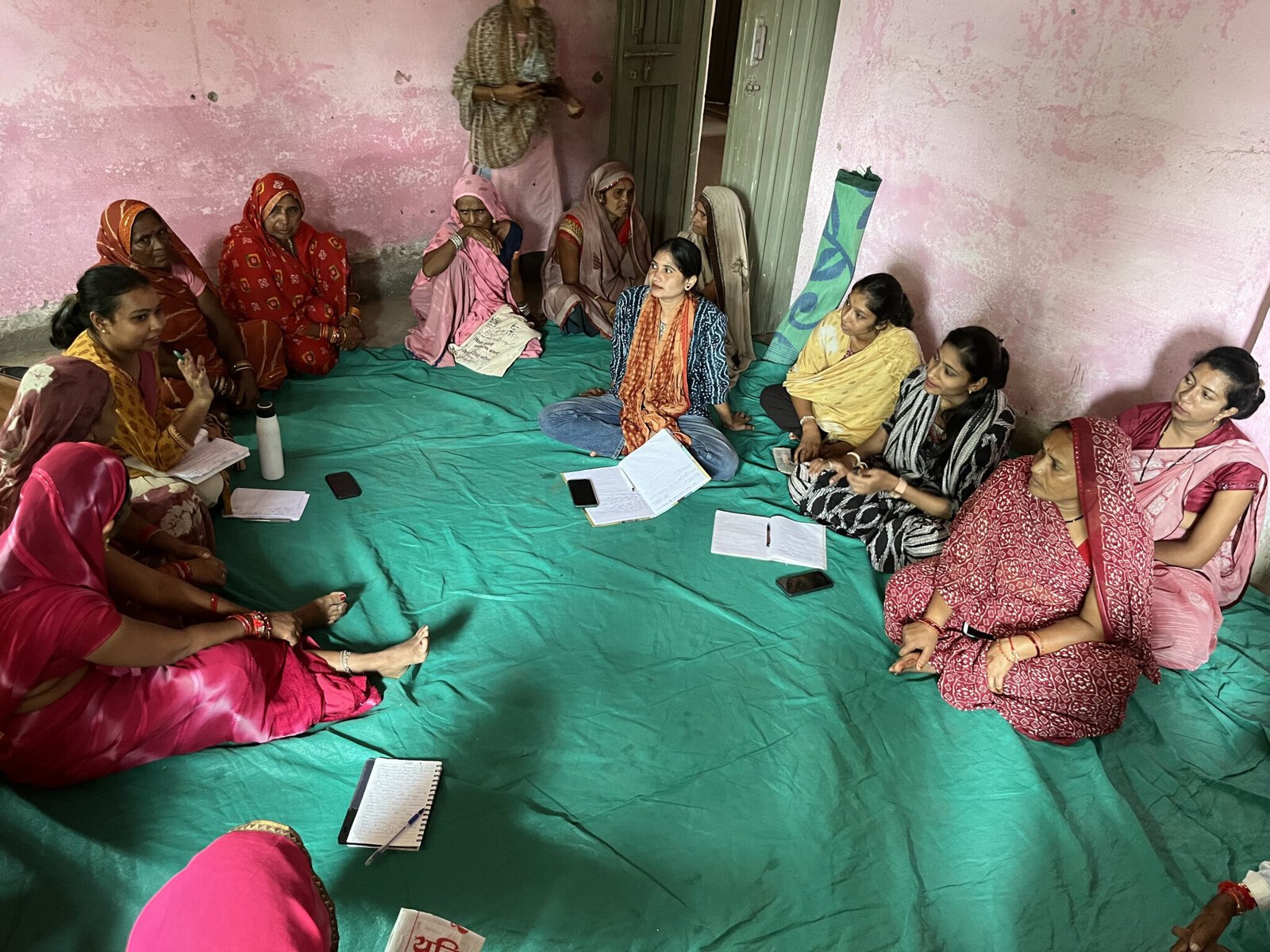
Women attend the GPCC meeting in Bhagsur village.
Rekha and Seema share different stories of struggle, yet they are bound by a common goal — to bring in social change in their village. The Badlao Didis are women volunteers who play an important role in bringing about significant changes in the village in the areas of infrastructure, economic development, health and education. They coordinate with a range of stakeholders, including the Gram Panchayats, health and women and child departments. Currently, 434 Badlao Didis are engaged in the local governance system in Madhya Pradesh, and 69 of them are in the Rajpur block, where we reported this story from. According to data available with the NGO Transform Rural India, there are 34 Badlao Didis have contested Gram Panchayat elections, of which 21 have won. While 15 of them have gone on to become Panch, six have become Sarpanches in Rajpur block alone. A Panch is an elected ward member of a Gram Panchayat while a Sarpanch is the elected head of a Gram Panchayat. This NGO with a few local partner organisations conduct a series of training programmes for the Badlao Didis to take up the work with Gram Panchayats. In the process, several Badlao Didis gained the confidence and contested Gram Panchayat elections.
The leadership role evolves through a chain of events at the village level. The Badlao Didis first join a SHG, which acts as a community-based association for microfinance support to engage these women in small-scale businesses. From among them, civil society organisations train women in how the Gram Panchayat system works. These Didis work in close coordination with ASHA (Accredited Social Health Activists) workers and Anganwadi workers. Some of them later go on to become Panch and some even become Sarpanch.
The idea of training women as Badlao Didis, who are volunteers from the community, is to make them the key forces behind bringing about transformation and positive outcomes among the communities in villages through deep engagement with the local governance system. Since these women are recruited from the communities, they become champions of the causes that need immediate attention. Through close collaboration of the different stakeholders, the women learn to share responsibilities, take accountability, and bring a solution-focused approach to their work at the village level.
Interviews showed that the women have beaten all personal odds, including lack of access to education, and adequate finances, and have fought societal barriers, to perform their duties as agents of change. Indian government data shows that the literacy rate difference between men and women is significant in Madhya Pradesh — only 59.2 percent of women are literate as compared to 78.7 percent of men. Different socio-economic factors, including traditional practices and poverty, put women at a disadvantage in accessing education in Madhya Pradesh. While rural Madhya Pradesh’s Multidimensional Poverty Index (MPI) is 0.111, Barwani district — where this story was reported from – has a MPI of 0.167.1 Over 33.5 percent of the population in Barwani are multidimensionally poor.
Narrating the setbacks they face in doing their work, Seema recounts a time when a family, which is a serial defaulter, threatened to hit the duo. She retaliated, saying, “Hum bhi do jan hain, humare haath mein toh laddu nahi hain.” (There are two of us. We are not carrying laddoos either — indicating that she and her companion would protest.)
Understanding the local governance institution and processes has opened up the doors for the Didis to achieve important outcomes at the grassroots — improving the quality of midday meals in schools, engaging locals as daily labourers in the villages, construction of Cement Concrete (CC) roads, improving water supply, construction of buildings for community gatherings, opening up of Public Distribution System (PDS) shops which provide free foodgrains for the villagers, and applying nets on open wells to thwart any mishaps of cattle or children falling inside them.
This work is not without its challenges. At the GPCC in Bhagsur village, Seema points out the challenges in collecting the monthly INR 100 water tax fixed by the gram panchayat for one tap supply connection in the village homes. Several people have more than one connection and refuse to pay for the extra connection, and sometimes even for the primary connection. Seema is in charge of collecting the water tax along with another woman in Bhagsur. But the duo is left haggling with the defaulters every month after tediously going to each village house to collect the money. Door-to-door collection fetches them 10 per cent of the total collection, which roughly comes up to INR 1,000 each. When people default, their commission typically goes down, though they still have to go around the village.
Narrating the setbacks they face in doing their work, Seema recounts a time when a family, which is a serial defaulter, threatened to hit the duo. She retaliated, saying, “Hum bhi do jan hain, humare haath mein toh laddu nahi hain.” (There are two of us. We are not carrying laddoos either — indicating that she and her companion would protest.)
The current priority areas are improving water supply, drainage system, and condition of streetlights. Now that the women are coming forward, we are achieving change. They ensure to secure their work before leaving the meeting.
At the GPCC, Seema insists that the water tax collection issue be resolved before next month. When she points out that the pump operator does not cooperate with them, the Saachiv sends for him to attend the meeting. Once the operator comes in, the Saachiv instructs him to cooperate with the women. “People have to pay the water tax for their connections. There would be no exceptions from now on. Soon, we will look at the list with the total number of water supply connections and address the current gaps,” the Saachiv tells the meeting. While the exact composition of a GPCC varies, there are gram panchayat members, officials from the block development, NGOs, local residents in villages, and representatives from development agencies. The GPCC which has proven to yield successful outcomes in development, if institutionalised, can go a long way in convergences among many agencies towards local development.
Pannalal Parmar, the Saachiv at the Bhagsur Gram Panchayat, says, “The current priority areas are improving water supply, drainage system, and condition of streetlights. Now that the women are coming forward, we are achieving change. They ensure they secure their work before leaving the meeting.” He adds with a laugh, “The men would end up not reaching the meeting spot.” The people in the village are assured that they can make more out of the existing schemes with the Gram Panchayat building soon going to have two helpdesk sathis who will provide the local population with information on different schemes and help them out with digital filling of forms when required.
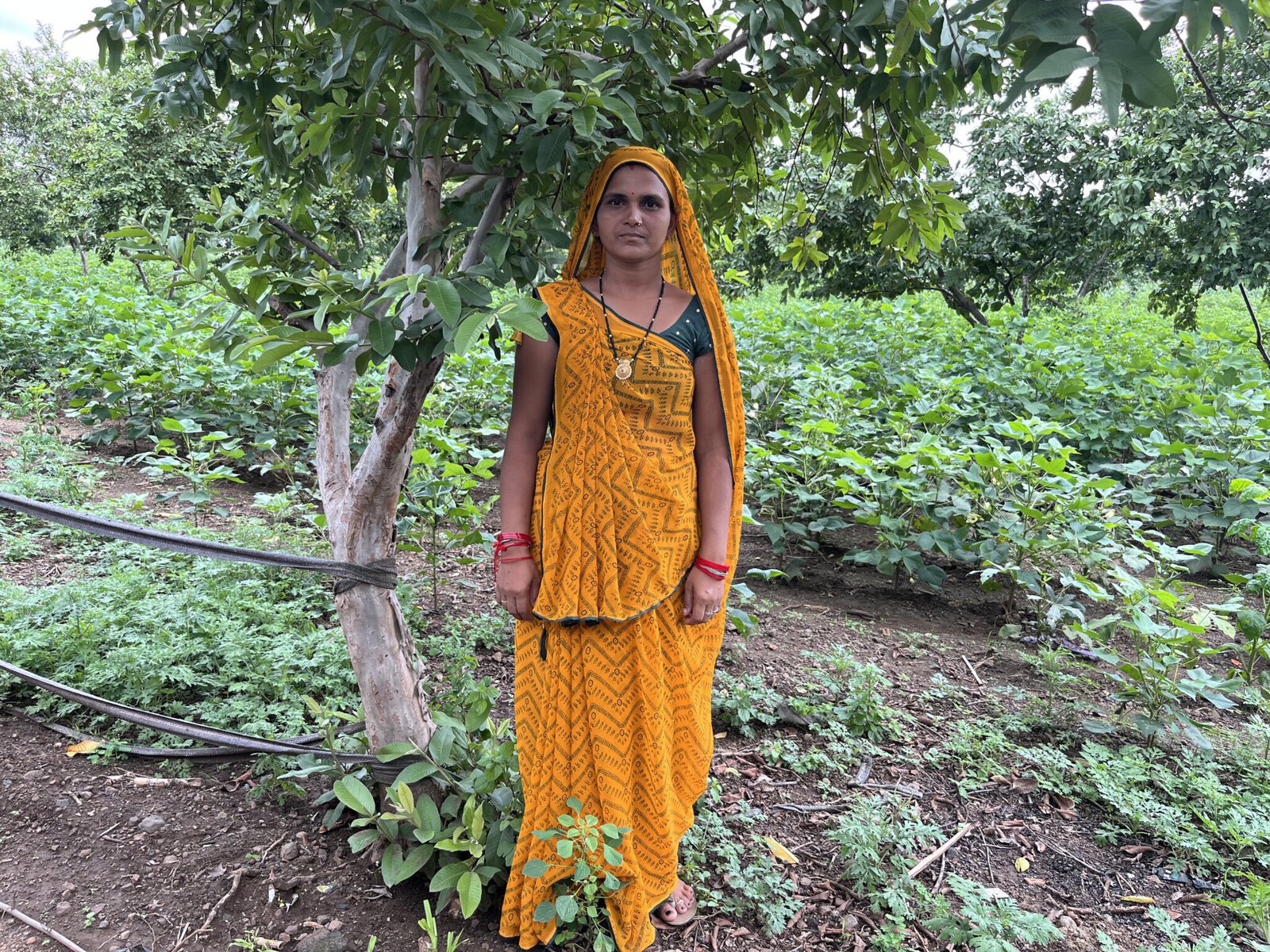
Seema Nargave says her husband’s support has helped her come a long way.
Seema, who is currently enrolled in a Master of Social Work programme, is optimistic to bring more changes through her persistence. “From my childhood, I was certain I would do something to bring in change. When we achieve results (at the village level), I like to work even more.” She adds with a grin, “Pati ka full support hain, isi liye itna bolti hun.” (I have my husband’s support, this is why I speak so much).
For Rekha, this has been a lone battle — of looking after her six children, mother-in-law and a husband who is heavily dependent on alcohol. While her mother-in-law eventually warmed up to her new leadership role since, she joined the SHG in 2018 and started caring for the children when she was busy, her husband would bitterly fight with her. His frequent falls after alcohol use and overall poor health would also derail her. But she stuck on. When trust was being built within the family, the earlier Saachiv stood in her way, telling her to stay away from the affairs of the village. But she has come a long way since. “I was told to keep myself restricted to the SHG. I did not give up. I said I am a part of the village and have a say in its affairs. Today, before any meeting, the Saachiv ensures we are present there.”
When asked how she has changed over the past five years in this leadership role, she says, “Earlier, I was always fearful, I would not be able to talk to anybody. During the training, I started learning about Gram Sabha, and other issues like water and electricity supply.”
As her husband approaches her in an inebriated state, she gets briefly distracted before regaining her composure. Lately, she has been actively holding meetings to lead conversations in the village on how women can cope in families where men are struggling with alcohol dependence. “I told the women that let’s support each other actively to improve the situation,” says Rekha.
Her dreams are now reserved for her daughters. “I want them to be educated and self-reliant,” she adds in a quiet voice.
It is such a privilege for me to help out other women. I want to get more knowledge and training to tell people about the existing schemes. Trust me, people often do not know about the government schemes and are losing out as beneficiaries.
Family support eases the burden for these grassroots leaders
In Matli village, Lalita Kanojia was busy with household chores and agricultural responsibilities till the pandemic hit. All those years that she stayed home, she would notice women gather in small groups frequently. She eventually joined one and went on to become a Badlao Didi. Over the next few months, she helped women fill out their forms to access government schemes. “I helped the women fill out forms for the Ladli Behna scheme. They still come to me if they cannot understand how to fill out forms or need information on something else,” she says. The Ladli Behna scheme, announced in 2023, promises married women a monthly cash assistance of INR 1250.
Now she spends a good three hours every day working out of the Gram Panchayat office, where she fills out forms for other women, helping them apply for existing government schemes, and also helps with completing Know Your Customer (KYC) activities for authentication of beneficiaries, which is necessary for people to access government schemes.
Her husband has also bought her a computer so that she can make data entries at home. She adds that one does not need to pay for getting information. “It is such a privilege for me to help out other women. I want to get more knowledge and training to tell people about the existing schemes. Trust me, people often do not know about the government schemes and are losing out as beneficiaries,” she says. Currently, she is also a mobiliser of the Panchayats (Extension to Scheduled Areas) Act, which came into effect in Madhya Pradesh in 2022. This Act gives more constitutional rights to the tribal population, which makes up over 21 per cent of the state population — to make use of the common resources of the village.
Last year an opportunity arose to go to Guwahati in eastern India for training, she bought new saris and took a flight for the first time in her life. “Earlier, I had travelled in motorcycles and cars, but never in an aeroplane. Now even my jeth (elder brother-in-law) looks at me with respect,” says a beaming Lalita.
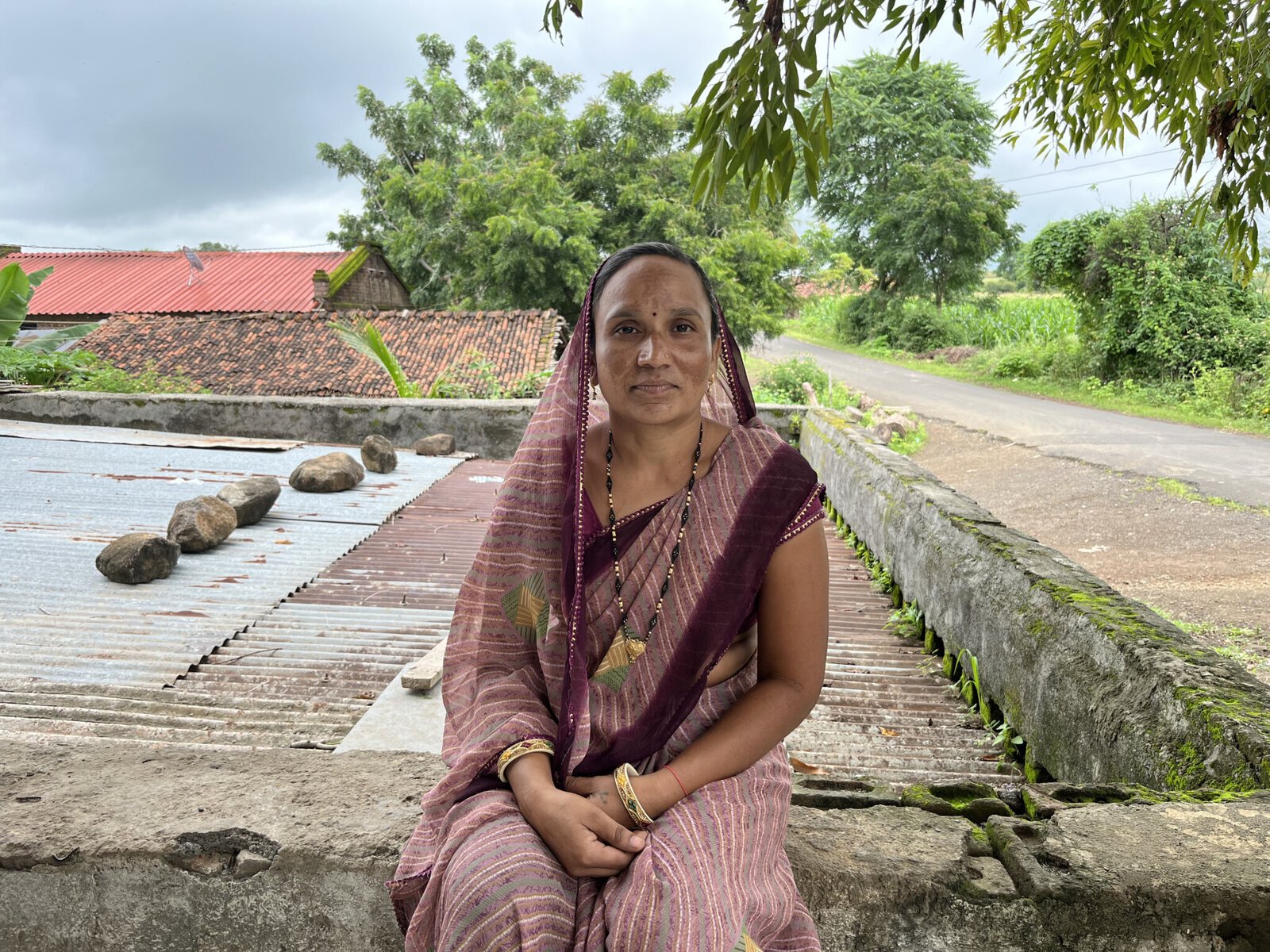
Lalita Kanojia likes to fill out forms of government schemes for women who approach her.
Laxmi Jaiswal in Ghusgaon village echoes a similar sentiment. Earning people’s trust and her own identity have been motivating factors to relentlessly pursue village welfare issues. “Earlier, people would know me as Ravi Jaiswal ke Mrs. Now they call him Laxmi didi ki pati (Laxmi didi’s husband). He feels happy hearing this.”
But like the other women, she too suffered setbacks in the beginning days. When she started talking about improving basic infrastructure at the village level after being appointed as a Badlao Didi, people would hurl abuses at her. Her husband asked her why she was being so adamant about bringing about change at the cost of her emotional health. “He asked me – why do you want to hear the abuses of these people? But I did not give up,” says Laxmi. After all, there were a series of things in the village that needed fixing.
The village did not have a PDS shop for the longest time. Laxmi, along with other women, met the sub-divisional magistrate and food department officials regularly till a shop was set up at the village. Next, she turned her attention to the condition of the village government school. With a lack of an adequate number of fans at the school, children would swelter in the heat. Laxmi negotiated with the school teachers, asked them to pool in money, and got more fans in the school. For a long time now, she has been lobbying to improve the drainage system so that the overflowing nullahs (drains) do not run in front of their houses. The nullahs pose a challenge with the overflowing dirty water, especially during the monsoons. “I hope to be able to bring changes to the drainage system soon. I have made some difference,” she said, smiling.
For 24-year-old Ranjana Vaksala in Revja village, associating with the SHG was a starting point too. “But you head back home after the lending process. It was after the training as a Badlao Didi that I started enjoying the process – learning how to write down the important agenda for the GBDP (Gram Panchayat Development Plan) before the Gram Sabha to achieve change. We also started visiting schools to check the quality of midday meals and bring in improvements.”
Her husband’s unconditional support has helped her carry out her work while looking after two young children.
Fighting against social practices to bring in change
In Deola village, Sarpanch Salu Kanoji, in her 40s, waits patiently with her husband sitting in the chair next to her for the village members to arrive for the scheduled Gram Sabha in a school building. Eventually, the meeting starts, but an adequate number of members do not arrive — the quorum of every meeting of a Gram Sabha should not be less than one-tenth of the total number of members or 500 members of the Gram Sabha, whichever is less. When the meeting ended, Salu ensured the discussions were put on paper and distributed sweet boondi to the attendees. “But we need to set another date now for the Gram Sabha,” she says, as there is no quorum for the Gram Sabha meeting today.
As the meeting with mostly male members who have turned up progresses, Salu asserts herself from time to time to raise her points. Salu has studied till class 5 — but the years she served at the SHG as a Badlao Didi prepared her to take on more. From the early days, other women would tell her she spoke very eloquently. Understanding the local governance system meant she could fight the local elections to contest for the post of a Sarpanch.
Salu Kanojia who has been elected as a Sarpanch wants to achieve positive outcomes at the grassroots.
Talking about her struggles as a Sarpanch, where people often turn up at her doorstep and misbehave, blaming her for unfinished work in villages, Salu says, “I want to get a lot of work done to improve the condition of the villages. But I can only do it once the government sanctions funds. For the past two years, not much work has been done because of a lack of funding. When people come to my home and start fighting with me, I ask them why they do not come to the Gram Sabha to discuss the points?” Lately, she has been able to achieve some positive outcomes.
Children would struggle to go to school during the monsoons, wading through puddles and stagnated water. Now, a small bridge is under construction over the overflowing nullah in Deola village for the smooth passage of the local population. “It is very difficult to negotiate the mud in the monsoons. I knew that I had to get this small bridge made for the people. Some work remains,” says Salu.
Salu presides over the scheduled Gram Sabha meeting where adequate number of members did not eventually turn up, and the meeting had to be rescheduled.
Her efforts did not stop there — she was also determined to address the social evil of dowry practice in the village. While giving or taking dowry is illegal in India, the ground reality is different, with dowry practices existing in both rural and urban India, where grooms’ families typically demand dowry from the women’s families during marriages. While she could not do away with the age-old dowry practice, she negotiated and brought down the general tradition of dowry amounting to INR 4 lakh in their village to INR 1.25 lakh through consensus and counselling of people in the village. “The majority of people in the village were happy with this decision. But some people who want to hold on to the old practices were disappointed,” says Salu. A section of the people felt that the earlier amount of INR 4 lakh was fair to demand from the girls’ families during negotiations.
For Laxmi Khanna, 38, in Nandgaon village, serving as a Panch has been a defining period in her life. She joined an SHG over a decade back, was appointed as a Badlao Didi in 2018 and elected as a Panch a couple of years back. From addressing domestic violence induced by the use of alcohol in the village to the construction of Ajeevika Bhawan, which serves as a community centre for capacity building and rural livelihood activities, has a water tank, a PDS shop, she feels she has come a long way in contributing to the promotion of welfare in the village.
When it came to fighting alcoholism in the village, she brought women together and helped them talk about this deeply personal issue, where their husbands were dependent on alcohol use. When the women eventually opened up, they addressed this issue by raising awareness against the unscrupulous sale of alcohol. The construction of the Ajeevika Bhawan was also high on her priority list — women engaged in the SHGs can gather there, and it can also temporarily gather for classes when there are fewer students turning up. “We relentlessly raised this issue in the GPCC and then the Gram Panchayat to get this Ajeevika Bhawan made. This feels good,” says Laxmi.
Having studied till class 10 herself, she hopes her three children will complete their education. Reiterating how family support has played a pivotal role in her growth, Laxmi points out that much of her success is owed to her mother-in-law, who cared for her children and took up her agricultural responsibilities when she grew busy with work outside. When she was unsure of the steps ahead, her mother-in-law insisted that she keep honing more knowledge about the local governance system.
When an opportunity came up to go to Delhi for a week-long training, she was nervous. “I asked how I could go away for so long, leaving my young children? My mother-in-law said they would be right here when you return to the village. She told me everyone is not destined to sit in an aeroplane, and that I should not miss my chance.”
Laxmi Khanna said she owes much of her success to her mother-in-law.
“Earlier, our voices reached only the Gram Panchayat. I feel now our voices have travelled far. A lot still needs to be done. We are fighting for a better transport system in the village – there are very few buses,” says Laxmi.
The story of Seema, Rekha and other Badlao Didis is of social change at a local level from within, where members of the community, especially women, take charge of engaging with the local governance institution and processes on the one hand and on the other engage with the community itself in changing social practices. The fight put up by the Badlao Didis shows that local leadership can successfully emerge from citizens where they successfully raise people’s awareness and seek accountable governance. With active participation in local governance, they have challenged the notion that the influential elite alone can be in a position of power. Radha Malviya, 48, an ASHA worker, sums up the change achieved through her over two-decade long journey. “Earlier, when we went to people for vaccination, they would insult us and say we are spreading misinformation. Now things are different. Badlao didis, through their relentless effort, have changed the people’s minds here. Now things are different.”
Meanwhile, Seema and Rekha are confident of bringing about a more secure future for themselves and their villages.
About the author
Ritwika Mitra is an independent journalist based in Kolkata. She writes on climate crisis, gender, caste and hunger from across India.
Image credits: Ritwika Mitra
About the series
This series will spotlight local democratic practices from across the country that demonstrate innovation, effectiveness and good governance. This work is facilitated by the Centre for Local Democracy, Azim Premji University.
The Centre for Local Democracy supports the work of Azim Premji Foundation and others working on deepening and widening local democracy across India. The Centre enhances the work done in rural, forest, PESA and urban settings through educational programmes, documentation, dissemination of good practices and research in emerging thematic areas.
MPI has three overarching indicators – conditions of health, education and standard of living of a person. Health has 3 sub indicators like nutrition, child mortality, maternal mortality, education has two sub indicators like years of schooling and school attendance, and standard of living has seven sub indicators like cooking fuel, sanitation, drinking water, housing, electricity, assets, bank account. Each has a weight and then a final score is obtained for districts and states. ↩︎
MPI has three overarching indicators – conditions of health, education and standard of living of a person. Health has 3 sub indicators like nutrition, child mortality, maternal mortality, education has two sub indicators like years of schooling and school attendance, and standard of living has seven sub indicators like cooking fuel, sanitation, drinking water, housing, electricity, assets, bank account. Each has a weight and then a final score is obtained for districts and states.