
Gram Kachahari: Judiciary at the Grassroots
By Anuradha Nagaraj | February 2025
A unique legal system at the Gram Panchayat level is delivering quick and effective justice to thousands in Bihar.
Details
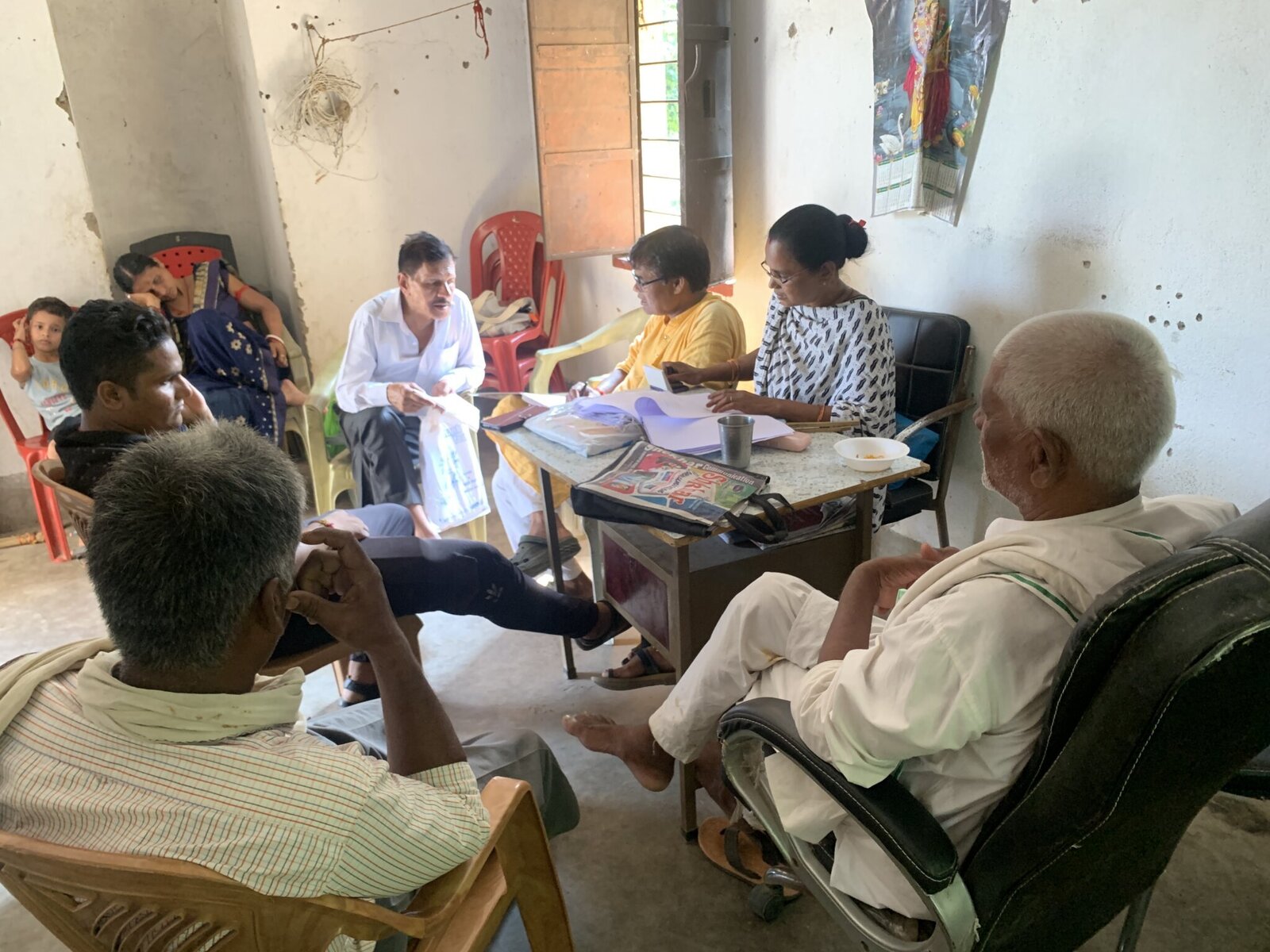
Dulhin Bazar, Bihar: In a sparsely furnished room with peeling wall paint in Ainkhan Bhimnichak village, 69-year-old Ram Parvesh Bhagat is holding court. Dressed in a white kurta-pyjama, he leans back in his wheeled office chair as he listens to the plaintiffs — a poor couple and their daughter-in-law.
The proceedings begin with Rashmi Devi advocating for her family and describing the harassment she and her in-laws are facing from a relative over a small piece of land.
“They throw stones at us from their rooftop when we walk past their homes, threaten us, say a ghost has possessed my mother-in-law,” says Rashmi, speaking softly but clearly. “We are poor, live in a broken hut and work as farm labour or sometimes as daily wage workers. We live in fear, and so far, all our attempts to raise a complaint against him have failed.”
Her account is interrupted by questions from Bhagat, who wants to know the exact sequence of events, when they approached the police and for how long this issue has been going on.
In response, the family members, who belong to the other backward caste (OBC) category, say they have been beaten, and threatened for over a year, and going to the police has not helped resolve the issue.
Rashmi’s mother-in-law, Damayanti Devi, now speaks up. “We fear for our lives. Please ask him to leave us alone,” she says, adding that they don’t have money to pay the court fees but believe that justice will be delivered.
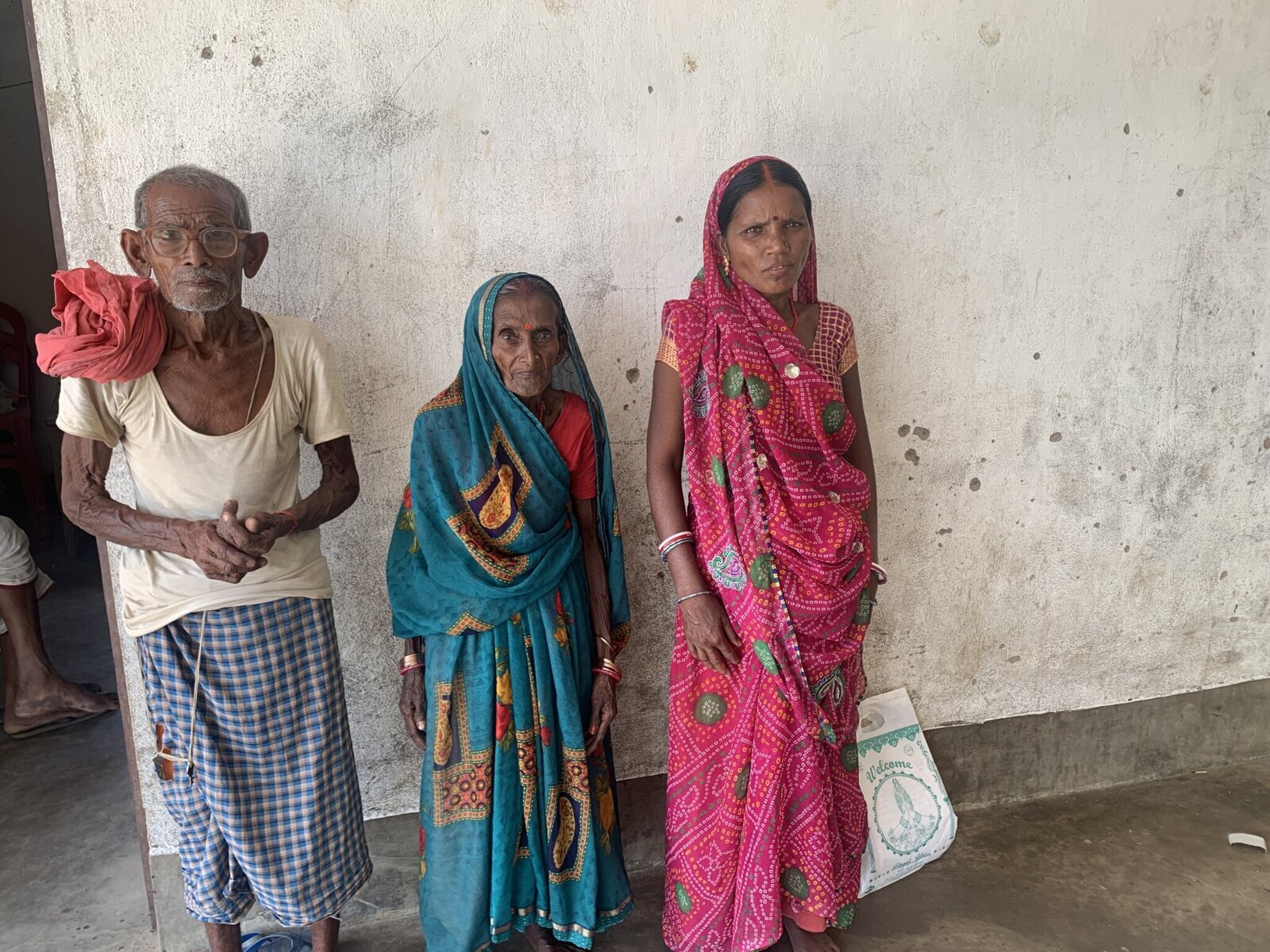
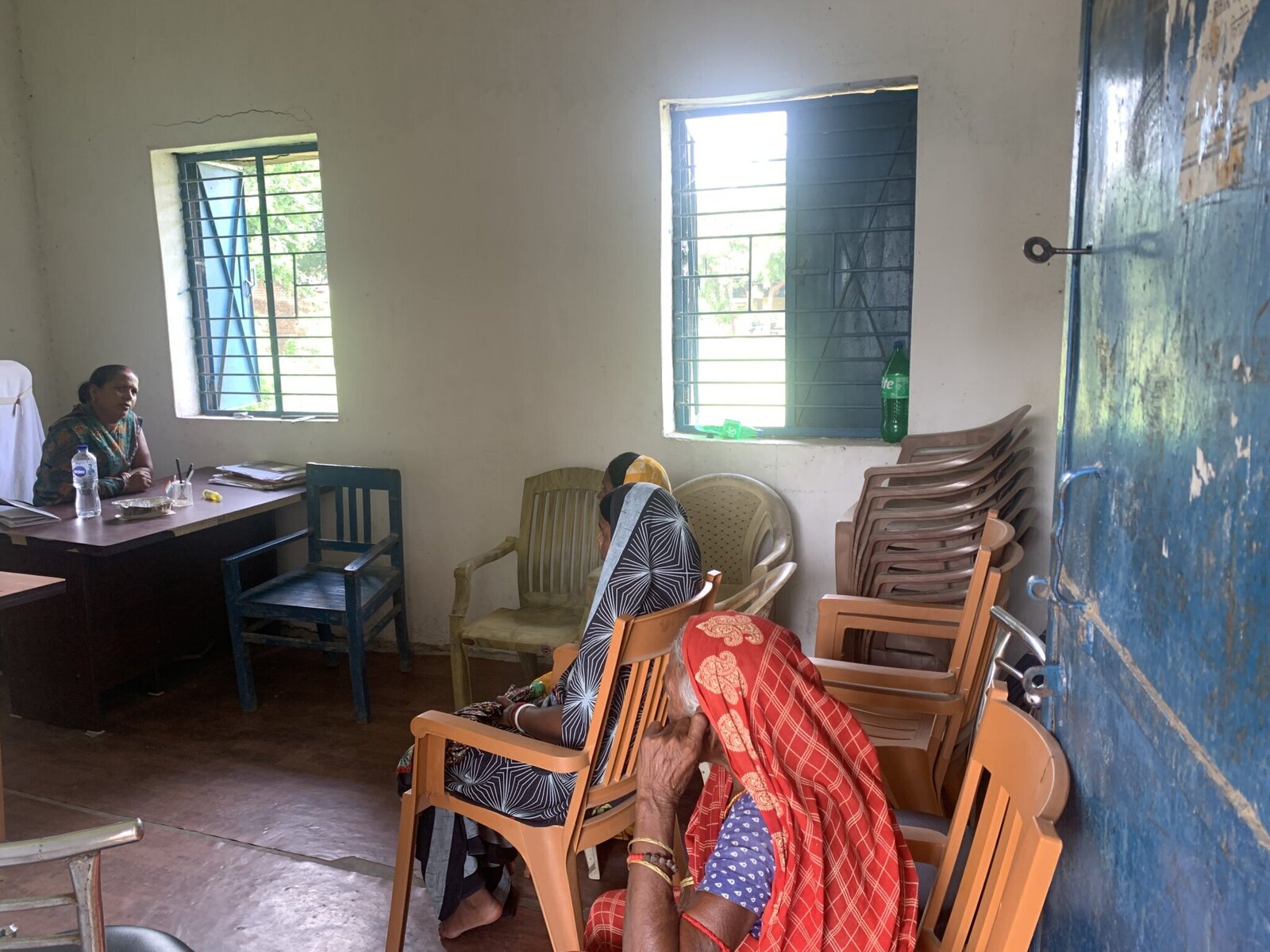
Rashmi Devi (in pink sari) and her family pose for a picture at the Ainkhan Bhimnichak Gram Kachahari, where they have filed a case seeking resolution in a family dispute matter.
Bhagat nods reassuringly and looks around the room at his fellow jurors, all residents of the village. The court decides to summon the person against whom the family has complained, and a date is set for the next hearing two weeks later. The three are reassured that the problem will be resolved within a month.
Minutes later, the next hearing begins at the Ainkhan Bhimnichak Gram Kachahari, a court set up at the Gram Panchayat under Section 90 of the Bihar Panchayati Raj Act of 2006
This is one of the 8,057 local courts that deliver timely justice at an affordable cost across Bihar in cases ranging from petty theft and small land disputes to cattle trespass and family feuds.
“We pride ourselves on our justice delivery. We rarely refer cases to higher courts and in many cases also prevent people from going to the police. Our goal is amicable solutions and so far, I would say it has been a success because people trust us.”
Unlike informal village councils or Khap Panchayats, whose judgements are often arbitrary and are not bound by Indian law, the Gram Kachaharis in Bihar are part of the Indian judicial system which work within the specified sections of criminal and civil law, besides being accountable to the communities that elect the jurors.
“We have resolved at least 100 cases in the last few years,” says Bhagat, describing himself as a “buffalo grazer” outside the courtroom and likening himself to a family patriarch who resolves problems.
“We pride ourselves on our justice delivery. We rarely refer cases to higher courts and in many cases also prevent people from going to the police. Our goal is amicable solutions and so far, I would say it has been a success because people trust us.”
Justice Delayed and Denied
In 2016, during the hearing of the Anita Kushwaha versus Pushap Sudan case, the Constitution Bench of the Indian Supreme Court reiterated that access to justice was a fundamental right guaranteed to citizens by Articles 14 and 21 of the Indian Constitution.
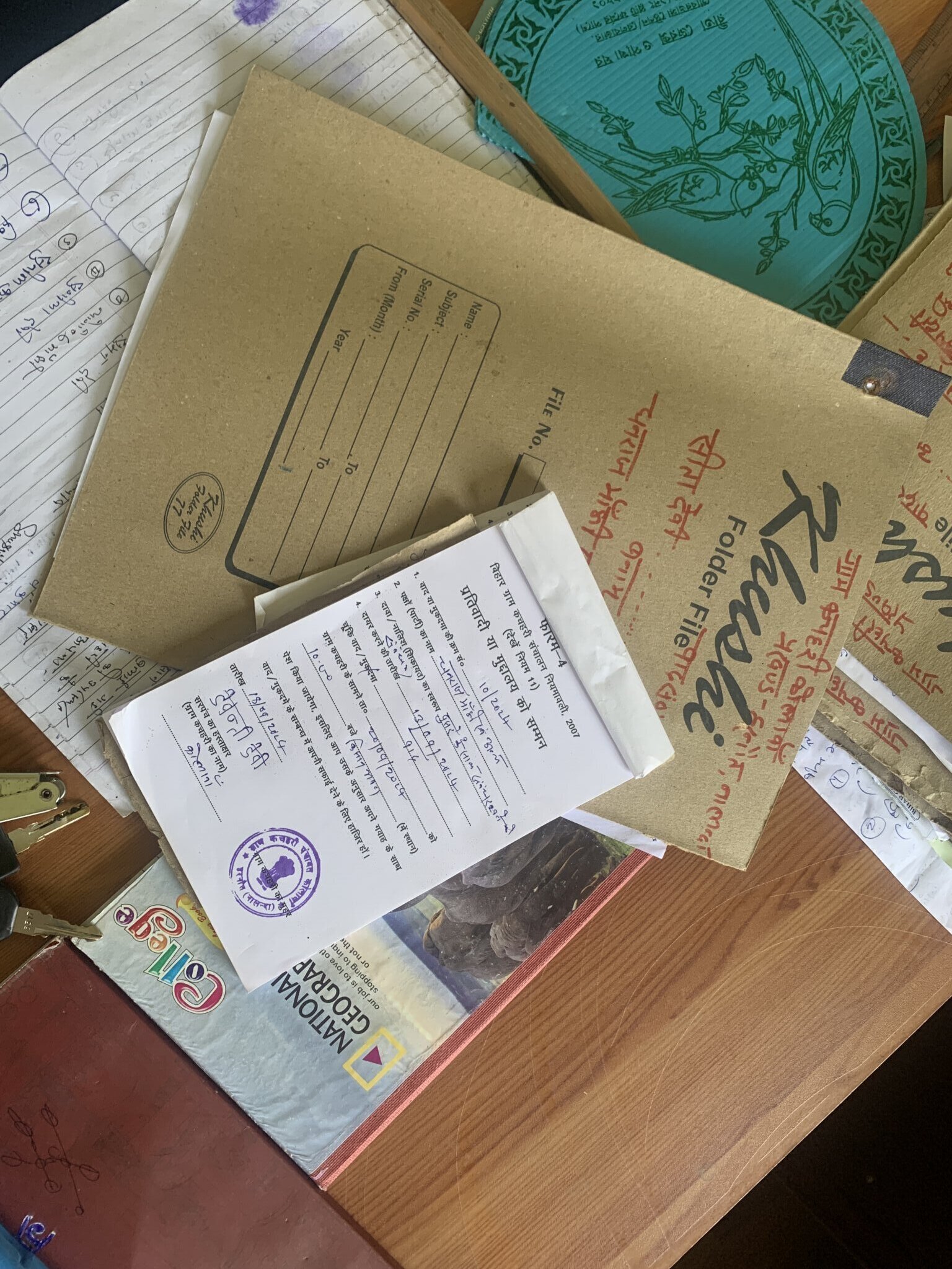
Records of a case at the Kolawan Gram Kachahari in Bihar.
In its judgement, the Supreme Court observed: “Access to justice as a constitutional value will be a mere illusion if justice is not speedy. Justice delayed, it is famously said, is justice denied. If the process of administration of justice is so time-consuming, laborious, indolent and frustrating for those who seek justice that it dissuades or deters them from even considering resorting to that process as an option, it would be tantamount to a denial of not only access to justice but justice itself.”
Further, the Supreme Court bench noted that access to justice remained a big question mark on account of delays in the completion of the adjudication process because of the inadequate judge-to-population and judge- to-case ratio in comparison to other countries.
According to the latest government data, there are over 45 million cases pending across the 3,578 district and taluka court complexes across India, and 6.2 million in the 39 high courts in the country.
“Not everybody, particularly the poor, wants to go to court. There is a common perception that it is costly, and a case could take years to resolve,” says Preeti Tongria, additional secretary at the Bihar Panchayati Raj department.
“In rural areas, a seemingly small problem can become a big feud,” she adds. “In these cases, many don’t know how to access legal support, where to go, what documents are needed and how to proceed. Gram Kachaharis make the process easier and faster.”
How will Villagers deliver Justice?
In 1993, the 73rd Amendment to the Indian Constitution stated that states should take steps to organise village panchayats and “endow them with such powers and authority as may be necessary to enable them to function as units of self-government”.
In Bihar, work began on this almost immediately and one of the documents leaned on was the 1947 Bihar Panchayati Raj Act, which also mentioned the setting up of courts at the grassroots.
Gram Kachaharis were thus functioning in the state after the Act was implemented in 1948 and had a slew of powers, including imprisoning a person for one month if found guilty. The functioning of this legal set-up, however, slowly faded away, only to be relooked at after 1993.
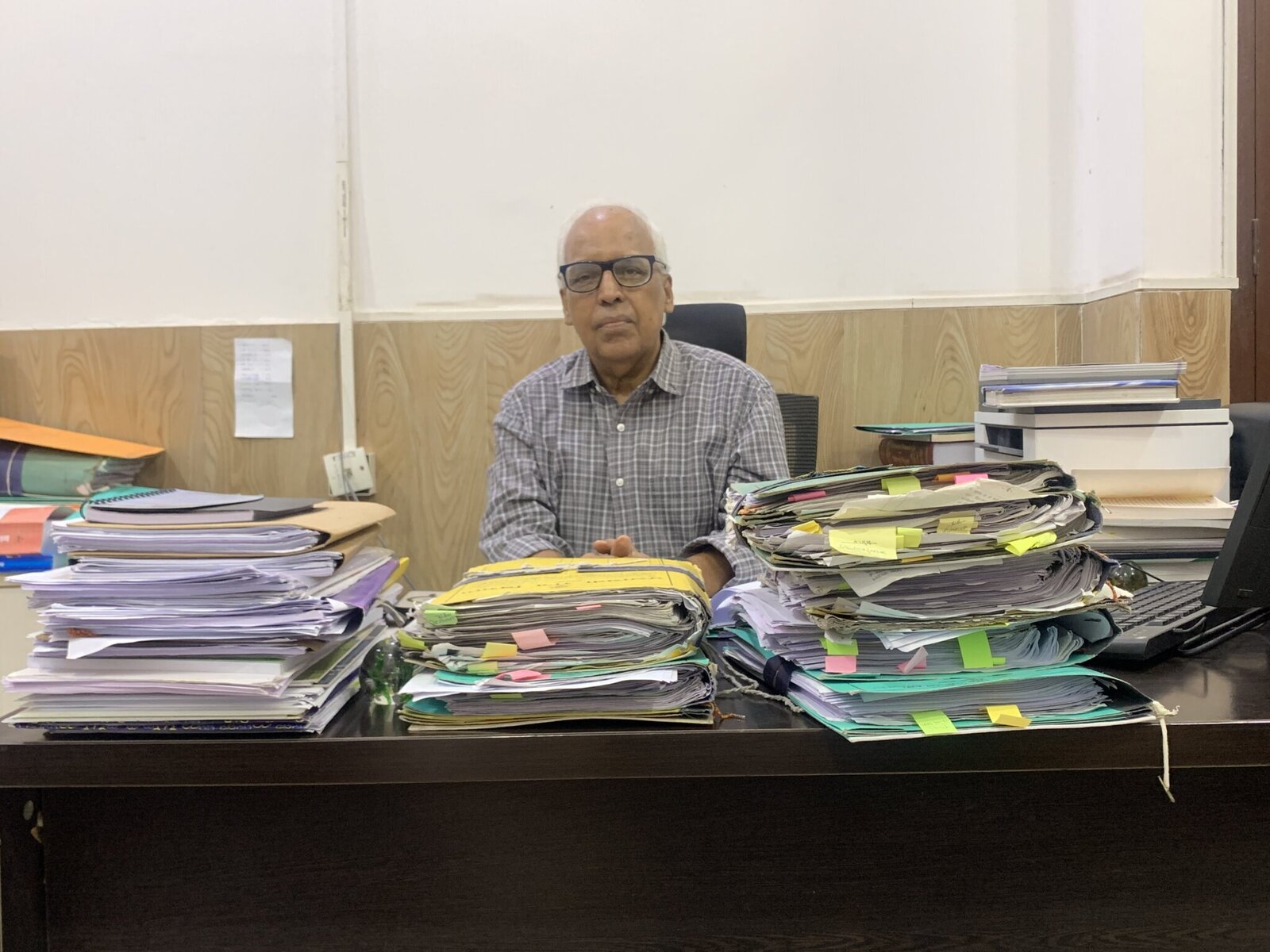
Retired bureaucrat Raghuvansh Sinha poses for a picture at the Panchayati Raj Department of Bihar government.
Raghuvansh Sinha was part of the team that was given the job of amending and updating the old Bihar Panchayati Samiti and Zilla Parishad Act following the 73rd Amendment.
“We had less than a year to draft a new Act,” recalls the 76-year-old retired bureaucrat who is now an advisor to the state’s Panchayati Raj department.
“The Indian Constitution does not mention the setting up of Gram Kachaharis, but we decided to borrow the framework from Bihar’s old Acts. We burnt the midnight oil, meeting the advocate general every day to discuss the nuances of the bill we were drafting and decide what the role of the Kachaharis would be. Finally, we gave wider powers to these local courts in our draft, including the right to award three months’ imprisonment to an accused if found guilty.”
The newly formed Act and the wider ambit given to the Kachaharis were immediately challenged in the Patna High Court and hearings in the case went on for two years. Finally, in 1996, the high court order stated that many parts of the Act were unconstitutional, raising questions on the legal knowledge of the “simple village people” elected to listen to cases and give verdicts based on the law.
“In a special comment on the Kachaharis, the court said the concept was good but asked how it would work,” says Sinha. “The bottom line was ‘How will uneducated villagers understand the nuances of the law and deliver justice?’”
The Bihar government, convinced that local courts were essential for speedy and cheap justice delivery, appealed to the Supreme Court while simultaneously building consensus on what shape the Kachaharis should take.
In 2001, Bihar held its first panchayat elections after the 73rd Amendment came into force. However, the state could not hold simultaneous Gram Kachahari elections, as the legal limbo on the institution’s validity continued. The Supreme Court too, which had set up a nine-judge constitutional bench to look into the Bihar government’s petitions, did not hold a single hearing in the case.
In 2005, a newly elected state government decided to convene an all-party meeting to address the concerns of the high court and resolve the impasse before the 2006 panchayat polls.
“There was a resolve within the government to enable these local courts, and there were numerous discussions on the modalities of making this happen,” Sinha says.
“The key concern was the lack of legal knowledge of community members who would be elected as jurors and hear cases in the Gram Kachaharis. There were suggestions of providing them with some outside assistance, and with the 2006 panchayat elections knocking on its door, the state government decided to provide two qualified staffers to aid the jurors in hearing cases and dispensing justice.”
The decision to appoint a law graduate as a Nyaya Mitra or Friend of the Court and a Gram Sachiv (secretary) to aid in documentation paved the way for the 2006 Gram Kachahari elections across Bihar, resulting in the establishment of 8,053 courts — one each for an estimated population of approximately 7,000 and coterminous with Gram Panchayats.
The state government subsequently withdrew its cases in the Supreme Court, stating that it had reworked the Act to incorporate suggestions from the high court.
Sarpanch Devanti Devi presides over a hearing at the Kolawan Gram Kachahari in Nalanda district of Bihar.
Under the Bihar Panchayati Raj Act, 2006, the Kachaharis are empowered to try cases under 40 sections of the Bharatiya Nyaya Sanhita, hear civil cases up to a value of Rs 10,000 and impose fines of up to Rs 1,000. Section 102 of the Act, however, states that the main objective of the Kachaharis will be to try for an amicable settlement between the litigants.
The courts look at cases ranging from land disputes, trespassing, partition of land and non-payment of loans or dues to feuds between neighbours and right to pathways to access one’s property. While domestic violence is not specifically under the purview of the Kachaharis, several disputes do come to them, and there are ongoing discussions to make this official.
“It is just a different world from my everyday life. I learn here, I hear different views, I feel accomplished and, most importantly, I help resolve problems.”
In 2008, the Indian government introduced the Gram Nyayalayas Act, advocating judicial officers for a group of panchayats, and recommending that states consider appointing them to enable legal recourse for residents of villages.
This Act came on the heels of a study by the Law Commission and its recommendations to “provide access to justice to citizens at their doorstep and to ensure that opportunities for securing justice are not denied to any citizen because of social, economic or other disabilities”.
However, the implementation of the Act has been slow, with only 318 Nyayalays operational across the country according to Department of Justice data, making Bihar’s Gram Kachaharis, which were already ahead of the curve, one of the most effective grassroots justice delivery mechanisms in India.
The Litigants
On a warm September morning in 2024, Shekhar Suman waits in the Ainkhan Bhimnichak Kachahari for a copy of a judgment against his brothers. The 27-year-old graduate is the youngest of eight siblings and is preparing for exams that will get him a government job.
Suman and his father, burdened with the expenses of his sister’s wedding, approached the court when his older brothers refused to contribute.
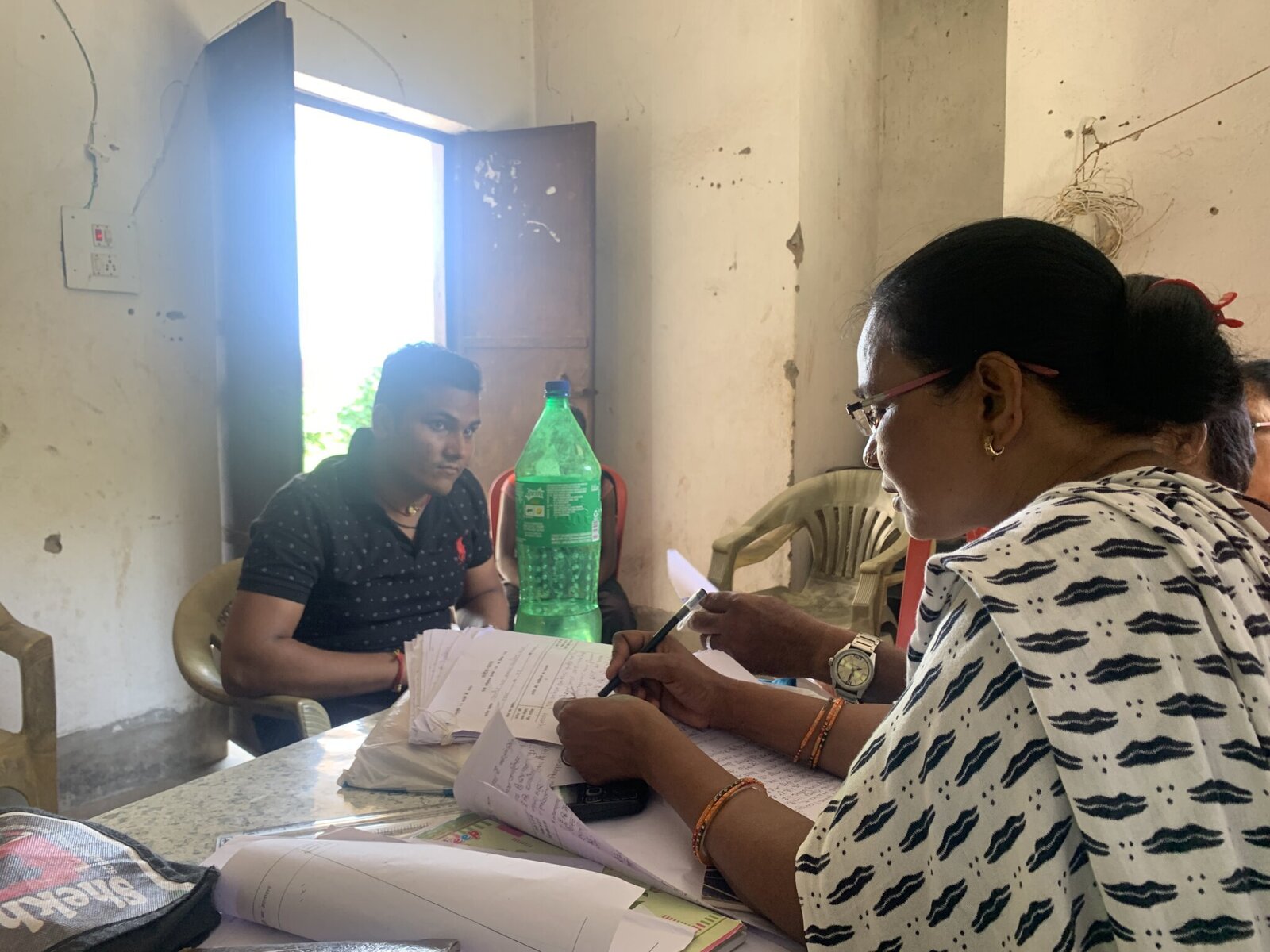
Shekhar Suman waits for a copy of the verdict in his family dispute case at the Ainkhan Bhimnichak Gram Kachchari in Bihar.
“My brothers have good jobs and earn well,” Suman says. “But all our attempts to ask them to share the financial burden of this wedding have failed. My father is a retired grain merchant. My sister who is getting married is also funding part of the wedding, but the others are refusing. We came to the Kachahari for some resolution to this impasse.”
Jyoti Kumari, the Gram Sachiv appointed to assist the jurors, is doing the paperwork for the court’s proceedings in Suman’s case.
“The Kachahari called all the brothers to present their side. One of them deposed on the phone and the other came to the court. While the youngest one agreed to pitch in, the other said No and the third brother did not respond to summons,” she says.
“We cannot force the brothers to pay,” explains Sarpanch Bhagat. “But we still helped the family by deciding that the brothers would not get a share in their father’s property. This also gives the father and youngest brother the freedom to decide if they want to borrow money against the property they own and at what scale they want to celebrate the wedding.”
Lawyers being banned from the Kachaharis, all arguments and counter-arguments in the small room are being put forth by the litigants and accused themselves.
“This provision was made to keep the cost of pursuing justice low,” says Sinha, recalling the debates during the drafting of the law. “Lawyers are not only expensive but also tend to keep a case going for a longer duration, delaying justice delivery. In this system, the petitioner is given a chance to present their case, which also makes it a more level playing field in the rural context, where social structures impact everyday life.”
This opportunity is what prompted Sita Devi to approach the Kolawan Gram Kachahari in Nalanda district. A first-time petitioner, she is seeking spousal support from her husband who has migrated for work to Delhi but does not send her any money to take care of their five children and her in-laws.
Coming to the court was her last resort. “I work hard on other people’s farms and sometimes in MNREGA projects,” she says. “My husband works as a labour contractor in Delhi but has not been sending any money home. I am struggling to take care of the family. I want some support; how can he just disappear and leave us to fend for ourselves?”
Sita has also submitted a complaint to the local police station but has not received any positive response. “A Panch (juror) in our village suggested that I come to the Kachahari,” she says. “She has seen me struggle and knows how hard I work to make ends meet. She said I would get justice here.”
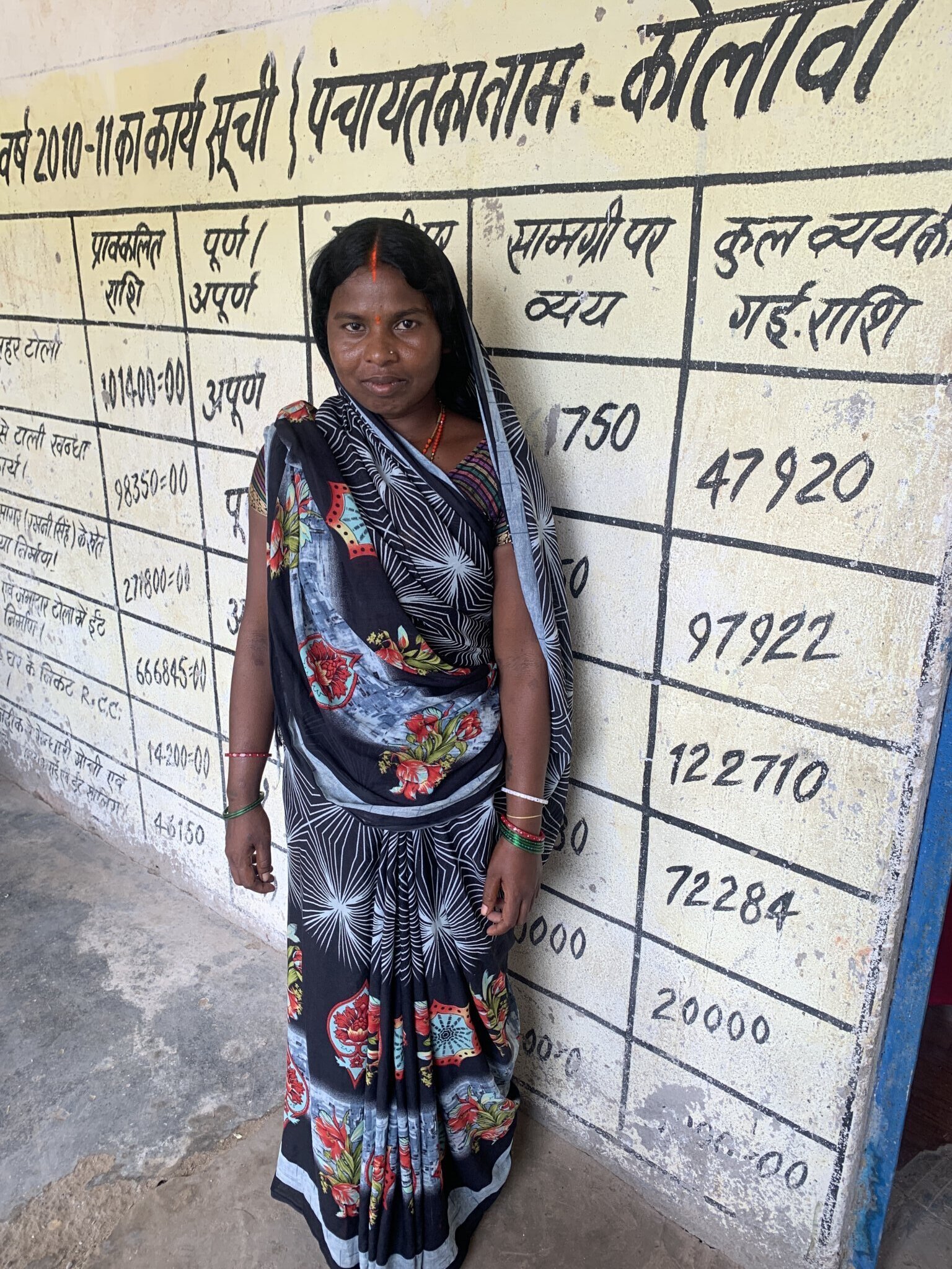
Sita Devi poses for a picture outside the Kolawan Gram Kachahari, where she has filed a petition against her husband.
According to Bhagat of the Ainkhan Bhimnichak Kachahari, women file more complaints, finding a unique recourse to justice in the system. “They file cases about illegal sale of liquor or domestic disputes,” he says, adding that sometimes petitions describe in detail how there are no vegetables to cook at home while money is being squandered on alcohol.
“We issue summons and get the accused to sign bonds,” he adds. “At the end of the day, women get big benefits from these courts.”
The Jury System
Sumana Devi’s day starts early and ends late. She spends all her time doing household chores, taking care of cattle and working on the farm. She describes her life and work as “boring, monotonous and exhausting”.
In the last two years, the one thing that she really looks forward to is dressing up and heading for the weekly Gram Kachahari sitting in Kolawan village.
“It is just a different world from my everyday life,” says Sumana, who was elected as a juror to the Kolawan Gram Kachcheri in 2021. “I learn here, I hear different views, I feel accomplished and, most importantly, I help resolve problems.”
Like her, Sangeeta Devi also looks forward to the court sittings. “This is the first time I have ever come out of my house,” she says, adding that it opened her mind and made her aware of many things.
“When we get together in the Kachahari, everyone is an equal,” she says. “No one is treated differently based on their caste, income or status in the village. I take this as my duty and perform it seriously. My family also takes what I do seriously now; they understand the importance of it.”
Both Sangeeta and Sumana were elected as jurors to the Kolawan Gram Kachahari for a term of five years. Both contested the polls reluctantly, under pressure from their families and village elders.
Gram Panchayat polls in Bihar are held every five years, and residents vote to elect both Gram Panchayat and Gram Kachahari members. While the Panchayat is headed by a Mukhiya, the Kachahari is headed by a Sarpanch and has one elected juror from every ward within that Panchayat. In effect, there is one juror elected for a population of roughly 500 people.
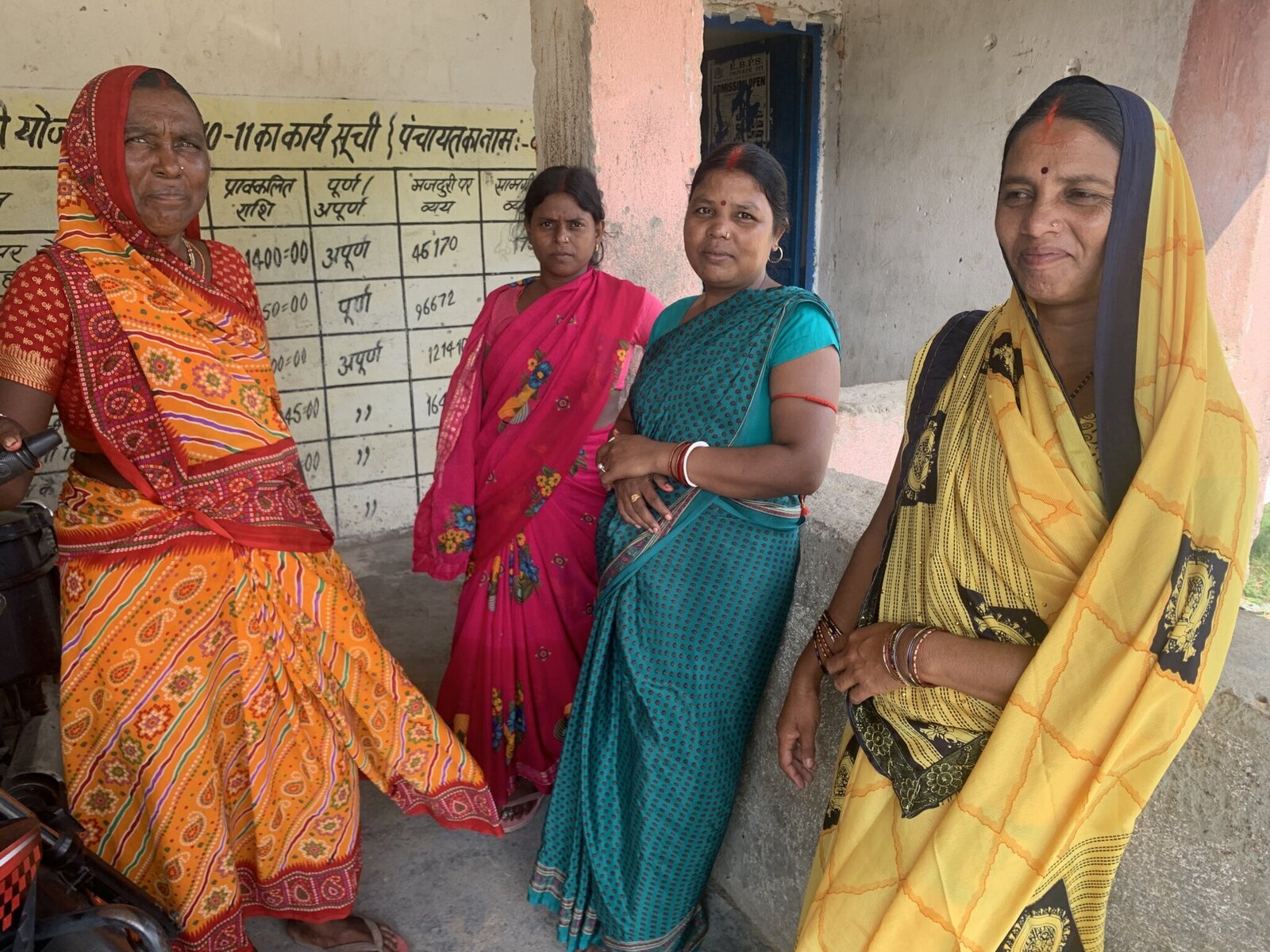
Jurors elected to the Kolawan Gram Kachahari in Nalanda district of Bihar take a break during their weekly sitting.
Unlike the Indian legal system, the Kachaharis depend on the jury system to enable fair, unbiased delivery of justice, reserving seats for jurors from socially and economically weaker communities and women. They are paid Rs 500 per month for their services.
“Till the elections, everything is smooth. But once they are elected, the most common question elected members ask is what their powers are,” says S P Singh, Chair Professor of Panchayati Raj at the Chanakya National Law University in Bihar.
“The training that follows their election becomes crucial to ensuring that the Kachaharis uphold the law and dispense justice,” he adds. “How every member of these courts understands and interprets the law is important.”
The training programme draws on the experience of retired district judges and judicial and administrative officers who are brought together to hold these sessions, explaining the importance of the institution and the role each elected member plays in it.
“A special curriculum was created for this, which includes moot courts — where cases are simulated to practically demonstrate what being part of this system entails — and practice,” Singh says, adding that all Gram Kachaharis were updated when the Bharatiya Nyaya Sanhita recently replaced the colonial-era Indian Penal Code.
All cases that come to a Gram Kachahari are heard by a bench of at least five jurors, including the Sarpanch. Both the complainant and the accused are allowed to have one jury member of their choice on the bench.
“This ensures that there is fairness in the proceedings and no opportunity for either side to question the Kachahari members’ motives,” adds Singh. “It is one of the reasons people trust these local courts.”
Message from a Premchand Story
In 1922, renowned Hindi author Munshi Premchand wrote Panch Parmeshwar, a story of two childhood friends, Jumman Sheikh and Algu Chaudhary.
When Algu Chaudhary is elected as the Sarpanch of the village and passes a verdict against his best friend Jumman, their friendship falls apart. But in due course, when Jumman becomes the Sarpanch, he realises that Algu was right and that the person sitting on the judgement seat cannot be subjective and biased.
The takeaway from Premchand’s story is that an ideal Sarpanch is always objective and unbiased, a fact that has become an unwritten guideline for every Sarpanch and jury member across the state.
“Everyone here knows the story,” says Gorakhlal Yadav, head of the Bihar Rajya Gram Kachahari Sachiv Sangh, an organisation that represents the 8,000 secretaries appointed to assist members of the Gram Kachaharis. “It illustrates the ideal way to dispense justice and the constant endeavour is to follow it.”
Yadav adds that the women members are very particular and follow the guidelines in letter and spirit. “In so many cases, the women manage their homes because the men migrate for work, and they bring their ability to do many things to the Kachaharis,” he points out. “They are an asset that the system has created.”
At the Kolawan Gram Kachahari, Sarpanch Devanti Devi agrees as she patiently waits with fellow jurors, all women, for the proceedings in Sita Devi’s domestic dispute case to begin. The 40-year-old, who has studied only till Grade 8, has given nearly 30 judgements in her two-and-a-half-year tenure, ensuring that most cases are resolved within a month.
“When we get a case, we first check if it is within our jurisdiction and then start our probe,” she says. “We do site visits, talk to people and in most cases, already know what is going on because members of the Kachahari also live in these villages.”
Devanti says that the accused are summoned thrice. “If they don’t show up on any of the dates, we rule in favour of the petitioner,” she adds. “Sometimes things get heated up and people fight but we have always found a way around it.”
Challenges and Learnings
But upholding the principles of Premchand’s story is not always easy, say jurors, acknowledging that caste and class prejudices sometimes do creep into the proceedings.
“In cases where the complaint is against a well-off person, the accused tend to ignore the summons of the Gram Kachahari and go directly to the district courts,” says Yadav. “They do this knowing that a poorer complainant will find it difficult to fight the case against them in these courts which involve longer commutes, are more expensive and where cases can drag on for years.”
In addition, poor monitoring of the Kachaharis, delays in payment to members and support staff, lack of awareness among communities and poor infrastructure have been identified by both researchers and Gram Kachahari members as roadblocks that prevent the courts from reaching their full potential.
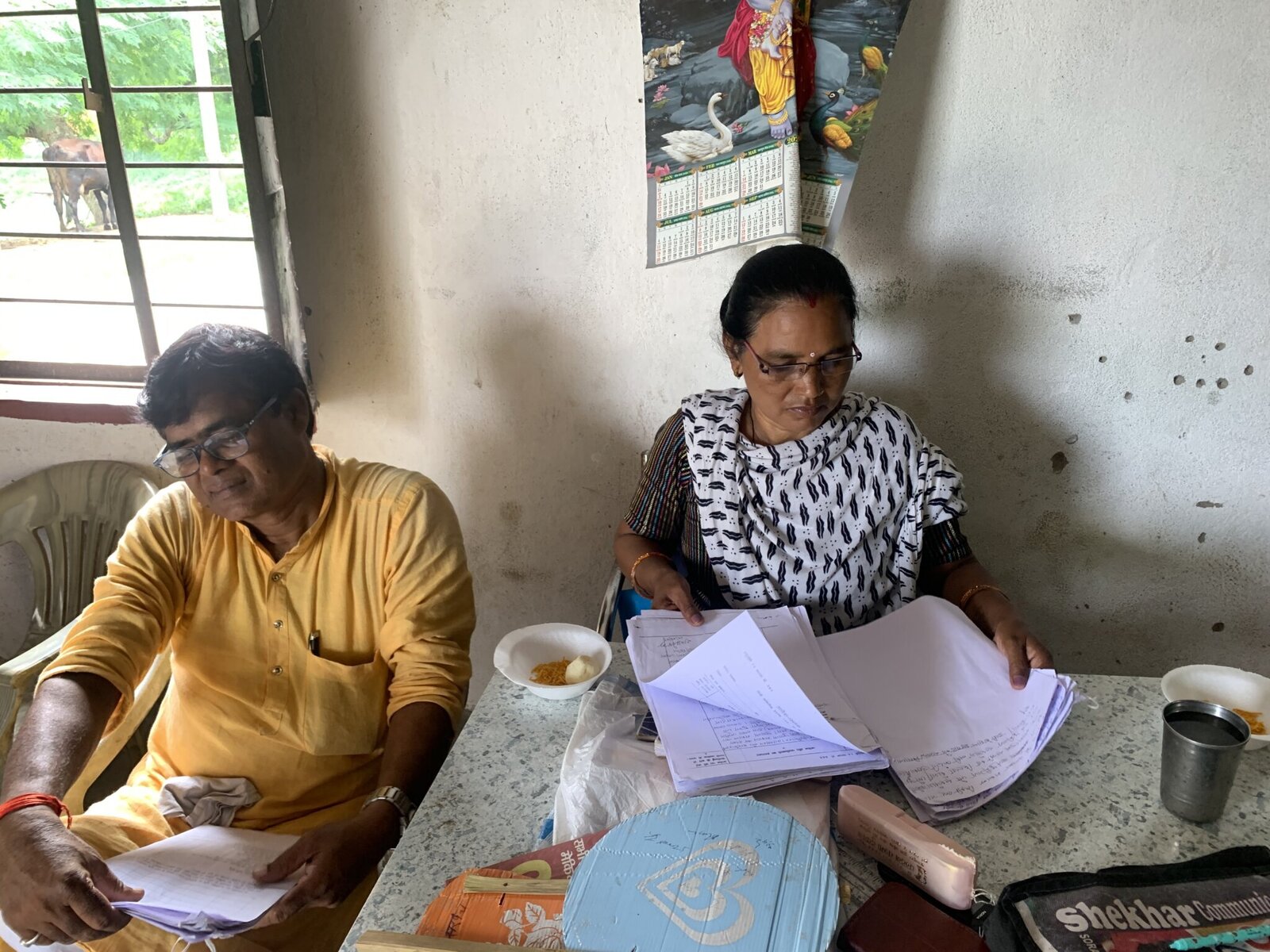
Nyay Mitra Akhilesh Prasad and Sachiv Jyoti Kumari at the Ainkhan Bhimnichak Gram Kachahari in Bihar.
Yadav is at the forefront of demanding an increase in monthly wages from the present Rs 6,000 to Rs 30,000 and benefits for all those appointed as Sachivs.
Jyoti Kumari could not agree more. The schoolteacher was persuaded by her family to apply for the job and since 2007, she has been part of this rural justice system.
“In the early years, we did not even have a place to sit and conduct the proceedings, and even the jurors were not always comfortable working together. Things are better now. Over the years, this system has got more streamlined, and with every passing year, the people’s faith in it has also increased,” she says, adding that while she has learnt a lot on the job, the challenges of income, commute and increasing paperwork remain.
The other challenge that remains for the system is the delay in filling up vacancies in the posts of both Sachivs and Nyaya Mitras — key people meant to help litigants and advise the jurors on all things legal.
Abhay Kishore, a Nyaya Mitra at the Kolawan Gram Kachahari, says the vacancies impact the weekly functioning of the courts, as one person is given additional charge of nearby areas as well.
“There are more than 3,000 vacancies for both posts, and in many cases, one person is managing more than one Kachahari,” Kishore says. “This directly impacts how many times a Kachahari sitting can be held because, without the Sachiv or Nyaya Mitra, proceedings cannot happen.”
In addition, many jurors and officials say that the Kachaharis have still not been fully integrated with the judicial system, resulting in many cases that should be handled by them still being filed in district and high courts or being handled by the police directly.
“It is only recently, after directions from the high court, that hundreds of cases that fall in the ambit of Gram Kachaharis were transferred to them from other courts,” says Yadav. “It came as a validation for the role Kachaharis play in the legal system.”
Delivered: Accessible and Quick Justice
Despite the challenges, government data shows that between 2021 and 2023, the 8,057 Gram Kachaharis across Bihar disposed of 87% of the over 1,43,278 cases filed.
A 2022 report titled ‘Study of the Institution of Gram Kachahari in Bihar’ by a non-profit organisation, Sigma Foundation and the Azim Premji University across the 15 Gram Kachaharis they studied found that around 88.6% of cases were settled amicably and 9% of all cases were decided through a trial.
In addition, the report found that 80% of the cases were disposed of within six weeks of the case being filed, as stipulated in the Act. The annual pendency of cases was 5.9% in civil suits and 8.8% in criminal ones. This brings out the huge contrast in pendency in the lower and high courts of India.
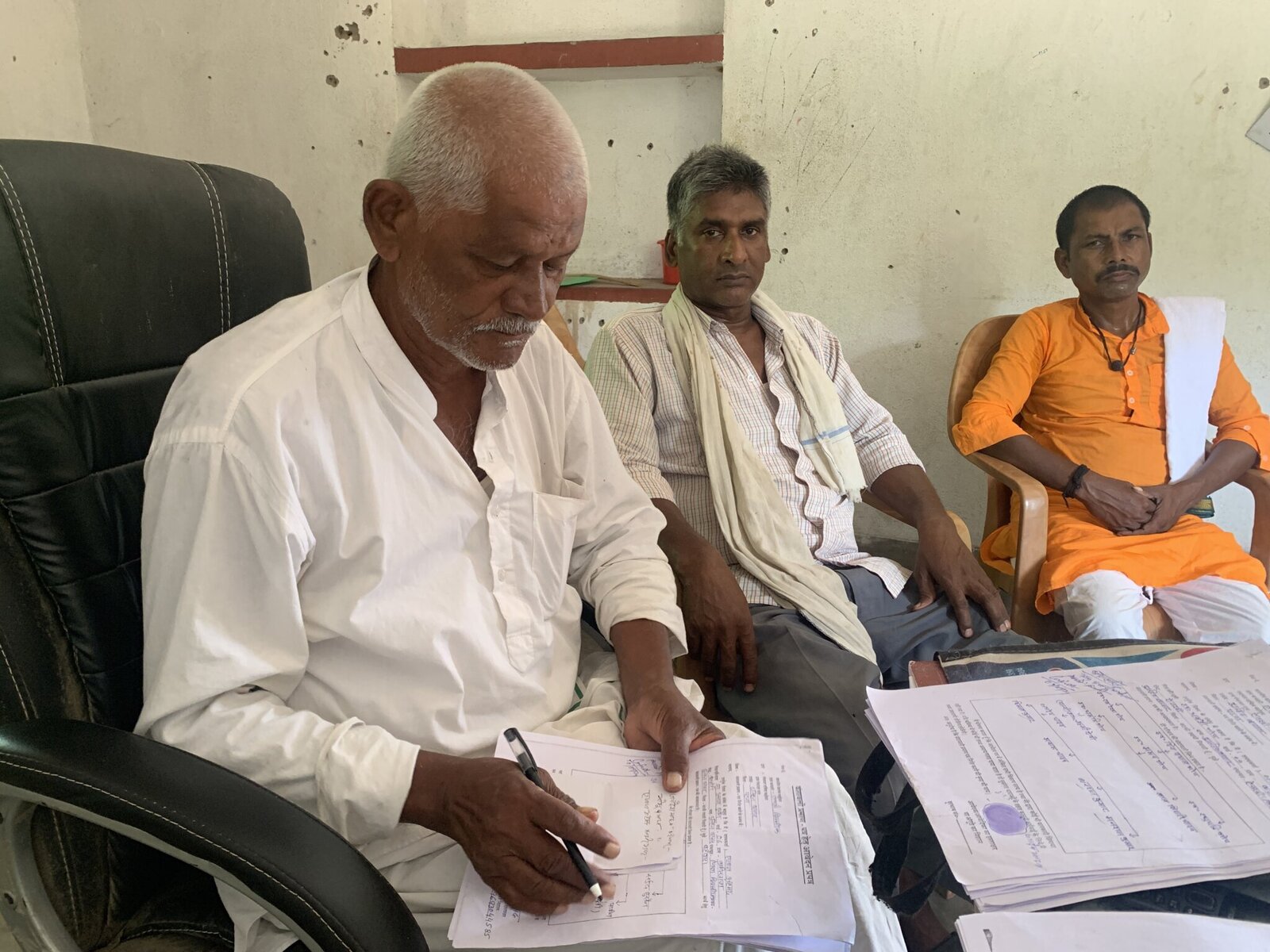
Sarpanch Ram Parvesh Bhagat at work during a sitting of the Ainkhan Bhimnichak Gram Kachahari in Bihar.
The Bihar government is now also considering expanding the scope of the Kachaharis to include cases like domestic violence as per the Centre’s Gram Nyayalayas Act.
In Ainkhan Bhimnichak, Rashmi Devi and her family got justice, as promised, a month after they approached the Kachahari. The accused was asked to pay a fine to Rashmi Devi’s family and sign a legally binding bond promising not to further harass them, and he complied.
“When we get a case, we first check if it is within our jurisdiction and then start our probe. We do site visits, talk to people and in most cases, already know what is going on because members of the Kachahari also live in these villages.”
“It is a stressful job and there is a lot of pressure on all of us to ensure that we maintain neutrality during the hearings,” Bhagat says, adding that even arriving at a reasonable amount of fine is often challenging.
Recalling a case that dragged on for six months, he adds, “It was a fight akin to the Mahabharat for just two inches of land. We had to measure, re-measure and do all kinds of maths to resolve that one. But at the end of the day, when people agree and abide by our decisions, it is very satisfying.”
About the Author
Anuradha Nagaraj is faculty at the Azim Premji University and founder of The Migration Story
Image credits: Anuradha Nagaraj
About the series
This series will spotlight local democratic practices from across the country that demonstrate innovation, effectiveness and good governance.
This work is facilitated by the Centre for Local Democracy, Azim Premji University.
The Centre for Local Democracy supports the work of Azim Premji Foundation and others working on deepening and widening local democracy across India. The Centre enhances the work done in rural, forest, PESA and urban settings through educational programmes, documentation, dissemination of good practices and research in emerging thematic areas.