
Why Organ Donation is so Difficult in India?
India has lakhs of patients waiting for organs — kidneys, livers, hearts and lungs. Yet the number of donors remains extremely small.
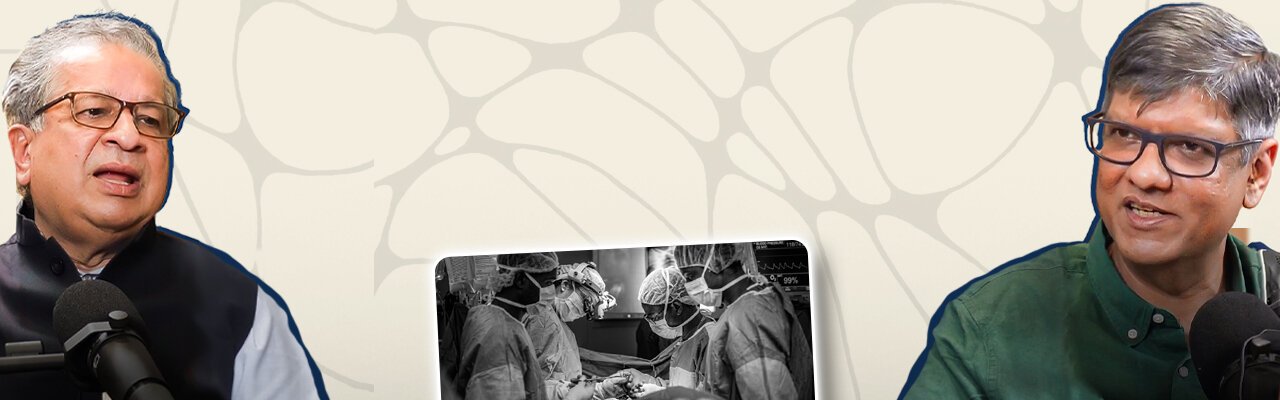
In this episode of The Health Worker, Ram G. Vallath speaks with Dr. Sunil Shroff, founder of the Mohan Foundation and one of the pioneers of organ donation in India.
Details
Dr Shroff explains the stark reality behind organ donation in the country. India records around 147,000 road deaths every year, and nearly 60% of these involve head injuries, creating roughly 90,000 potential brain-death donors annually. Yet fewer than 900 organ donations actually take place, meaning less than 1% of potential donors become donors.
But the problem is not only medical. It is deeply human.
Doctors often have to approach families in the most difficult moment of their lives, when a loved one lies in the ICU, brain dead, supported by machines while the heart still beats. For many intensive care doctors, asking grieving families for organ donation has historically felt almost impossible.
Subscribe on YouTube
Dr. Shroff describes how early organ donation programs in India had to find ways to navigate this moral and emotional challenge.
One of the most important strategies came from an unexpected place — the eye donation movement. At the time, eye donation campaigns had already created public awareness across India. Instead of asking families directly for multiple organs, doctors first asked if the family would consider donating the eyes of the deceased. If the family agreed, the conversation could gradually open up to the possibility of donating other organs.
This “foot-in-the-door” approach helped make organ donation conversations less overwhelming and allowed hospitals to slowly build trust with families.
The episode also traces Dr Shroff’s own journey. After training in the United Kingdom, he returned to India in 1995 just as the country passed a landmark law recognising brain death for organ transplantation. From there began the long process of building awareness, hospital systems and networks that made deceased organ donation possible in India.
The conversation explores why donation rates remain low, why some states perform far better than others, and how policy frameworks like opt-in and opt-out donation systems shape organ donation globally.
Credits
Akshay Ramuhalli, Bruce Lee Mani, Gorveck Thokchom, Kishor Mandal, Kruthika Rao, Narayan Krishnaswamy, Prashant Vasudevan, Ram Sheshadri, Sananda Dasgupta, Sanoob Puliyanchali, Seema Seth, and Velu Shankar.
Special thanks to Dr. Sunil Shroff for being part of the episode.