
Palliative Care, Chronic Illness & India’s Ageing Future | Dr. Rajagopal
Pain relief in India is often treated as an afterthought — delayed, minimised, or ignored altogether. In a healthcare system focused overwhelmingly on cure, suffering is frequently normalised, even when it doesn’t have to be.
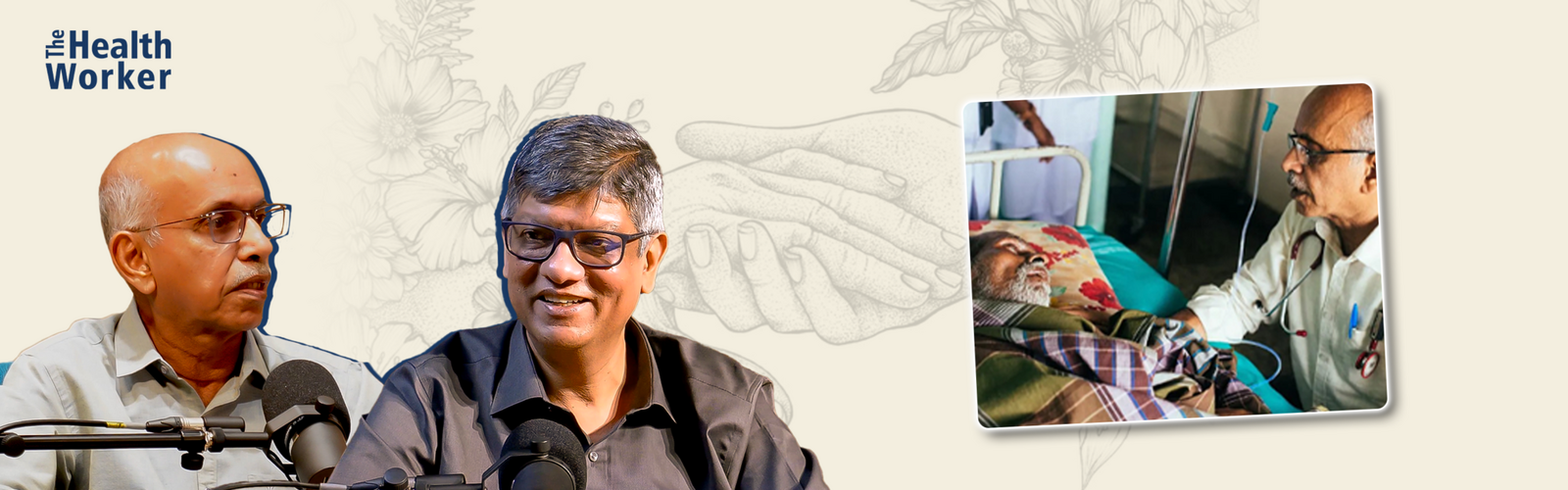
In this episode of The Health Worker, we speak with Dr. Rajagopal, one of India’s most respected voices on palliative care, pain management, and end-of-life ethics, to ask why pain continues to be sidelined in medical practice — and what this means for a country facing rising chronic illness and a rapidly ageing population.
Details
Dr. Rajagopal explains palliative care moving beyond the common misconception that it is only about death or terminal illness. He speaks about pain relief, emotional support, family care, and dignity as essential components of healthcare.
The conversation also confronts uncomfortable realities. India today has close to 800 medical colleges, yet only a small fraction offer meaningful training in palliative care. Pain is still poorly assessed, doctors are often unequipped or insensitive to suffering, and quality of life is rarely treated as a core health outcome.
As India ages, and as chronic illnesses become the country’s next major health challenge, these gaps will only deepen.
Subscribe on YouTube
Against this backdrop, the episode looks closely at Kerala’s community-led palliative care model — where care is rooted in neighbourhoods, supported by primary health systems, and shaped by public responsibility. Kerala’s experience offers not a perfect solution, but a powerful reminder that humane, accessible care is possible when pain and dignity are taken seriously.
Credits
Akshay Ramuhalli, Bruce Lee Mani, Gorveck Thokchom, Kishor Mandal, Kruthika Rao, Narayan Krishnaswamy, Prashant Vasudevan, Ram Sheshadri, Sananda Dasgupta, Seema Seth, Shraddha Gautam, Supriya Joshi, and Velu Shankar.
Special thanks to Dr. Rajagopal for being part of the episode.