
Wild Wonders
Book Title: My Nest Is The Best
Author: Niyatee Sharma
Illustrator: Sushma Durve
Book Title: Ila, My Wild Mongoose Friend
Author: Abhisheka Krishnagopal
Illustrator: Ambika Karandikar
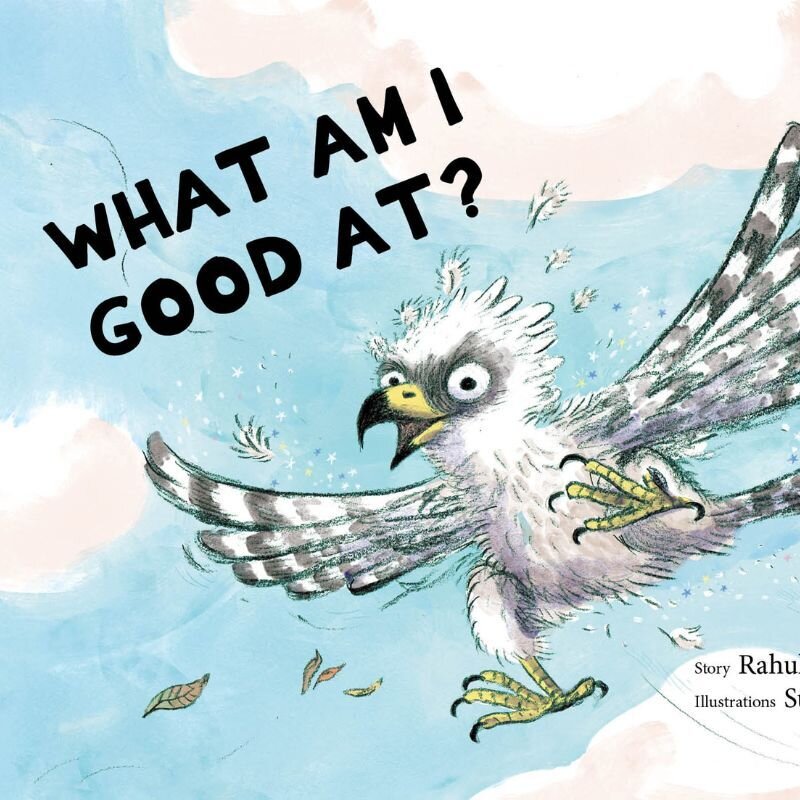
Book Title: What Am I Good At?
Author: Rahul Pradhan
Illustrator: Sunaina Coelho
Publisher: Kalpavriksh, 2024 (paperback, ₹170 each)
Reviewed by: Payal Dhar
Details
What does it mean to have been born into a climate crisis? To never having seen a sparrow perched on your windowsill? To having lived through a global pandemic in the first decade of your life? To not knowing that each time you ask ChatGPT for help with homework, you are driving yet another tiny nail into this planet’s coffin?
Indeed, present-day youngsters face a monumental – some already say insurmountable – task of righting all the wrongs of the previous generations’ egregiousness and excesses. But while rising temperatures, submerging cities, and the delicate balance of our ecosystems are important, so is a renewed awareness of what we stand to lose.
Three illustrated books from Kalpavriksh, all published in 2024, record some of the wonders that exist under our noses, but perhaps not always visible, particularly to us city-dwellers. The first is My Nest is the Best by self-confessed nature-lover and writer Niyatee Sharma and illustrator Sushama Durve, who loves to draw Indian plants and animals.
Imagine a bird’s nest. What do you see in your mind’s eye? If you’re like me, you probably imagine a bed of twigs and leaves high in the branches of a tree, or on the parapet of an apartment building. This book will swiftly disabuse you of the notion that there is just one kind of nest. We meet seventeen amazing birds and their equally astonishing nests – woven from reeds, large leaves stitched together, a cavity carved into a tree trunk, a hammock swinging from a fork in a branch, and even a floating nest in the shallows of wetlands.
If I were to pick a favourite, it would be a close call between the rufous woodpecker and the edible-nest swiftlet. The former has a peculiar love – hate symbiotic relationship with tree ants. While the ants are usually their prey, they also build their nests inside the ant colony, providing the insects protection from predators during the birds’ mating season. Swiftlets, on the other hand, make their nests out of saliva – and these are the same as the controversial and sought-after delicacy, bird’s nest soup.
The text is a blend of verse and prose, which doesn’t work quite as well. The fun rhyme‑y bits describing the nests suddenly change into drab encyclopaedia-ish text with detail. This might have been more effective if the text had been child-friendly prose altogether.
Ila, My Wild Mongoose Friend is ecologist Abhisheka Krishnagopal’s memoir of her bitter-sweet relationship with the eponymous creature during her time at a wildlife rehabilitation unit on the outskirts of Bengaluru. The text is accompanied by Ambika Karandikar’s beautiful illustrations. Through the author’s eyes, we follow Ila’s journey as a juvenile rescued from captivity to her release into the wild; we see her raising her own pup and end with – spoiler alert – an eventual question mark about her whereabouts.
Ila as the author’s companion seems to have the demeanour of a playful kitten and an inquisitive puppy blended together. But as the narrative progresses, we also see her wilder side being expressed, which makes her a danger to some of the more vulnerable creatures in the wildlife rehab unit, making it necessary for her human friend to have to watch her carefully. Ambika Karandikar’s enduring art brings all of this to life – from young Ila upsetting bowls of food, to her twisting around the author’s legs or playing with her egg, to her poking her nose everywhere, even where it definitely does not belong.
The book reads like a personal journal, which would otherwise be great, except this is a children’s book. The long, run-on sentences with multiple clauses needed some tightening up and simplifying.
In What Am I Good At?, author Rahul Pradhan and illustrator Sunaina Coelho explore the question of identity. Baby Eagle, high up on a nest in an old tree, watches her mother and father with admiration as they soar high into the sky, source tasty bits of food for her and drive away predators. And, as she grows older, she wonders what she might be good at.
From her vantage point, Baby Eagle meets a variety of creatures – an elephant, a bear, a monkey, a deer and an otter – and asks each one if they know what her strengths might be. One by one, each animal tells Baby Eagle that they don’t know about her, but also, they tell her what they themselves are good at. Coelho’s art deserves a special mention, particularly the way she uses the eyes to give each animal expression.
Finally, the youngster’s wings are strong enough and she’s ready to fly. Once she gets her balance and rises into the sky, she finds she is a really good flier, has a keen eye and can catch prey with deadly accuracy. Thus, Baby Eagle realises what she’s good at is being an eagle. Ostensibly a simple story, What Am I Good At? has a powerful message in our capitalist society that values exploitative productivity above all else – that each one of us is enough as we are.
This book too is a mix of verse and prose, and once again, the breaks feel discordant. The book loses out for it and would have been absolutely delightful had it been fully in verse.
Overall, these are three very different books, but together they remind us that everything around us is connected. And if there is any hope for this planet, then it is for us to see these connections with compassion and understanding, and realise how delicate the natural web is.
About the reviewer:
Payal Dhar writes books for middle-grade and young-adult readers. She’s also a freelance journalist who writes on science, technology and society