
Tepid Tales
Book Title: Wonder Tales for a Warming Planet
Author: Rajat Chaudhuri
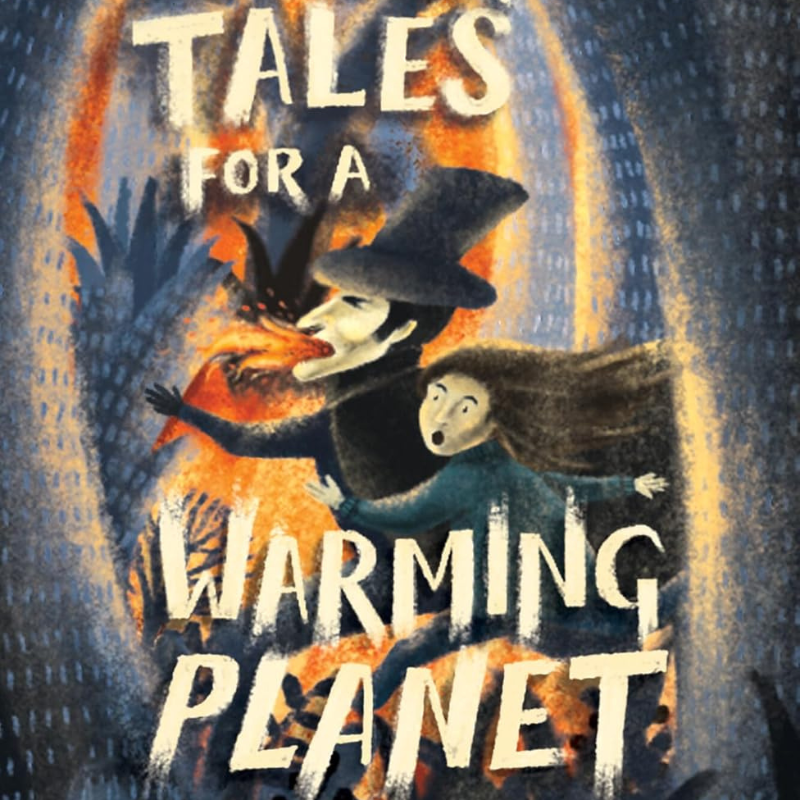
Illustrator: Isha Nagar
Publisher: Perky Parrot (paperback, ₹295)
Reviewed by: Suchi Govindarajan
Details
At the time of writing this review, I hear about fatal lightning strikes in Bihar and looming heatwaves in Uttar Pradesh. I see headlines quoting Simon Stiell, UN Climate Change Executive Secretary: “Humans have only two years left to save the world.” But elsewhere in the world, we continue as always: cutting down forests, burning fossil fuels and producing toxic waste. It appears that the corridors of power and money remain soundproofed from climate news.
Books like Wonder Tales for a Warming Planet are vital at this time. This is climate-fiction that uses allegories to explain the scale and complexity of the problem, which is a great approach for young readers, many of whom are already experiencing climate anxiety. They can confront dangers – even familiar ones – within the safe space of a story. And if they can think through complex ideas in a parallel world, they will be better equipped to deal with the real one. After all, as author Rajat Chaudhuri says in his introduction, children are “the generation who will be most affected by the sickness of the planet”.
This book is a collection of three stories set in interconnected lands. In ‘Tina and the Light of the World’, the protagonist meets magicians and angels who promise her a utopia. As she travels with them, she realises they are not as they seem. ‘The Seventh Sense’ sees young Gogol take on the task of saving a beloved forest from redevelopment. ‘How did the Ocean Vanish?’ tells the story of three friends who tried to prevent an apocalypse.
Rajat Chaudhuri has a vivid imagination and his universe comes alive around the reader. Middle-grade readers, in particular, will be delighted by the sparkling characters and the details of their worlds. The maps are a lovely addition, with fun country names to decode. There is a giant fish, a talking globe and an entire family of one-eyed creatures. Of course, the concerns in these stories are very real – an island sinking into water, rising temperatures, a lack of electricity and even inequalities of class. I was struck by the fact that technology was placed squarely on the side of the demons. “Sorcery and science are close cousins,” a character says. I don’t agree with this perspective myself, but I think it offers food for thought, especially for young people growing up in the age of AI.
Isha Nagar’s illustrations complement the story perfectly, providing just the right amount of whimsy. I thought the use of charcoal was particularly clever, given the book’s theme.
What lets the book down though is a lack of restraint. The best allegories can be read at multiple levels, thanks to clues left in by the author and a resonance between truth and fiction. Wonder Tales for a Warming Planet is far too indulgent with its storytelling to achieve this. The reader is forced to lean on the Learning Notes (one for each story) to enjoy it as intended. ‘Tina and the Light of the World’, for example, does not stand very well on its own. And ‘How did the Ocean Vanish?’ has a nested plot that serves little purpose.
In invoking fairytales, the author also slips into their moralistic views and old-fashioned tropes. One character is likened to a sloth, another to a jackal. One could forgive the fact that many of the guardians and parents are cast as villains (an old tradition in children’s literature). But why, in 2025, must the difficult teacher at a school also be described as short and ugly?
After a second reading of the book, I’m convinced that these issues reflect as much on the editors as the author. A little more editorial feedback with regards to plot and narrative could have helped make it a compelling read. Rajat Chaudhuri has built for us an interesting and vibrant parallel universe. His stories should have been constructed with the same care.
About the reviewer:
Suchi Govindarajan is a writer, poet and photographer. She’s the author of three picture-books for children. After a long career as a technical writer, Suchi now enjoys leading people on nature walks and birdwatching tours.