
Pulse of the Planet
Book Title: Our Potpourri Planet
Author: Ranjit Lal
Illustrator: Anushua Sinha
Publisher: HarperCollins India, 2025 (paperback, ₹599)
Reviewed by: Chintan Girish Modi
Details
There is such a lot of new writing about the environmental crisis that people seem to be growing numb. Perhaps it is the guilt-tripping, catastrophising tone that makes them feel hopeless. It appears that their heart is in the right place and they really want to do something, but end up holding back because they believe that it is already too late or that small acts do not amount to much.
Against this backdrop, Ranjit Lal’s new book titled Our Potpourri Planet comes across as a brave attempt to approach the subject in a manner that is likely to hold the interest of its readers. He focuses on getting readers to view the plant and animal kingdom with love and respect before he goes on to talk about how their lives are threatened by human interference. This is a smart strategy because it makes readers feel like they are being welcomed into a new world instead of being hit on the head with a hammer. The author’s brilliant sense of humour also plays a substantial role in rescuing the book from being yet another bleak and grumpy volume on how badly humans have behaved in relation to fellow earthlings.
The author’s description of how a caterpillar transforms into a butterfly is a terrific example of how he engages with nature from a place of wonder and delight, and conveys those feelings through his beautiful prose. Caterpillars are depicted as fussy eaters, preferring leaves of the kumquat or other citrus plants over “a bunch of fresh palak (spinach), which surely should be so good for them”. A butterfly emerging out of a chrysalis is compared to “an astronaut climbing out of a space capsule,” and its wings to crumpled crepe paper.
What could have been a boring, almost clinical, account of the process turns into an exhilarating spectacle because of Lal’s felicity with language. He makes it look effortlessly chatty but it takes tremendous creativity and skill to write like this. Elsewhere in the book, he mentions that “not all plants are vegans”. This unconventional entry point into the topic of carnivorous plants like the Venus flytrap, sundew and bladderwort grabs attention quickly. He captures their hunting expedition with a graphic visual, noting that these plants use “their sweet juices to lure, trap and suck dry gullible insects”. They seem almost like vampires.
The book is being marketed as “the perfect read for nature enthusiasts of all ages” but it might also entice readers who are not particularly enthusiastic about flora and fauna. The credit for that would go entirely to the author’s remarkable ability to hype up everyday phenomena that might seem too mundane to an exhausted expert. This book has sparkling word-portraits of ants feasting on a buffet, turtles tuning into the Earth’s magnetic field, crows decorating their nests with tiny trinkets and lyrebirds mimicking a variety of sounds that include chainsaws as well as camera shutters. His deep affection for nature is contagious.
Lal makes it impossible for readers to not care about other species, and then makes them see how humans – labelled as “senseless hoodlums” – have caused much of this suffering through development projects that destroy habitats, use of pesticides in agriculture, dumping sewage in oceans and poaching for meat as well as animal skin demanded by the fashion industry. He is unrelenting in assigning blame and with good reason because humans are responsible. However, this thought gets repetitive, and some editing could have made the book tighter.
This author, like many others, refers to nature as “Mother Nature”. She is personified as a frustrated and vengeful mother who hates having her benevolence taken for granted. He writes, “…she is getting rather hot under the collar and has been throwing tantrums”. Floods, tornadoes, heatwaves, wildfires and landslides are all described as expressions of her fury. Lal’s vivid imagination and out-of-the-box analogies make readers pause and take notice.
The book concludes with a celebration of numerous individuals, organisations and grassroots communities involved in helping this mother heal and recover. Apart from the work of Rachel Carson, Jane Goodall, Sunderlal Bahuguna, Salim Ali, MK Ranjitsinh, Kailash Sankhala, Greta Thunberg, Bittu Sahgal, Sunita Narain and Afroz Shah, readers also get to learn about the contributions made by the Bishnois of Rajasthan and the Kolis of Maharashtra. The author also applauds common people who reuse, repair, recycle and repurpose various kinds of objects.
To guard against the possibility that humans might pat their backs a bit too much, the author provides a glimpse of the unsung labour of seaweed that absorb greenhouse gases and dung beetles that “process stinking, bacteria-infested dung and turn it into rich, nutritious soil”. This humbling reminder is essential to make readers aware of their anthropocentric gaze.
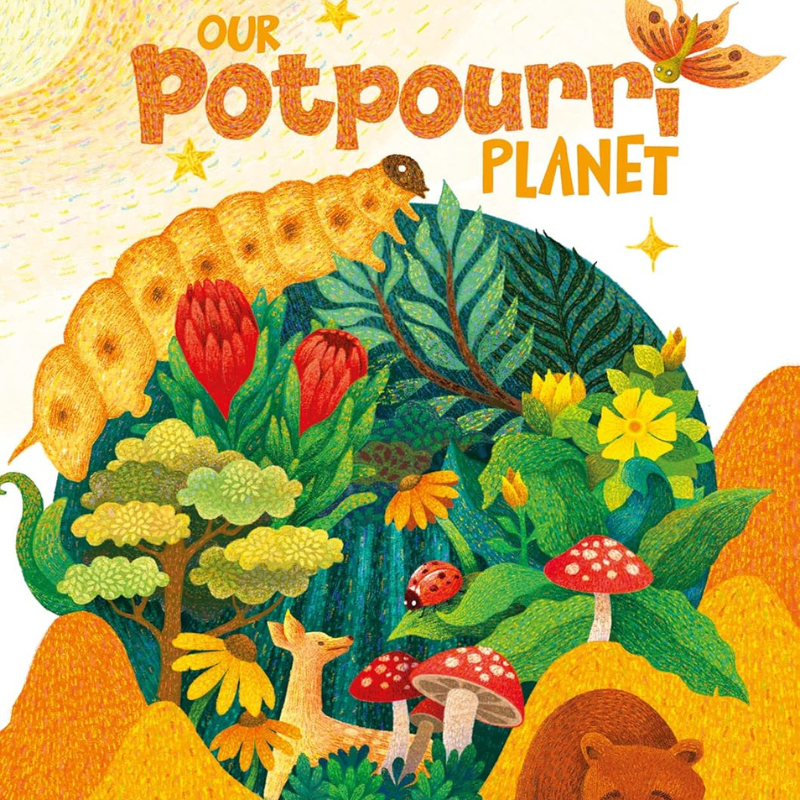
Anushua Sinha’s illustrations add value to the book. Whether it is a frog, a praying mantis, an owl, a pelican or a starfish, she makes them look elegant and stunning, imbuing them with a personality so that readers always remember that other creatures have a right to live. They are not simply collateral damage in a world that revolves around unchecked human ambition.
That said, the illustrations offer a pictorial equivalent of what the reader has already encountered in words. They exist for decorative value, and not as a commentary on or interpretation of the text. One wonders if the illustrator was held hostage by an unimaginative brief or simply chose to use visuals only to break the monotony of the words on the page.
Lal does not spell out his target audience, but it seems that he is addressing affluent readers as he writes: “Don’t buy so much food that more than half of it goes to waste. Do you really need 25 pairs of jeans or six dozen t‑shirts? Or 200 pairs of shoes? You can only wear one at a time and you have only two feet.” Most Indians cannot even dream of buying so much.
Another grouse is an instance where the author’s humour falls flat. He recommends that if readers encounter resorts at hill stations that dump garbage down the mountainside, they could pick some of that garbage and “dump it on the receptionist’s counter”. This does not seem funny, and it comes across as irresponsible. Such knee-jerk reactions do not bring about a change of heart. They alienate people and even make them despise well-meaning activists. Moreover, it is possible that the receptionist is not the one responsible for the dumping.
While Lal deserves kudos for putting together a highly informative book, it is surprising that no sources are mentioned while claiming, for instance, that “as much as 40 per cent of all land has been converted to agricultural use, which is also responsible for 90 per cent of the deforestation that’s happened, and sucks up 70 per cent of the earth’s freshwater resources”. There are many other examples in the book where statistics are unsupported by references.
The copyright page mentions that “the facts, verified to the extent possible, are as reported by him (Lal)” and “the publishers are not in any way liable for the same”. Readers, and indeed the author, would be better served with more thoughtful editing and attention to citation.
On the whole, however, this is a book worth reading and sharing with friends.
About the reviewer:
Chintan Girish Modi is a Mumbai-based journalist, educator, literary critic and tree hugger. His writing has been published in several newspapers, magazines and anthologies.