
Soiled Stories
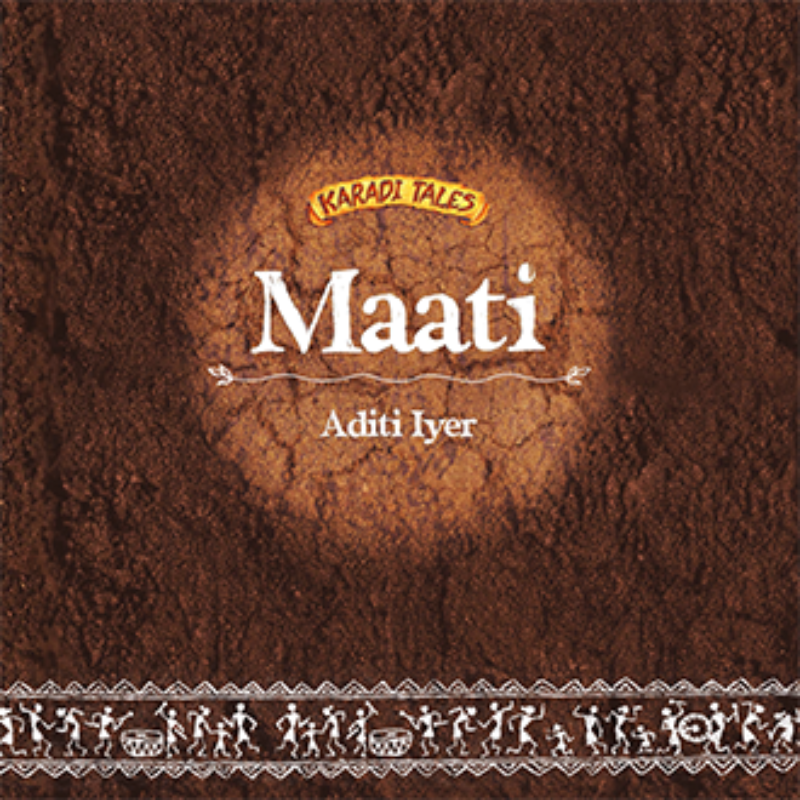
Book Title: Maati
Author & Illustrator: Aditi Iyer
Illustrator: Damini Gupta
Publisher: Karadi Tales (hardback, ₹599)
Reviewed by: Meghaa Gupta
Details
The sun blazed unrelentingly over the fields that spread in front of us. Thatha and I stood on the veranda and shielded our eyes with our hands. I could see the cracks on Thatha’s feet and feel the blister on my heel. As far as the eye could see, there were endless stretches of scorched paddy fields.
So begins this evocatively written and beautifully produced picture book about the destruction of the Earth’s soil cover. The non-fiction section at the end of the book warns readers that 60% of our planet’s topsoil is already in trouble and if things continue this way, we will be producing 40% less food in just 20 years from now.
Why, then, are things this way? Like many children’s books on environmental deterioration, here too the answer boils down to human greed. A stranger lures farmers with new ways of farming that promise higher yields. Even though the elders are sceptical, others are keen to explore his ways: Despite the bounty Maati (another word for soil) showered on us, some people in the village wanted more. More crops meant more money. And more money meant more comforts.
What happens next isn’t hard to guess. Sixteen-year-old Aditi Iyer, the author-illustrator of this book, imagines Maati as the spirit of the soil that begins to wilt: Her skin was dry and itchy, and she became grainy and coarse to the touch. She lost her golden black sheen and she smelled different. Her beautiful voice grew hoarse… her breath became raspy and she struggled to nourish the life she held within her.
The lyrical writing, striking Warli art and an attractive design make this book a treat to hold. Pages with a crumpled effect evoking the soil, double-page illustrations teeming with little details about plants, animals and rural life… there is so much to observe in this book! I did feel that the author could, perhaps, have used some Marathi words to accompany the traditional tribal art from Maharashtra, especially since the state has often been in the news for its farm troubles and tragedies. For example, instead of Thatha, she could have used Ajoba for grandfather. Ultimately, though, it’s the simplistic narrative that lets this book down.
The problems of industrial farming driven by engineered seeds, chemical fertilisers and pesticides and wasteful use of water are no secret, and it’s important for young readers to get a vivid sense of this. But, in trying to capture all of it in a picture book, meaningful details are lost. Who is this stranger proposing new ideas? Why has he suddenly showed up? Are the farmers such simpletons that they readily give up age-old wisdom in the pursuit of newfangled ideas — or are they just greedy? Perhaps, Maati’s gifts are not enough to fulfil all they want out of life? By not bringing in the larger forces that drive farming, the narrative inadvertently ends up portraying farmers in a poor light. Also, the book makes an erroneous assumption when it suggests that droughts and floods are an outcome of the new farming practices. These natural disasters have existed since time immemorial and have only worsened with unprecedented human-induced climate change.
Towards the end, Thatha says that even though Maati has become visibly ill, she can be nursed back to health, and the non-fiction section that follows includes a brief write-up on how unhealthy soil can be treated. Yet, these feel-good bits seem like sops. It might have been more useful and hopeful, for example, to have actually highlighted positive agricultural practices being adopted by farmers in different parts of the country. In the past few years, we have had some books such as Aparna Karthikeyan’s No Nonsense Nandhini and Bijal Vachharajani and Jayesh Sivan’s picture book The Seed Savers do this to good effect. I also wondered whether the audience of this book would understand terms like ‘agroforestry’ without any explanation.
Despite these problems, Maati is a moving and visually-captivating account of soil degradation — an underrepresented subject within children’s literature — and could be used as a conversation starter in homes and classrooms.
About the reviewer:
Meghaa Gupta works in children’s publishing and co-edits the Nature Writing for Children newsletter.