
Reclaiming Paradise
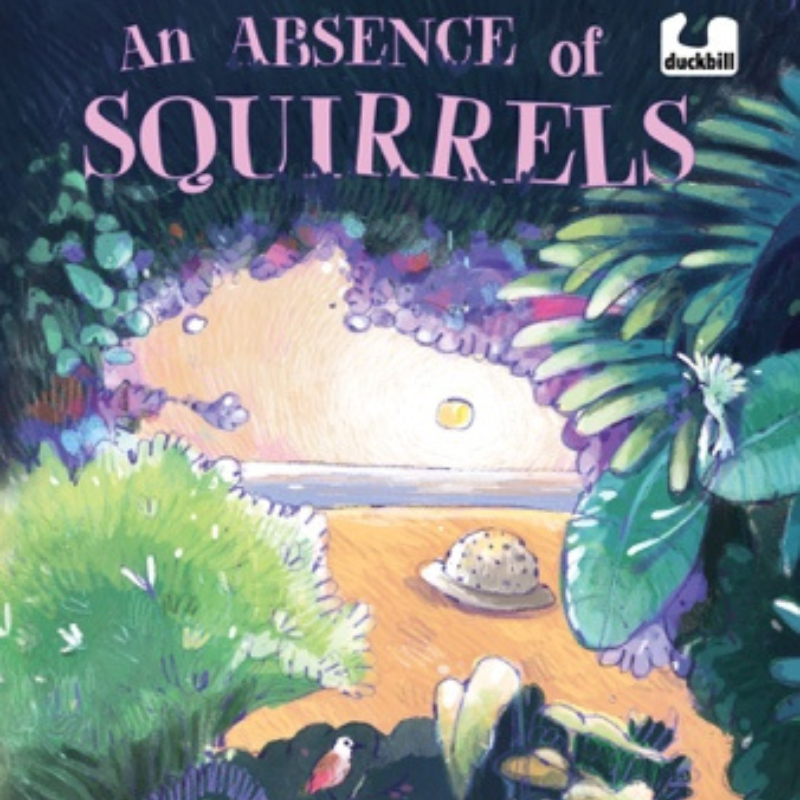
Book Title: An Absence of Squirrels
Author: Aparna Kapur
Publisher: Duckbill (paperback, ₹299)
Reviewed by: Gautam Bhatia
Details
Thutta, the setting of Aparna Kapur’s An Absence of Squirrels, is seemingly an island paradise. Its 5120 people live contentedly under the competent and benevolent administration of “the Captain”. Life is free of conflict. From time to time, people leave the island and do not return – but that, as everyone knows, is by choice. Other than that, the inhabitants of Thutta have no contact with the outside world – and happily so.
The first hints of trouble in paradise appear, however, when the precocious protagonist Katli notices that some of her playmates are repeating – in identical language – praise of the Captain: she wants what’s best for us. Katli’s investigation of this strange behaviour, alongside her friend Abhay, takes her to the library, where the two of them discover the existence of a lost animal called the “squirrel”.
Mysterious goings-on are afoot: whenever someone says the word “squirrel”, an automated hat appears, settles on the speaker’s head, and wipes out their memory. As the mystery unravels, Katli and Abhay learn what the readers are informed early on: that far from being a benevolent administrator, the Captain is much closer to being an authoritarian despot. Although she gained power following a popular movement against the previous leader of the island, the Captain soon grew intolerant of dissent. When dissenters parodied her through the figure of the squirrel, the Captain took a drastic step: she got rid of all the squirrels on the island, and then, with the assistance of her lieutenant, wiped out the inhabitants’ memories of squirrels through the use of the automated hat. She now uses the hat to periodically wipe out the memories of the adults on the island, and perpetuate her own rule. With the adults out of commission, it is up to the children to plan – and execute – the long-overdue revolt against the rule of the Captain.
An Absence of Squirrels explores many themes that are staple features of science fiction and fantasy. The memory wipe – which takes away the citizens’ ability to even remember the existence of squirrels (and what that stands for) is reminiscent of Guy Gavriel Kay’s Tigana, where a tyrannical sorcerer conquers a land and compels its inhabitants to forget even the name of their erstwhile country. The figure of the benevolent-totalitarian Captain, set against an adult population lulled into stupor, recollects an entire tradition of science fiction dystopia, with its roots in Brave New World. Environmental themes are also woven into the novel. While the classics of the authoritarian SF genre – 1984, Brave New World, Fahrenheit 451 and their successors – were concerned about political authoritarianism, in An Absence of Squirrels, authoritarianism is bound up with environmental collapse, articulated through the erasure of squirrels from Thutta. The symbolism is clear.
The hinge of the novel turns upon the character of Katli, an intriguing, Pessoa-esque figure who has developed multiple personalities to address specific situations and people, and switches between them depending on context. These multiple personalities turn out to be crucial to the investigation and discovery of the truth, and, ultimately, to the resistance, although it is suggested that, in the end, Katli finds the resources to integrate them into one. While some members of her supporting cast – in particular, Abhay – are sketched out in as much detail, others (perhaps inevitably, given the constraints of length) remain somewhat shadowy.
An Absence of Squirrels, thus, taps into classic speculative fiction ideas around memory and resistance, within the very contemporary frame of the environmental crisis. This juxtaposition is unique, as is the novel’s main character, Katli. With that said, however, the complexity of the novel’s set up is not entirely reflected in its ending. While Thutta is reminiscent of Ursula Le Guin’s “ambiguous utopias” in that its inhabitants are, in some measure, genuinely happy (leading to questions about the necessity of revolution), an ambiguous utopia equally results in a conclusion that is too pat, or where everything is resolved too easily. Its happiness seems somewhat unearned, given what has gone on before.
Yet, in a literary landscape dominated by mythological fantasy, An Absence of Squirrels is a welcome addition to the speculative market for young readers. Perhaps its greatest merit is that it does not talk down to its audience, but rather, treats them as equals capable of navigating complexity. In a genre that has lately become notorious for its reliance on tropes, An Absence of Squirrels is both counterpoint and corrective.
About the reviewer:
Gautam Bhatia is a writer, reviewer and editor based in New Delhi. He is the author of The Sentence, the science fiction duology, The Wall and The Horizon, and the coordinating editor of the science fiction magazine, Strange Horizons. In his other life, he is a constitutional lawyer and public commentator on civil and constitutional rights in India.