
Of Mangroves and Murmurs
Book Title: Whispers of the Mangroves
Authors: Radhika Suri and Chetna Singh Kaith
Illustrator: Pari Satarkar
Publisher: HarperCollins (paperback, ₹399)
Reviewed by: Richa Chadda
Details
When I saw mangroves for the first time, I was stunned. Of course, I had read about them (The Hungry Tide has been an eternal favourite), but no words could have prepared me for the sight. They seemed like a living miracle: trees that grow where trees shouldn’t; neither land nor sea; the roots rising like fingers from the mud, gatekeeping a world where the tides decide the rhythm of life. Rooted in the tension between land and sea, they protect coastlines, nurture biodiversity and stand as one of the planet’s most resilient yet fragile ecosystems. And in a world that is only beginning to understand the depth of their importance, any attempt to introduce young readers to mangroves is more than welcome.
For children growing up far from coasts and estuaries, mangroves can feel like an unfamiliar landscape. Whispers of the Mangroves, written by Radhika Suri and Chetna Singh Kaith and illustrated by Pari Satarkar, deftly attempts to bridge the gap. The book invites readers into the mangrove world through verse, following the quiet murmurings of trees, birds, tides, and creatures that inhabit this watery forest. There is an undeniable charm in the intent and the tone is gentle and evocative. The text is a great effort to capture the sounds, movements and mysteries of the mangrove landscape.
The choice of verse gives the book a lyrical quality. Lines flow lightly across the pages, inviting readers to slow down and notice small details: the ripple of water, the rustle of leaves, the lives hidden beneath the surface. Sample this:
Roots, spread out like umbrellas,
are a playground for baby fish,
crabs and shrimp!
Thousands of shimmering fish
dart and swirl while
the jellyfish
rests upside down.
The approach of putting it in verse works well in parts, especially when it evokes a sense of wonder that mangroves inspire. However, the format also leaves the book hovering precariously between poetry and fact, without fully committing to either. For a young reader curious about mangroves, the book raises interesting glimpses but stops short of explaining them in depth. What exactly makes mangroves so unique? How do their roots breathe? Which animals depend on them? Why are these forests disappearing in many parts of the world? These questions appear at the edges of the narrative but are not explored in ways that satisfy a reader’s curiosity.
In that sense, one wonders whether a straightforward non-fiction approach might have served the subject better, especially for the intended age group. A text rich with facts, anecdotes and small pieces of ecological trivia could have deepened the reader’s understanding of these fragile ecosystems. It would also have opened up an important opportunity to discuss conservation — why mangroves matter, and why protecting them is urgent in a world with rising seas and vanishing coastlines.
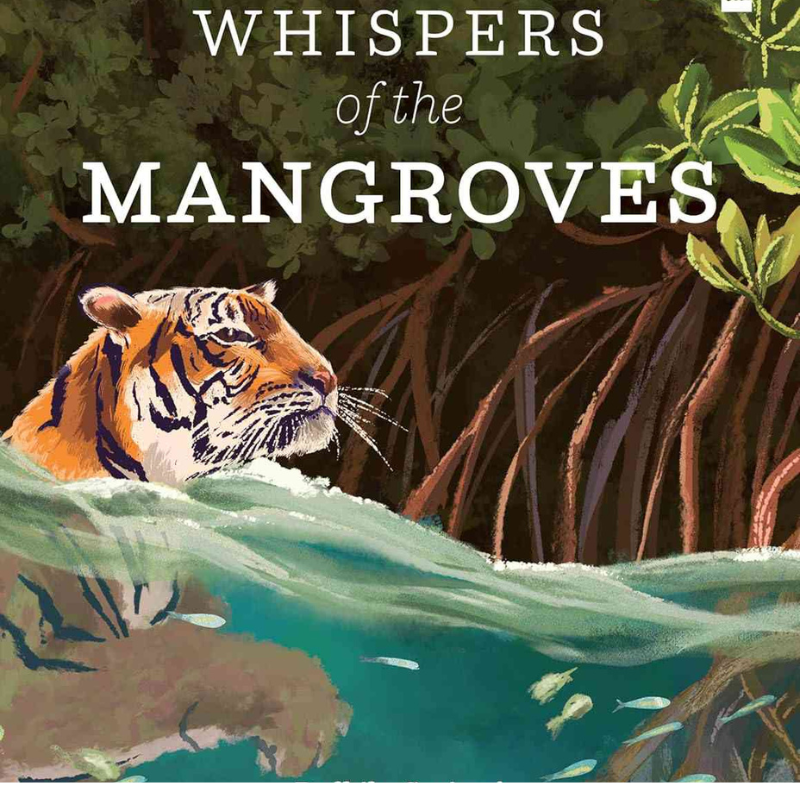
Where the book truly shines is in its visual storytelling. Pari Satarkar’s illustrations bring warmth and vitality to every spread. The mangrove landscape is rendered with softness and detail: winding roots, layered greens and creatures tucked into the corners of the page. There’s an almost tactile sense of place in the visuals, inviting the reader to imagine the quiet hum of life within these tidal forests.
Whispers of the Mangroves is a gentle, thoughtful introduction to a world that deserves attention. It succeeds in creating atmosphere, but doesn’t fully capitalise on the ecological value of its subject. As a read-aloud experience, it works. As a gateway into the fascinating world of mangroves, it feels like a first step rather than a complete journey. For parents and educators hoping to spark an early interest in coastal ecosystems, this book is a worthy addition to the shelf.
About the reviewer:
After a corporate career of over a decade, Richa Chadda now chases her dream of working with children and books. From organising literary events to promoting reading, she loves it all.