
High and Dry
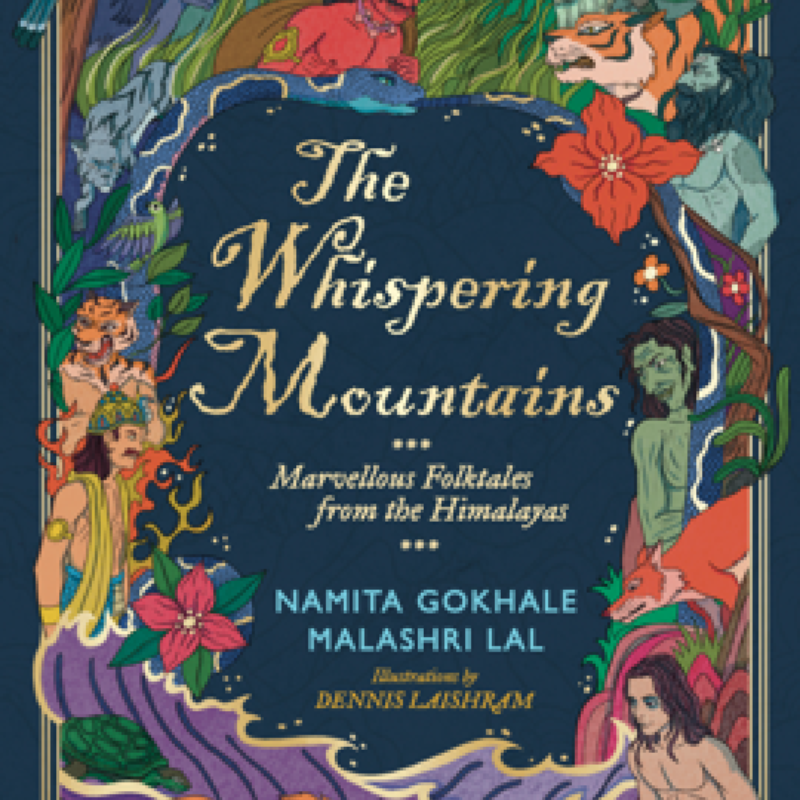
Book Title: The Whispering Mountains: Marvellous Folktales from the Himalayas
Authors: various
Editors: Namita Gokhale and Malashri Lal
Illustrator: Dennis Laishram
Publisher: Penguin (hardback, ₹699)
Reviewed by: Parvati Sharma
Details
For the first few weeks of the Covid lockdown of 2020, with its eerily blue spring skies, deserted streets and endless anxieties, I could neither read nor write. When I finally opened a blank file and started to type, I wrote fairy tales. I’m not sure why this form was so appealing then, suddenly and temporarily. Perhaps because fairy tales, fables, parables and allegories allow you to pare your feelings, your fears and desires, to their barest form. Or perhaps because, as JRR Tolkien argues in his wonderful essay, ‘On Fairy Stories’, such tales allow for “recovery”. Not of health alone (although that, too) but of our ability, so early-on jaded, to be surprised. After all, Tolkien writes, “The patterns from bud to unfolding, and the colours from spring to autumn were all discovered by men long ago.” Knowing this can lead to a weariness in our bones, from which “we need recovery. We should look at green again, and be startled anew… We should meet the centaur and the dragon, and then perhaps suddenly behold, like the ancient shepherds, sheep, and dogs, and horses – and wolves.” Such recovery, he goes on, is the “regaining of a clear view… ‘seeing things as we are (or were) meant to see them’ – as things apart from ourselves.”
The Whispering Mountains, an anthology of folktales from the Himalayan regions of India and from Bhutan, edited by Namita Gokhale and Malashri Lal, holds a hint of this promise of fresh sight. The stories in this collection – of how the rainbow came to be, how the very first man came to die, of inscrutable hermits demanding terrible sacrifice and many others – take you to the elemental places of the imagination. Various authors and both editors (all credited at the end of the book, oddly enough, rather than its beginning) have contributed stories from India’s north-east, Jammu and Kashmir, Himachal Pradesh, Uttarakhand and Bhutan to the volume. It’s a Puffin publication but neither its authors nor its editors (nor its publisher, for that matter) succumb, by and large, to the temptation to present these stories as exclusively “for children” by slicing away the gory bits and other complications.
Less fortunately, however, the telling itself is of uneven quality, rarely matching the vitality of the stories themselves. Often, moreover, the authors of these stories insert a deliberate distance between the tale, the teller and the listener, with a line like: even today the people of such-and-such place believe this-or-that thing – ethnographic asides that turn the stories into curious artefacts rather than compelling truths.
No doubt, there is value to an exercise of documentation alone, and perhaps that is what the editors intended – to collect stories rather than tell them. If that is the case, however, the book would have benefited immensely from a longer introduction and its stories from contextual notes. As it stands, The Whispering Mountains offers a peek into the storytelling traditions of the Himalayas, but does not transport us to the snowy realms.
About the reviewer:
Parvati Sharma is based in Delhi. She has a background in English literature and Indian history, and has worked extensively as a travel writer, editor and journalist.