
Mighty Mammoths, Missing Magic
Book Title: The Lost Elephant and the Soul Tree
Author: Akila Kannadasan
Publisher: Red Panda (paperback, ₹250)
Reviewed by: Sandhya Rao
Details
Clearly, author Akila Kannadasan’s heart beats for elephants, and with a bigger pang for elephants forced by circumstances to be housed in camps and, later, domesticated. Like her, many have been moved by what they see at Mudumalai’s Theppakadu elephant camp in the Nilgiris. The emotional connection between mahouts and their charges, indeed, between humans and animals, when and where it exists, is always tender, compassionate and inspiring. It’s not surprising then, that Kartiki Gonsalves’s The Elephant Whisperers won an Oscar. Children, especially, tend to be drawn to these beautiful creatures: the universal popularity of Ashok Rajagopalan’s Gajapati Kulapati series is a case in point.
Given all this, a story featuring elephants is bound to resonate with readers. Therefore, the author scores a goal upfront by choosing to write about a baby elephant that somehow gets separated from its herd and finds itself in a camp. The fact that the baby elephant in question, Little Girl or LG as she is called, is put under the care of a loving mahout could have been another quick goal, but this becomes a somewhat elusive target even though it triggers a major turning point in the resolution of the plot.
From the plot point of view, The Lost Elephant and the Soul Tree has ingredients that should provide sufficient scope for a delicious adventure story. There is a tusker in musth, there are marauding hyenas, there’s a sea of neelakurinji flowers that bloom only once in twelve years! And, at the heart of it all, is the lost and found trope, with a magical tree thrown into the mix. But it seems as if, in the hurry to join all the dots and reunite LG with her mother and her herd, the magic is dealt with in a rather matter-of-fact manner. Elephant A in the camp reminds Elephant B about the Soul Tree that should help LG, and they know that the tusker, magnificently named Killer, knows where it is. So, all LG has to do is ask Killer for help. Simple.
But this simple solution ends up dissolving the drama around the spirits of dead elephants coming together to form the beating heart of the Soul Tree. The reader gets a sense of the jungle, of living in the wild and life in the camp — yet, there’s something missing.
The writing is competent and has clarity, but one wonders whether it could have been more evocative and less formal. The animals are personifications, fair enough, but are they humans dressed up like elephants rather than elephants with human qualities — in the way they speak, the opinions they express, in the way they behave or even hold forth?
The story is bound to interest young readers, but a little more atmosphere, a little more emotional nuance, a little more by way of twists and turns in the plot may have made it a more delectable dish.
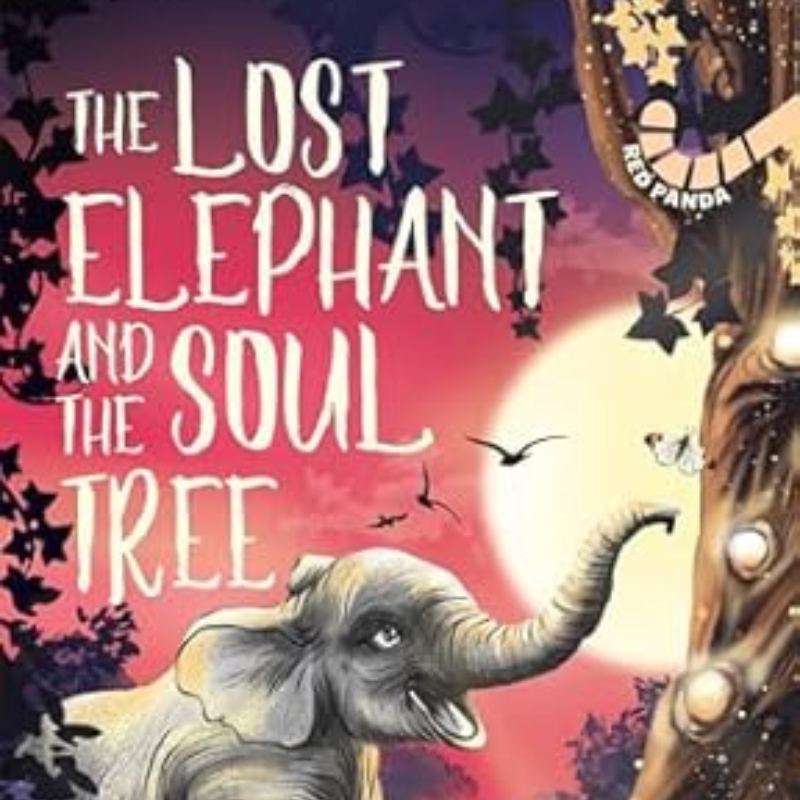
A word about the illustrations too. My knowledge of elephants is limited, but it does seem as though LG — I presume — on the cover is more African than Asian, even allowing for a large dose of stylistic license. The black and whites inside are dramatic, neat and well-finished, but there’s something plastic about them. Some softness, some gentler texturing… would that have made a difference?
Still, it’s a brave effort to draw attention to the challenges faced by elephants in the wild and a shout out to all those hard-working people who take care of them in camps. Indeed, it’s a tribute to all those who care for animals in distress. And, to reiterate, children will enjoy reading the book — they are still a long way from growing into nitpicky adults!
About the reviewer:
Sandhya Rao loves to read and write. She lives in Chennai and believes that speaking many languages and sharing food brings people together.