
In Search of Climate Realism
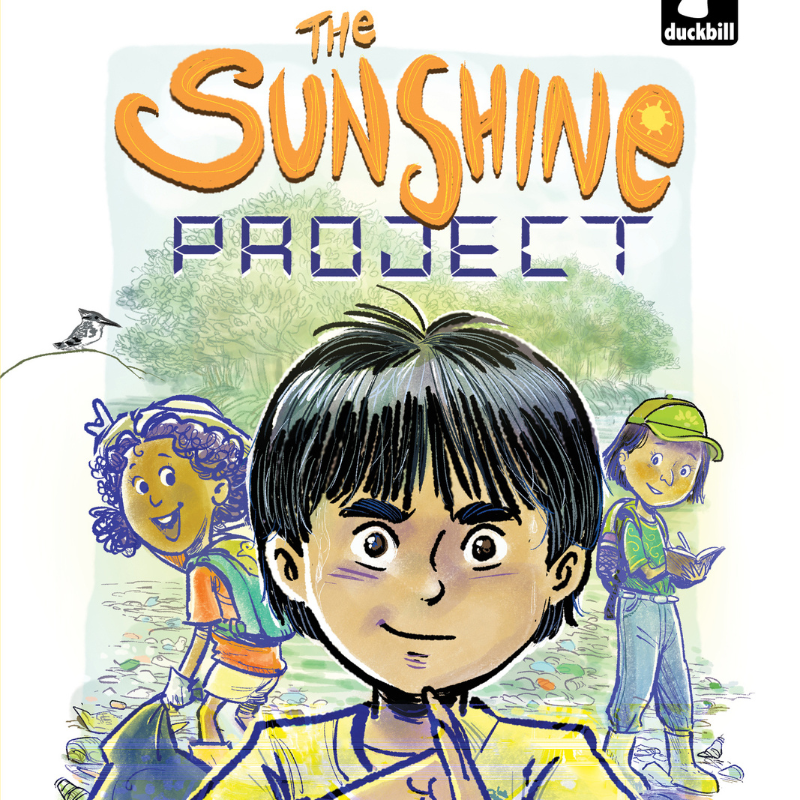
Book Title: The Sunshine Project
Authors: Uma Krishnaswami
Illustrator: Chetan Sharma
Publisher: Duckbill (paperback, ₹299)
Reviewed by: Dakshayini Suresh
Details
While reading Uma Krishaswami’s The Sunshine Project, it’s possible to forget, for a second, that the book is a 2025 release rather than a 2015 or even 2005 one. The characters in the book inhabit a charming, more innocent time, replete with ‘why was six afraid of seven?’ jokes and free neighbourhood book-lending kiosks — a world which will be familiar to readers of Krishnaswami’s much-loved Book Uncle series. But, and more relevant to this review, The Sunshine Project sets itself the challenge of imagining what climate activism might look like for very young members of society — and delivers a plot that feels, for want of a better word, unrealistic.
The novel centres around Anil, the second in a gang of three friends to be spotlighted in Krishnaswami’s ongoing set of nature and climate-themed middle grade fiction from Duckbill. Anil is a quiet and tentative middle school kid with a relatable voice. He hates public speaking, goes for karate classes, cares about the environment and loves his friends. He also struggles to bat away the aggressions of Mohan, his bully, and has a few emotional flare-ups when provoked. All in all, the writer succeeds in grounding the story in the first person narrative of a gentle child who has strong feelings about the world around him. Anil is a solar energy buff and believes that: Solar panels are like karate blocks. They push back against harmful emissions. They make them go down, down, down. When his class teacher sets the kids the task of being Young Reporters and investigate a ‘climate story’, he dives into the little mystery at the centre of this book. Why do the local engineers trained to work at solar power plants not have jobs in a city that’s planning to run on solar power? Anil wants to know, and this leads him down an unexpected path. It looks like the city’s solar electrification plan will come at the expense of a mangrove forest and a fishing settlement. Over conversations with his neighbours, friends and the fishing community, Anil’s question quickly changes from – what’s really going on to what can we do about it? The book culminates in a public consultation with citizens over the solar project in which Anil manages to overcome his fear of speaking in crowds and raises a storm of embarrassing questions to expose the duplicity of the city’s mayor.
The problem set up here is a complex one: Anil begins the novel being a champion of solar power and ends up with the realisation that implementing climate-friendly technologies in one sphere can impact lives and ecosystems in another. There is an ambiguity to the message here that is really valuable, and by leading Anil and his friends out of their comfortable city residences and into the intertidal zone, the writer does remarkably well in enabling this unlearning for them — and for the reader. Through the tool of Anil’s project, the book itself becomes a journey of critically considering this problem, hearing multiple perspectives and cobbling together knowledge from different sources — the news, people’s experiences and the books Anil borrows from Book Uncle, to finally parse it and locate the kind of stance he should take in his activism.
However, certain questions remain about the ultimate message of the book. Anil and his friends inhabit a semi-utopian world in which it is possible for the activism of a small group of citizens and friends to come together and meaningfully impact their surroundings. Consider, for instance, that the fictional Chennai-reminiscent city in the book takes suggestions from citizens on an app, and Anil and his friends use their status as ‘Young Reporters’ to challenge the city’s decision to side with a big business under the guise of green development. Consider that Anil’s teachers and principal take every opportunity to remind the children that “There is no Planet B” — in the language of one of the most popular climate slogans of our times. Consider that Anil and his friends leave their neighbourhoods to go take part in a trash collection initiative in the mangrove forest outside the fictional Kadalkuppam fishing village. The residents of the village are enthusiastic to meet their climate saviours and offer them water. “Welcome to Kadalkuppam,” says a little girl. But in today’s cities, well-to-do children rarely venture out unescorted from their homes and schools. The periphery of the cities they inhabit, and the lives of those who live and work there are increasingly removed from their sight by the landscaped lawns of gated complexes, by widening gaps in class, and by philosophies of school education that are increasingly divorcing learning from real social problems.
The Sunshine Project draws pertinent connections between the different needs of different parts of a city. It shows young middle-class readers the perspective they are sometimes missing, and suggests strongly to them that the environment should and can be a cause they care about. Nonetheless, we need to interrogate the kind of climate realism we construct in fiction when the fictional conflicts we set up are so uncannily real and contemporary. Bad faith development under the guise of “green” infrastructure is happening around us and across the country daily! Young readers should not feel hopeless in the face of physical and environmental changes in the world around them — but is it fair to depict public efforts that have such immediate and natural payoffs? What indeed can we expect books with environmental themes to do when they engage readers with their subject matter? And what does collective action really look like in a world that is more divided by class and material concerns than ever before?
The Sunshine Project is an important read that will, hopefully, prompt readers to reflect on these and other questions related to social justice and the environment.
About the reviewer:
Dakshayini is a feminist educator. Her instructional experience spans age-groups and learning needs, and ranges across the areas of libraries, language, gender and social science.