
Coucal Calling
Book Titles:
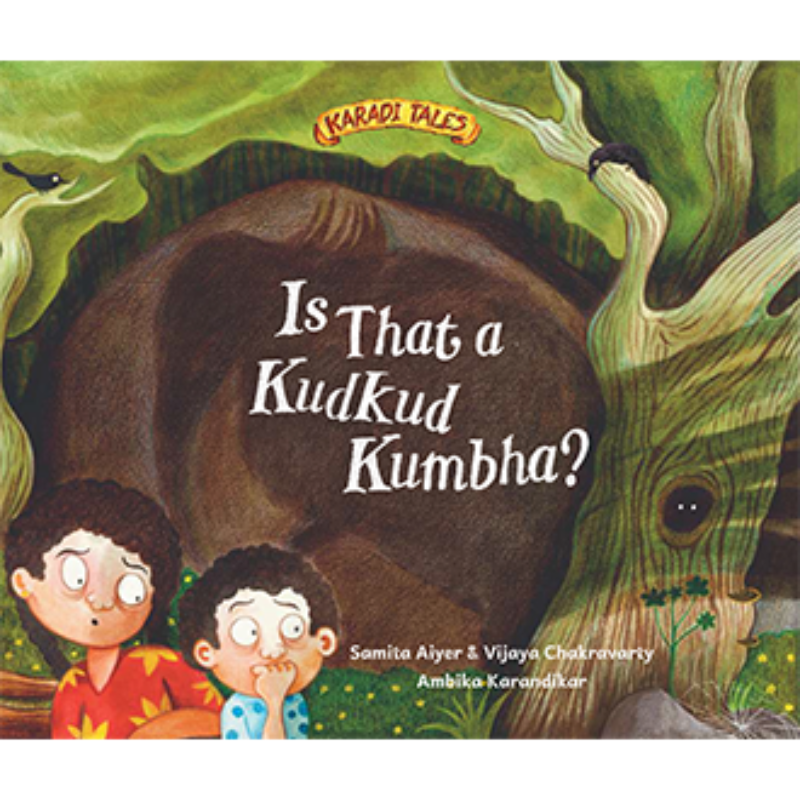
Is that a Kudkud Kumbha?
Author: Samita Aiyer & Vijaya Chakravarty
Illustrators: Ambika Karandikar
Publisher: Karadi Tales, 2024 (hardback, ₹295)
Reviewed by: Anita Mani
Details
When you first start to birdwatch, there are some sounds that catch even your inexperienced ear — one of these is the booming call of the Greater Coucal, the eponymous Kudkud Kumbha. In Delhi where I live, you can hear it in any large park or garden, in the undergrowth of open scrub land, and one even popped into my landlady’s garden on a dry day to drink from the bird bath. That made the day for me.
Ear birding is a wonderful way to be introduced to birds — you know which birds are keeping you company without binoculars or a camera to weigh you down. That’s exactly what happens in Is that a Kudkud Kumbha?, a delightful picture book by Samita Aiyer and Vijaya Chakravarty, illustrated by Ambika Karandikar.
Golu and Molu are spending their holidays with their grandparents — Aji and Ajoba — at Dongarwadi in the Sahyadri mountains in Maharashtra. The morning after they arrive, the children are wandering up a trail eating jamuns when a low call ‘kud kud kud kud’ halts them in their tracks. The call sounds menacing enough to tie wings to their feet. En route they run into a shepherd who tells them: that’s just Kudkud Kumbha, the rain bird. The imagery of a bird with the power to summon rain is rather overwhelming, so it’s not surprising that it’s a rather frightening looking Kudkud Kumbha that emerges from their pencils when they begin to draw it. From here on, the legend of the Kudkud Kumbha grows and the portrait takes on increasingly fearsome features — from red eyes to sharp claws!
The story has a simple plotline that makes artful use of suspense to set the imagination of the reader whirring. The interspersing of Marathi words — clear enough to understand in context — grounds the tale into the culture and everyday reality of rural Maharashtra. There is also a helpful glossary at the end of the book. Aiyer and Chakravarty keep the text easy and brief — ideal for young readers ready to read stories with words, but not yet ready to leave picture books behind. Both clearly love their birds and this book is a wonderful first flight into the avian universe. It’s also an enjoyable read-aloud book.
The realism is reflected in the illustrations too — there are cracks in the walls of Aji and Ajoba’s hill home and an all-too-familiar local wall calendar. The season — summer/early monsoon — is suggested by the arrival of jamuns and rain as well as the juicy mangoes hanging from the trees. There are layers to discover each time you pick up the book. The narrative ends with an illustration of the actual Kudkud Kumbha with callouts for all its key features. Now, why don’t they make such illustrations for all those hard to identify warblers and little brown jobs or LBJs?
Is that a Kudkud Kumbha? narrates exactly the kind of adventure I may have had when visiting my grandmother — it’s another matter that she lived in Mumbai’s crowded Dadar where the most exotic bird you could expect to encounter was a dusty kabootar!
About the reviewer:
Anita Mani lives, works and birds in Delhi, from where she runs Indian Pitta, her book imprint with Juggernaut Books.