
Birds and Beyond
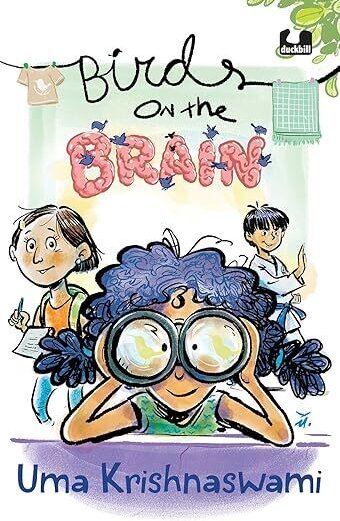
Book Title: Birds on the Brain
Author: Uma Krishnaswami
Publisher: Duckbill, 2024 (paperback, ₹250)
Reviewed by: Garima Bhatia
Details
Is one bird’s nest worth saving when weighed against sustainable power for a whole building? Is the mayor going to stop the city-wide bird count? Why do so many people know nothing about birds? These are some of the questions that preoccupy Reeni Thomas, the young protagonist of Uma Krishnaswami’s delightful book, who has birds on her brain.
After the much-loved Book Uncle and Me, Krishnaswami returns with yet another book featuring Reeni and her gang of co-conspirators. The narrative here moves along at an engaging pace, with never a dull moment. We soak in the calm of the terrace with Reeni as she admires the iridescence of a sunbird, and feel despondent with her as her friend Anil is faced with a seemingly intractable problem. The wonderful illustrations by Chetan Sharma bring this breezy book to life, whether it’s the istri lady’s tobacco-red stream, Anil’s karate chops, the birds-eye view of Reeni with her binoculars or her bird-inspired dreams featuring Salim Ali, the birdman of India.
The research that has gone into the book is accurate and topical, and should give a warm, fuzzy feeling to everyone who is interested in birds. The Great Backyard Bird Count is a much-awaited real event that happens every year, and the Bird Count India consortium indeed coordinates this global event in India. The descriptions of sunbirds are sure to bring joy to anyone who has watched these amazing creatures. A few mis-steps along the way (for example, sunbirds catching mosquitoes, Reeni referring to parrots instead of parakeets), may be forgiven and are likely to go unnoticed except by avid birders.
What makes this book stand out is that it isn’t just a book about birds or a birdwatcher who’s out to save them, but a rich tapestry of the inner and outer life of a young girl. Reeni cares deeply about birds and her little project, but she also realises that she has been a selfish friend and needs to listen more than she speaks. She spouts bird facts and the IUCN red list status of birds at the drop of a hat but is awed to discover the istri lady’s local knowledge of the birds in her village. She loves movies but also frets at the perceived incompetence of the movie-star turned mayor, and wonders why grown-ups use their precious votes to elect rogues and scoundrels.
Current issues like the hidden environmental impact of green energy, the quick dismissal of uncomfortable data as fake news, the high-handedness of celebrated government projects and their disregard of the less fortunate among us – all find a mention in this book. Seamlessly and subtly woven into the narrative are values about pluralism, empathy and inclusivity, messages that are sorely needed in today’s world. Reeni’s is a world in which the children bring their collective agency and out-of-the-box thinking to solve problems that are largely created by adults. This is a reflection of the climate action we see at many places in the world today, where children and young adults are increasingly demanding a seat at the table. It is after all their future that is at stake.
Educationist David Sobel said, “If we want children to flourish, to become truly empowered, let us allow them to love the earth before we ask them to save it.” Krishnaswami’s book tells us that a hobby like birdwatching can be one of the answers to this conundrum, inspiring children to connect with and care for the planet they inhabit. Birds are found everywhere we look, even in cities, and are easy to relate to, with their beautiful colours, enchanting songs and fascinating behaviours. A love of birds does motivate Reeni to take action to save her personal world from the travails inflicted on it by the adult world.
When speaking about a favourite book, one of the protagonists says, “It’s not about what happens in the end. It’s about why it matters.” Reeni’s quest to protect birds teaches valuable lessons about leadership, civic awareness and the importance of community in environmental activism. This indeed is why a book like Birds on the Brain matters.
About the reviewer:
Garima Bhatia is a birdwatcher and nature educator who leads Early Bird, a non-profit initiative to introduce children to nature through birds. She is also the course director of Early Bird’s most recent offering – a free online course titled The Wonder of Birds.