
Publications & Resources
Our faculty, students and researchers work together everyday to contribute to a better world by grappling with urgent problems we are facing in India. We conduct rigorous work to produce high quality learning resources and publications to contribute to public discourse and social change. Here, we feature a sample from our work for everyone to access. You can explore featured resources, policies, and the latest publications from the University.
To explore all the work of our University, please visit our publications repository.

- Published
- Authors
Abstract
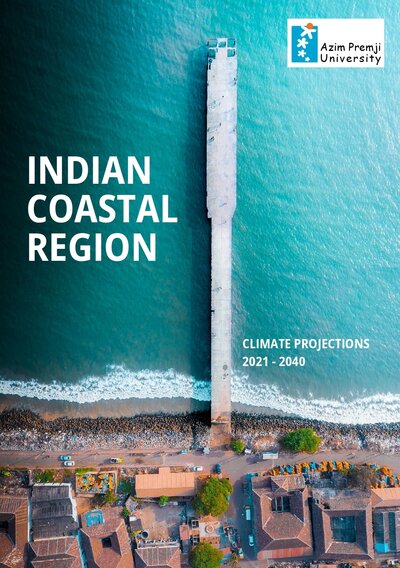
The Indian Coastline is a dynamic mosaic of diverse landscapes, stretching from the salt marshes of Kachchh to the fertile deltas of the East. Characterised by golden beaches, dense mangrove forests like the Sundarbans, and rugged rocky cliffs, it hosts a vibrant marine ecosystem rich in biodiversity. These coastal waters support millions of livelihoods through fishing and trade, while acting as a crucial buffer against monsoonal shifts and rising sea levels. This booklet offers a glimpse of how the climate of the Indian coastal region is expected to change in the coming decades. By using high-resolution data at a granular 25 x 25 km scale, this booklet provides precise climate projections that are essential for developing strategies to build climate resilience and adaptation. Derived from CMIP6 models corrected for regional bias, the booklet aims to help various stakeholders make informed decisions in the face of climate change. By providing precise climate projections, it helps various stakeholders — including policymakers, local authorities, and communities — prepare for specific risks in their regions. These insights will guide decisions on how to adapt to climate changes and mitigate risks, ensuring that strategies are practical and effective in safeguarding lives, livelihoods, and ecosystems across India. The insights presented here are based on the SSP2‑4.5 scenario which assumes that society will take moderate steps to reduce emissions and adapt to climate change, leading to a future with moderate effects.
Links