
Nature Writing for Children January 2026 Batch
The online workshop is designed and intended for people interested in writing books on the environment for children. The course is for adults (18+ years) with a decent understanding and grasp of the English language.
Details
Online certificate course for writers/environmentalists/educationists interested in the genre of nature writing for children
In 2004, India made environmental education mandatory in schools. Since then, a generation of children has grown up learning about the environment — not just through textbooks, but through lived experience. Extreme weather events, rising pollution, and the pandemic have brought the realities of ecological change closer to home for children across backgrounds.
Today’s young people are more environmentally aware than ever before. Yet, there remains a striking gap — the lack of engaging, age-appropriate stories that help them make sense of the changing world, connect with nature in all its diversity, and imagine hopeful futures.
The Nature Writing for Children online workshop seeks to address this gap. It invites anyone interested in children, stories, and the natural world — writers, illustrators, educators, environmentalists, and readers — to explore how ideas about nature can take creative form.
It is designed for those who have stories, insights, or experiences to share but may not have the guidance to shape them into manuscripts suitable for publication. The course offers structured mentorship and critical engagement to help translate ideas into well-crafted works of children’s environmental literature.
The two-day online workshop will help writers with stories learn the essentials of nature writing for children and polish their writing through professional feedback. It will also offer them an opportunity to network with people who work within the intersection of childhood, literature on the environment and publishing.
The workshop builds on Azim Premji University’s series of talks on ‘Nature Writing for Children’ that promote books that have been published in recent times and the various writers working within this field.
The workshop is intended to be hands-on, focused on learning via doing. Participants will not only learn, but would also need to engage critically with environmental writing for children to understand the importance of such literature and what gives it value – in the eyes of publishers as well as readers.
On successful completion, participants will be able to
- Critically engage with writing and books on the environment that cater to young readers
- Learn what makes for engaging environmental writing for children
- Fine-tune their rough drafts for possible publication
Structure of the Workshop
The online workshop will be offered from January 31 & February 1. The timings for the course will be from 9 AM onwards on two days.
| Sl No | Unit | Day |
|---|---|---|
| I | From Ideas to Manuscript | 1 |
| II | The Indian Scenario | 1 |
| III | Critical Review of Writings | 2 |
The workshop is designed and intended for people interested in writing books on the topic of nature and the environment for children. The course is for adults (18+ years) and will be offered in English.
All participants need to submit a draft write-up – fiction/non-fiction/picture book in English that is based on nature. This should be done using the register button at the beginning of this page.
We don’t need any illustrations at this point. Translations from regional languages are also permitted. The draft write-up doesn’t have to be final or complete, but the writer’s idea should come through in it.
We also need a brief summary of the writer’s idea.
The draft write-up should be within 2000 words, and the summary should be within 500 words. Your submission can have fewer words, but cannot exceed the word limit.
The last date for applying is 10 January 2026
The last day for fee payment is 22 January 2026. The decision of the evaluation committee will be final.
For any queries, please write to shashwat.dc@apu.edu.in
The participants will be awarded a Certificate of Participation after successfully attending all the days of course.
In this online workshop, we are looking at four units of learning interspersed with author interactions.
Unit 1: From Idea to Manuscript
In this module, participants will work with an experienced author to dissect a piece of writing and understand how it went from being an idea to a finished piece of work. The aim of this exercise is to help them develop their own work. They will also engage in a candid Q&A on the realities of the writing life.
Unit 2: Environmental Literature for Children: The Indian Scenario (Day 1)
This unit will introduce participants to what comprises environmental literature, the different themes, how these are not always restricted to nature conservation and non-fiction, the challenges and opportunities within environmental writing for children and how these books have fared.
Unit 3: Environmental Literature for Children: Critical Review of Writings (Day 2)
In this session, instructors would apply what was covered in the previous two units to share initial feedback on all the submissions made for the course, so participants can consider polishing these for submission.
This workshop will be led by people who have engaged critically with environmental writing for young people as publishers, editors, authors, and educators.
Unit Leaders
Smit Zaveri is an editor by day and baker by night. She has an MA in Publishing from Oxford Brookes University and has worked in departments across publishing in India and the United Kingdom before joining Penguin Random House India as an editor, where she worked on several critically acclaimed, award-winning books such as The Jungle Radio and Across the Line. Themes around nature have been an integral part of several books she’s published, be it fiction like Help! My Aai Wants to Eat Me, a middle-grade novella inspired by the natural phenomenon of bears eating their young ones and The Torchbearers, a mythological fantasy blended with environmental destruction or crossover books that marry fictional characters with nonfiction around environment like Naturalist Ruddy, Chaos at Keoladeo and Sita’s Chitwan. She is also the editor of Unearthed, a one-of-its-kind book that maps India’s environmental history since 1947.
Curators:
Shashwat DC is a part of the Communications team at the University and manages integrated Research Communications. He is an experienced Editor with two decades of experience in media with a background in creative writing, ideation, editing, and directing projects for Digital and Print platforms. He is the Editor and Founder of sustainabilityzero.com, a portal dedicated to sustainability, CSR, environment and social development issues in India.
Meghaa Gupta has been working in Indian children’s publishing for nearly two decades. She headed the children’s programme at the Green Literature Festival from 2021 to 2023 and has co-founded Literature across Borders, a transnational exchange for children’s literature at Bath Spa University in the UK. Meghaa is the author of a widely-acclaimed series of books on the history of Independent India published by Penguin that includes Unearthed: An Environmental History of Independent India and her picture book A Home of Our Own (Tulika, 2018) is part of the United Nations SDG Book Club.
Course Faculty
-


Shashwat DC
Shashwat is a part of the Communications & Engagement team.Shashwat is an experienced editor with two decades of experience in media with a background in Business, IT, Sustainability. He has been associated with media houses like Network18, Dataquest (India’s oldest IT magazine), Financial Express Newspaper, Free Press Journal Newspaper, Nazara.com, and others. Shashwat has also…
-
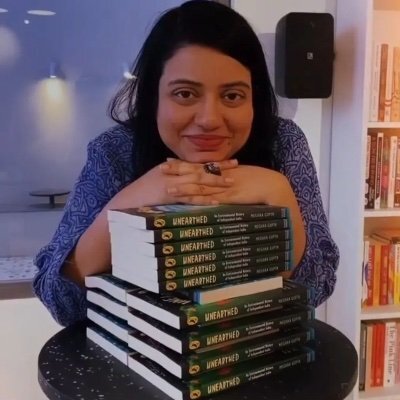

Meghaa Gupta
Meghaa Gupta’s exploits in history are the outcome of an irrepressible urge to contextualise the challenges of the present with the past and make greater sense of the times we live in.
She works in children’s publishing and firmly believes that all change begins with getting children to read books that demystify the world and its infinite possibilities.
Fee Structure
| INR 1500 | For Individuals (excluding GST) |
|---|---|
| INR 800 | For partner organisations of Azim Premji University & Azim Premji Foundation (excluding GST) |
For any queries, please write to: shashwat.dc@apu.edu.in