
Local Democracy and Welfare Entitlements: Theory, Policy, and Practice February 2026 Batch
Details
Despite efforts by some State governments and Civil Society Organisations (CSOs), the practice of local democracy and welfare entitlements in India has not been impressive. The Union and the State governments, despite the promise of the Constitution, have more often than not treated the Local Democratic Institutions as non-desirable or as their agencies rather than as local governments. More action is needed to close the systemic gaps so that welfare entitlements reach the intended population.
The CSOs of India, as some outstanding examples have shown in the past, can play a crucial role to develop a vibrant local democracy and ensure delivery of welfare entitlements in the country. Fortunately, there are many CSOs which are willing to devote themselves to the cause, but do not have the domain knowledge to work on local democracy issues. The course has been designed to equip them with knowledge and understanding of the issues related to local democracy and welfare entitlements.
Why this course?
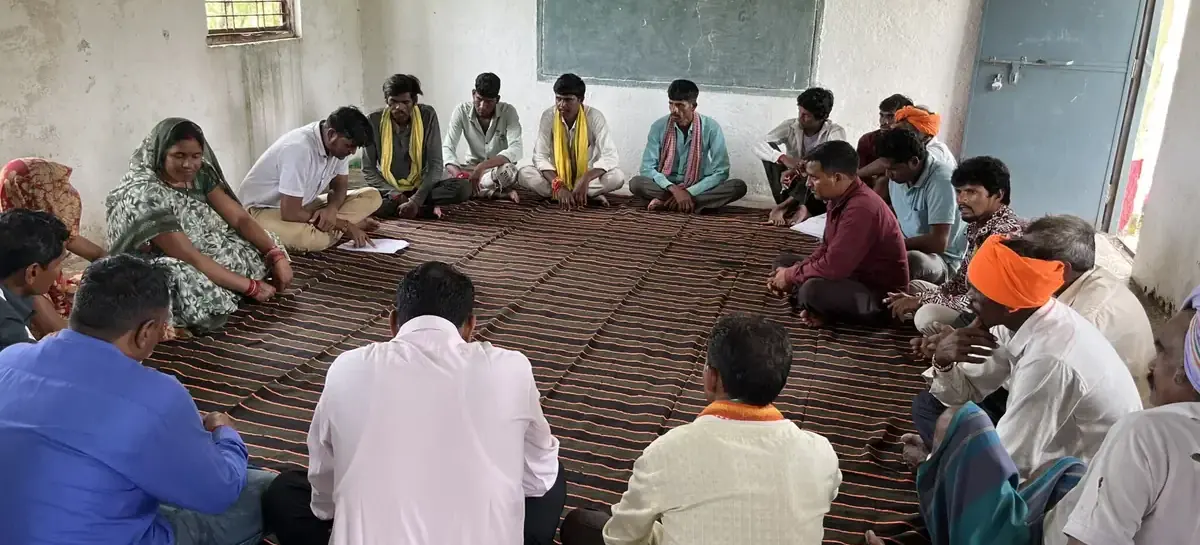
The course explores the theory, policy, and practice of local democracy and welfare entitlements in India, with a focus on rural local government, i.e., Panchayati Raj Institutions, and Gram Sabhas. Participants will be provided an overview of various ideas and policies that has informed India’s local democracy and welfare initiatives. The field experience of various issues related to local democracy such as participatory planning, poverty alleviation, empowerment of women and Dalits will be discussed. Case studies of successful collaboration between local governments and CSOs will be highlighted. Finally, the participants will be guided to develop their own vision and projects related to strengthening of local democracy and welfare entitlements in their respective field areas.
What does the course offer?
The course explores the theory, policy and practice of local democracy in India, with a focus on Gram Panchayats and Gram Sabhas. Participants will be provided a holistic overview of various ideas and policies that has informed India’s local democracy initiatives. Then the field experience of various issues related to local democracy such as participatory planning, poverty alleviation, empowerment of women and Dalits will be discussed.
Case studies of successful collaboration between local governments and CSOs will be highlighed. Finally the participants will be guided to develop their own vision and projects related to strengthening of local democracy in their respective field areas.
Who should attend?
The course is designed and intended for CSOs who are working or are interested in working on local democracy issues in rural forest and PESA areas. The course is best experienced by a minimum of two development practitioners from one organisation. The design of the course is aimed at mid to senior-level staff of the organisations having a minimum of seven years of experience.
Structure of the course
The course will be offered in Bengaluru from 23 Feb to 5 March 2026 in the face-to-face mode. It’s divided into seven themes along with a field visit and a a way forward for the participants to plan their work in future. The themes cover the theoretical foundation, policy perspectives and dominant field realities, and major exceptions and good practices.
| Serial No. | Session topic | Sessions |
|---|---|---|
| I | Concepts and theories | Three sessions |
| II | Panchayati Raj: Evolution, structure & mandate | Two sessions |
| III | Panchayat planning – Evolution and good practices | Three sessions |
| IV | Democratic governance in forests and 5th schedule areas | Three sessions |
| V | Rights and welfare- concepts and policies | Two sessions |
| VI | Facilitated sessions on civil society engagements | Four sessions |
| VII | Exemplars and innovations | Twenty sessions |
| VIII | Field visits and reflections | Three sessions |
Eligibility and selection
All applicants are expected to represent their organisation.
A minimum of two participants from each organisation should participate.
All applicants must possess a working knowledge of English.
Applicants will be shortlisted based on their applications and telephonic interviews.
Important dates
The last date for applying is 5 Jan 2026.
The selected candidates will be informed about the payment process by 12 Jan 2026.
The last day for fee payment is 16 Jan 2026.
The decision of the evaluation committee will be final.
Pedagogy
The course will be transacted in a mix of English and Hindi. It shall utilize published texts, videos and class presentations followed by interactive classroom sessions to explore the issues that will be discussed. The course will be conducted face-to-face only. Course materials will be available in Hindi and English.
Course faculty
The course will be anchored by Debraj Bhattacharya and Ashok Kumar Sircar. Faculty members will be drawn from Azim Premji University, Philanthropy and a pool of noted resource persons from around the country.
Certificate of Participation
The participants will be awarded a Certificate of Participation after successfully attending all the days of the course and submitting assignments
Course Faculty
-


Ashok Kumar Sircar
Ashok Sircar has worked for 31 years spanning the corporate sector, development sector, and teaching/training. He has been extensively involved in development action and studies in India in the domains of programme design, planning and execution, monitoring-evaluation, research and policy advocacy on issues of local governance, land rights and livelihoods.
-

Debraj Bhattacharya
Debraj is an alumnus of Presidency College, Calcutta and Calcutta University where he studied History for his BA and MA degrees.He has worked in various NGOs in the development sector of India for the last two decades and learnt about “development”, or the lack of it, while working.Debraj’s research, broadly speaking, falls in two disciplines…
Fee Structure
| INR 13275 | Course fee (including GST) – for individuals from non-partners |
|---|---|
| INR 1770 | Course fee (including GST) – for individuals from Field Practice Organsations (FPO) associated with Azim Premji Foundation, including Azim Premji University |
| INR 7080 | Accomodation fee (including GST) |
Food: Breakfast and meals are available at the cafeteria on direct payment basis.
Approximately Rs. 225/- can suffice for breakfast and two meals per person per day.