Child Care Hub — A Win-Win for Working Women
The Motherhood Penalty is a reality that many working women face while returning to work after a life event like childbirth. At Technopark in Thiruvananthapuram, a public-private partnership venture unites women from different strata of society, enabling them to support and uplift one another. Together, they operate a path-breaking daycare facility, Child Care Hub, which connects the dots of social security, women’s empowerment, child welfare, community development, and progress. Presented by Anuradha Nagaraj, Radio Azim Premji University brings you the story in the voices of the women powering the initiative.
Details
“Chechi, chechi!”
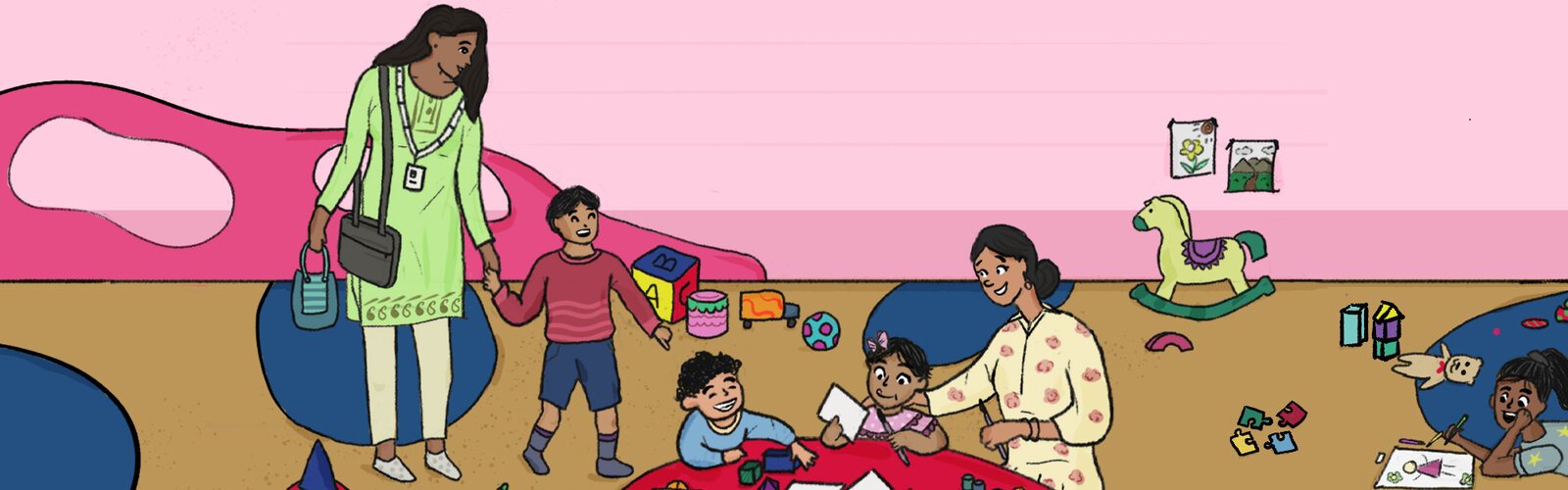
As the workday begins at Technopark in Thiruvananthapuram, the cheerful prattle of toddlers greets tag-wearing parents bustling in and out of the sprawling IT campus. Adding to this symphony are the voices of working mothers, slinging their laptop bags as they head off for another day at the office. The clock is ticking, leaving only a few minutes for a quick kiss on the cheek before they entrust their young ones to the care of the ‘Chechis’ who run the daycare facility. In Kerala, the Malayalam word for elder sister is often used to address unfamiliar women with respect, but here it carries a special endearment — a bond of maternal warmth and trust among empowered women from different social strata.
The Motherhood Penalty (as opposed to the Fatherhood Bonus) is a term used to summarise the economic disadvantages that women face in the workplace after becoming mothers. Among these are lower pay, perceived incompetence, fewer benefits, and interference with career advancement. They arise as a result of workplace attitudes that stereotype mothers as less motivated or committed to their jobs, compounded by the challenges of balancing work and caregiving responsibilities.
For young working mothers with demanding jobs in the competitive IT sector, a daycare facility is more than a perk; it’s a necessity. As these women return to work after maternity leave, such a service allows them to maintain a healthier work-life balance. But that’s not all — this initiative also creates livelihood opportunities and uplifts women from marginalised communities in the locality. This dual purpose is achieved through a well-conceptualised women’s empowerment programme that benefits everyone involved.
CC Hub (Child Care Hub) is run by the Thiruvananthapuram chapter of Women Inclusive in Technology (WIIT) as a public-private partnership (PPP) programme. Supported by Technopark, the IT industry in Kerala, and Kudumbashree (a grassroots women’s empowerment initiative by the Government of Kerala), this project unites women from different strata of society, enabling them to support and uplift one another. In doing so, CC Hub connects the dots of social security, women’s empowerment, child welfare, community development, and progress.
The Radio Azim Premji University team travelled to Thiruvananthapuram to record this episode of Stories of Change. Presented by former award-winning journalist Anuradha Nagaraj, the inspiring story of CC Hub is told through the voices of the women who brought this initiative to life.
Credits
Akshay Ramuhalli, Bijoy Venugopal, Bruce Lee Mani, Gorveck Thokchom, Narayan Krishnaswamy, Prashant Vasudevan, Sananda Dasgupta, Seema Seth, Shraddha Gautam, Supriya Joshi, and Velu Shankar
Acknowledgements
Thanks to Tina James, Anu T Jose, Radhika Vishwanathan, WIIT, Kudumbashree, Technopark Trivandrum, caregivers and parents.
More in Stories Of Change with Anuradha Nagaraj
-

Horn OK Please — Stories Of Change Visits Seva Kendra Calcutta
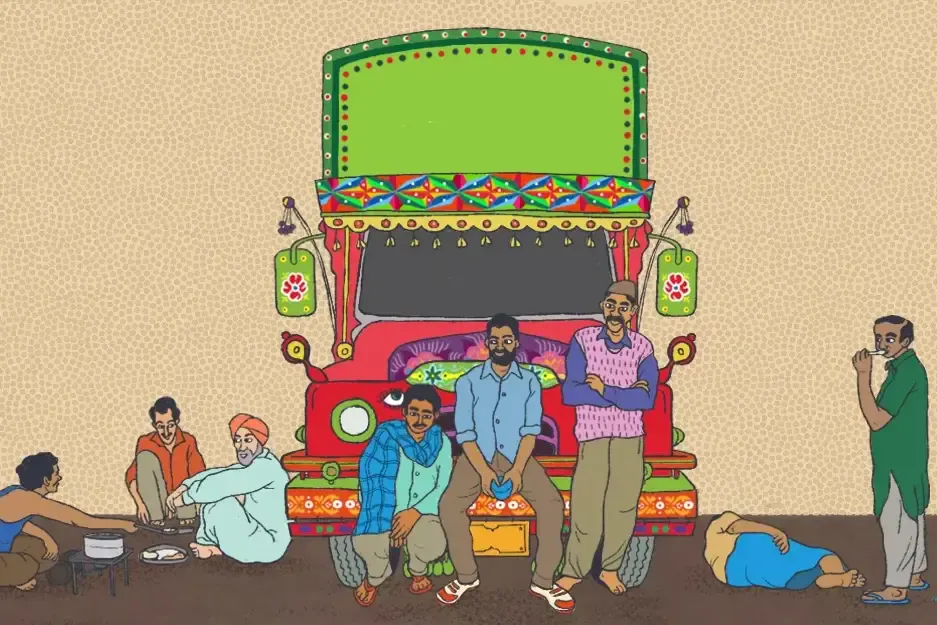
Seva Kendra Calcutta runs the Sambandh programme that provides an outreach avenue for truck drivers to create a nurturing and caring community focused on their wellness and security. Listen to Ep 2 of Stories of Change — Seva Kendra Calcutta
-
The Uhuru Experience — Stories Of Change Visits Snehadhara Foundation
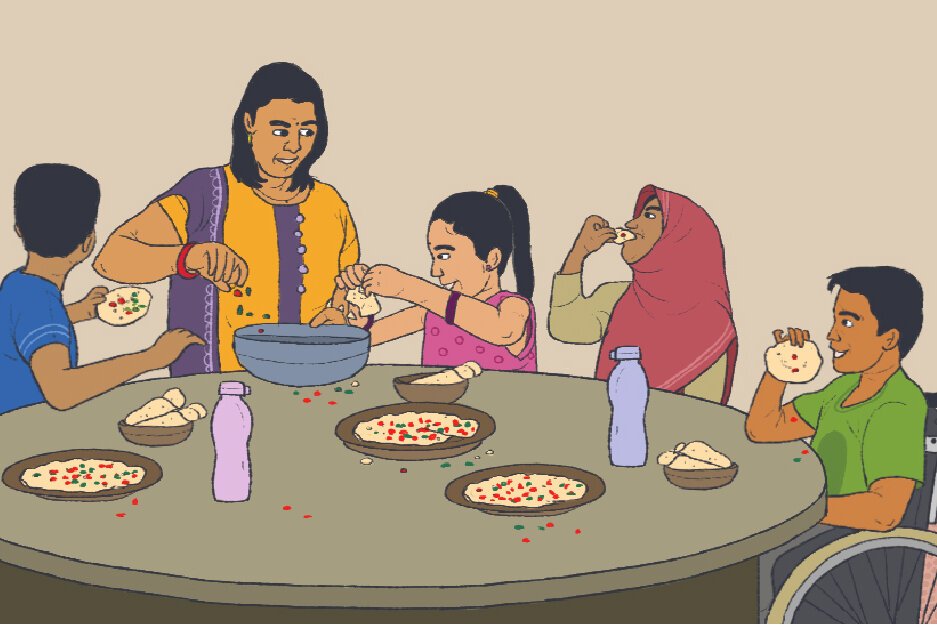
Listen to the story of the Uhuru programme, run by non-profit Snehadhara Foundation
-
In the Rann of Kutch, Kharai camels walk on water
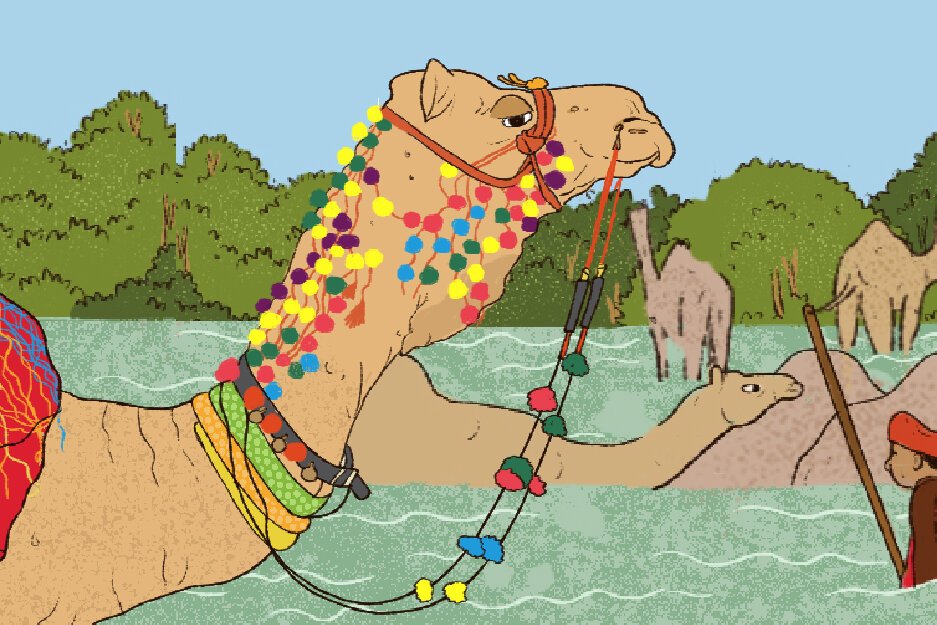
The Fakirani Jats inhabit the Rann of Kutch, where the 2500 sq-km Banni grassland segues into salt marshes and marine mangrove wetlands abutting the Arabian Sea. The livelihood of this pastoralist community is built around their pack animals, particularly the rare and hardy Kharai camel, a breed uniquely adapted to the region’s terrain and climate. As increased salt extraction and industrialisation fragment the fragile mangroves and force the herdsmen away from their traditional livelihood, the Kharai has become an endangered breed. A local organisation, Sahjeevan, has intervened with multiple initiatives to support the Fakirani Jats and sustain their traditional occupation of camel pastoralism. In the third episode of Stories Of Change with Anuradha Nagaraj, we train the spotlight on Sahjeevan’s work among the camel herders of western Gujarat.