
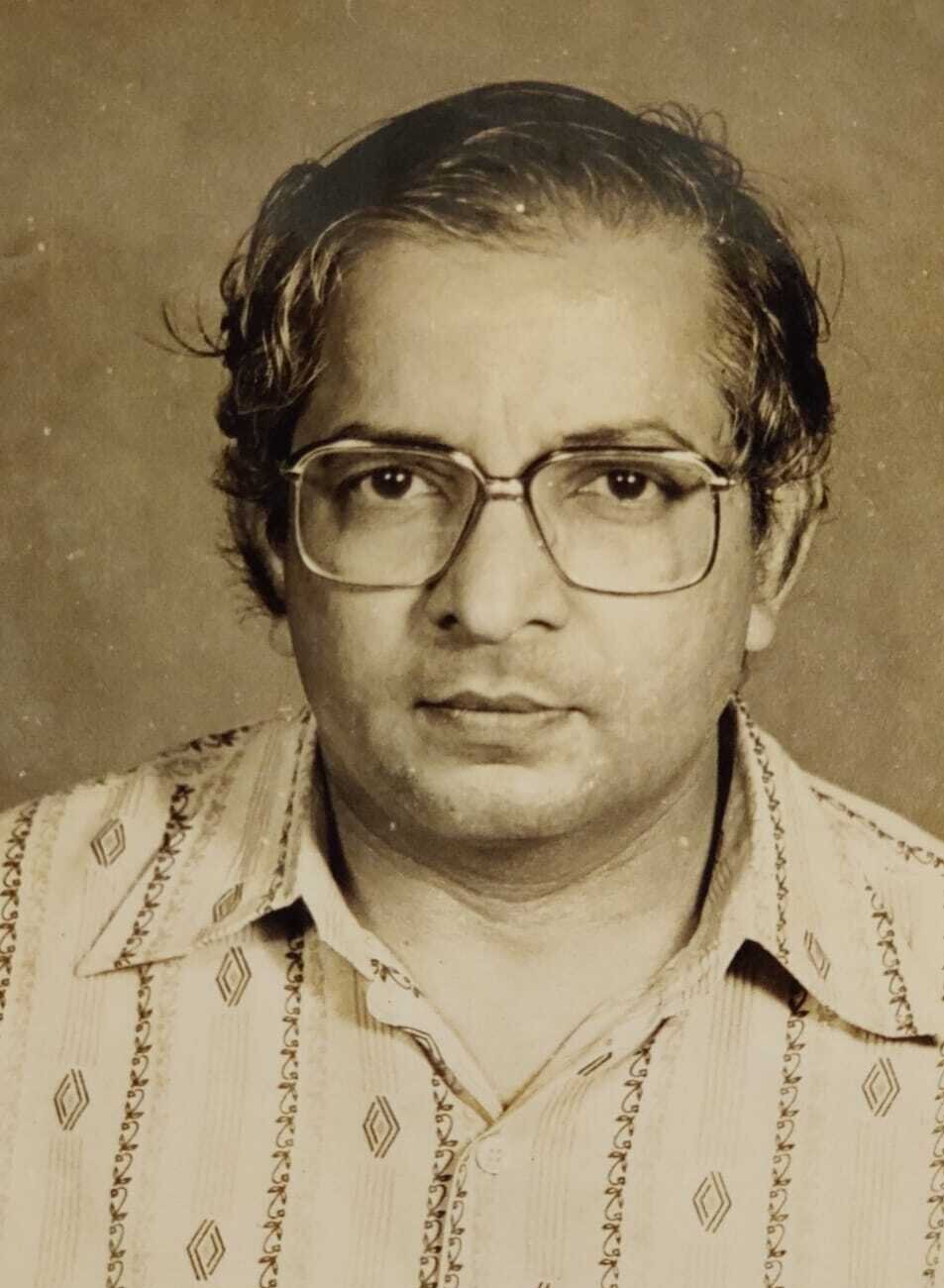
Srinivasan Ambirajan
Development and policy economist with an interest in public finance
By B. Chandrasekharan
Details
S. Ambirajan (1936 – 2001) was born in Pattamadai, Tirunelveli district, Tamil Nadu. He completed his schooling at Ramasesha Iyer School in Pattamadai, St. Antony’s School, and Mrs. A.V.N. College, both in Visakhapatnam, Andhra Pradesh.
He pursued his undergraduate and postgraduate studies at Andhra University in Visakhapatnam, where he earned his first PhD in economics in 1961. He obtained a second PhD in 1962 from the University of Manchester, England, where he was awarded both the Bank of England Houblon-Norman Research Fellowship and the Hallsworth Research Fellowship with distinction.
After serving as a faculty member at the University of Queensland, Brisbane, Australia, from 1964 to 1966, and the University of New South Wales, Sydney, from 1966 to 1981, Ambirajan joined the Department of Humanities and Social Sciences at the Indian Institute of Technology, Madras as a Professor of Economics, serving from 1981 to 1996, including a term as Head of the Department. From 1996 until his demise in 2001, he was a Visiting Professor of Economics at the Madras School of Economics, where he also played a key role in its development.
A prolific writer, Ambirajan’s scholarly range covered a broad spectrum: corporate taxation, classical political economy, Indian economic thought, economic history, and development policy. P.R. Brahmananda observed that “Dr. Ambirajan’s published works were in the area of monetary history and in the history of policy-making, especially in India. His work on the political economy of monetary management during British rule in India has become a classic.”
While pursuing his PhD in economics at Andhra University, he wrote his first book, A Grammar of Indian Planning in 1959, at the age of twenty-three. Drawing on the works of Ludwig von Mises, F.A. Hayek, and V.S. Srinivasa Sastri, he advocated decentralised planning, the promotion of private enterprise, and entrepreneurship, in contrast to the policies of central planning and extensive government regulation adopted by the Union Planning Commission under the chairmanship of India’s first Prime Minister, Jawaharlal Nehru.
Far ahead of his time, he was critical of the obsession with population control and aggressive birth control measures. He argued that “a rapid rise in population often accompanies rapid economic development” and that “economic development alone can effectively address overpopulation.” He warned policymakers that “drastic measures to cut birth rates, such as birth control and abortion, will not alleviate human misery and may, in fact, make the problem worse.”
Observing that since “there are immense possibilities of improving the agricultural and industrial productivity of underdeveloped countries, more attention could be given to the increase of per capita production than to the decrease of birth rates.” Further, he stated that “another line of action to fight overpopulation would be to embark on industrialisation. In the sphere of industrialisation, the law of increasing returns comes into operation, and every increase in population will make the process of industrialisation more profitable, because with more people, a more extensive application of the principle of ‘division of labour’ would be possible.” He asserted that “without industrialisation, the problem of age-long poverty cannot be solved.”
He observed that “misuse of natural resources in underdeveloped countries prevents real economic growth.” Strongly opposing deficit financing without a realistic assessment of resources, he warned that reckless borrowing and spending would ultimately “ruin ourselves and destroy our credit in the world.” He noted that planning should involve “analysing needs and balancing them with available resources” and that private enterprise and entrepreneurship were crucial for economic development.
Despite India’s liberal constitutional framework, centralised planning dominated economic policy in the early decades of independence. Ambirajan foresaw the economic stagnation that resulted from state overreach and argued that true economic development required a balance between government intervention and private enterprise.
Adopting a holistic perspective that would characterise his other works, Ambirajan stated, “Economic development is but one of the many factors that determine a country’s or a community’s prosperity. Without social betterment and general cultural progress, mere economic development can have no meaning for us.”
In his first PhD thesis, titled The Taxation of Corporate Income in India, a revised version of which was published as a book in 1964, Ambirajan studied the history of corporate taxation in India, covering the period from World War II to the first two decades of independent India.
His study was the “first attempt to present the problem of corporate taxation in India within proper theoretical and historical perspectives.” He emphasised that “the taxation of corporate income in India necessarily involves an exploration of the appropriate backgrounds, namely, the economics of corporate taxation in general, the history of corporate activity in India, and the volume and variety of legislation related to companies and corporate taxation in India.” Furthermore, he found that “an elaborate and complicated structure of corporate taxation has come into being, almost in a haphazard manner.” It must be noted that this period marked India’s adoption of a socialist pattern of society, during which private sector enterprises received little attention.
Ambirajan recommended that “rather than using corporate taxation as an egalitarian hammer to tax the rich and bring about income equality, it might be used to much greater advantage as a tool to encourage saving, investment, and economic progress generally.” He observed that “the problem is one of designing a structure of taxation that will be conducive to achieving rapid economic development, instead of relying on the current piecemeal attempts — which, by their very nature, are apt to prove largely ineffective — at providing incentives for greater capital formation.”
Additionally, he highlighted the need to: improve tax administration, strengthen measures to prevent tax evasion, maintain a simple tax structure, eliminate “nuisance” taxes, and abolish capital gains tax to promote higher capital formation in the private sector. He emphasised the necessity of ensuring continuity and consistency in tax reform efforts.
He also criticised the proposal of Nicholas Kaldor for restructuring the Indian tax system, contending that while it was theoretically sound, it was not feasible within the Indian context, given the existence of multiple taxes and a weak administrative system.
Ambirajan’s second doctorate was titled Economic Ideas and Indian Economic Policies in the Nineteenth Century, published to wide acclaim as Classical Political Economy and British Policy in India, a pioneering study on the nexus between the economic ideas of the classical economists and the economic policies of the British government in India during the late eighteenth and nineteenth centuries, and it is considered his most important work.
Ambirajan observed that the British Raj’s “policies leaned more towards a free trade orientation than towards any crude conceptions of the beggar-my-neighbour policies of the so-called Mercantilist writers of the seventeenth and eighteenth centuries.” He refers to the “economic ideals”, based on “classical economic liberalism”, which constituted the governance architecture of British rule in India with regard to six policies: “colonial policy”, “famine Policy”, “economic relations”, “taxation”, “land revenue”, and “economic development”.
The ideal for colonial policy was “to achieve the free flow of resources without any impediments, and for India to form part of a system of international division of labour”; for Famine Policy it was to” let the market allocate the scarce food resources”; on “economic relations”, the focus was “the maintenance of free trade” with individuals being “able to buy and sell their services freely, and thus avoid rigidities in the labour market”; for “taxation, “minimum interference with the allocative mechanism through fiscal measures”; while for “land revenue” the “ideal was the absorption of rent defined in Ricardian and Malthusian terms and the maintenance of the public sector without any ‘real cost’ to the society”; and the policy for “economic development” was mainly focused on “economic progress through individual enterprise, and provision of the appropriate institutional structure which among other things included a modicum of necessary public goods, a currency system, legal system and a police system.”
He noted that during the second half of the nineteenth century, “the more thoughtful among the policy makers began to show awareness of the folly of trying to translate English theories into Indian economic policies without any modification” and “as a result of such introspection concerning the nature and usefulness of political economy, a consensus was said to have emerged which retained the ‘ideals’ based on Classical economic liberalism, but many modifications were effected in practice, and in some cases this happened to such an extent that there was hardly any trace of the original ideal when the policy was implemented.”
He concluded that “we cannot be absolutely certain that theory was decisive because policy was formed within the context of a unique and complex historical situation, which no amount of research can completely reproduce in our minds.”
Both his PhD theses were groundbreaking research works, employing empirical and historical approaches to their chosen subjects. Additionally, he made many forward-looking policy recommendations that remain relevant even decades later.
In 1999, he delivered the B.R. Ambedkar Memorial Lecture at the University of Madras on “Ambedkar’s Contributions to Indian Economics”, later published in the Economic and Political Weekly, where he provided an in-depth analysis of Ambedkar’s economic contributions. He expressed disappointment that Ambedkar was often treated only as a Dalit leader and not also as a serious economic thinker.
Ambirajan was invited by the former RBI Governor C. Rangarajan to write the third volume of The History of the RBI for the period from 1966 to early 1981. However, due to his sudden demise, this project was completed and edited by other scholars.
In addition to his scholarly work, Ambirajan was keen on educating the general public on economic issues through his columns in The Hindu and The Economic Times. In particular, his articles explaining the Union Budget and the contributions of Economics Nobel Laureates were widely appreciated. He asserted that “public discourse on policy should be defined by sobriety, facts, and reason, and not by emotion and abuse.”
Ambirajan was diagnosed with cancer in 1991 and had to visit his doctors every few months for a health check. This did not deter him one bit, over the next ten years, from reading, writing, lecturing, accepting the assignment to write a volume on RBI history, attending Carnatic music concerts and helping to care for his father, the outstanding literary scholar K.R. Srinivasa Iyengar. Supporting him in all this was his wife, Prabha.
Ambirajan’s unexpected demise on February 4 2001 at 65 came as a shock to the economics fraternity. His legacy, both in terms of his academic output and as a role model, will endure.
Ambirajan, S. (1959). Malthus and Classical Economics. Popular Book Depot.
Ambirajan, S. (1964). The Taxation of Corporate Income in India. Asia Publishing House.
Ambirajan, S. (1965). Laissez Faire in Madras. The Indian Economic & Social History Review, 2(3), 238 – 244.
Ambirajan, S. (1967). Economic Ideas and Economic Policy in British India. Indian Economic Journal, 15(2).
Ambirajan, S. (1978). Classical Political Economy and British Policy in India. Cambridge University Press.
Ambirajan, S. (1984). Political Economy and Monetary Management: India, 1766 – 1914 Affiliated East-West Press.
Ambirajan, S. (1989). The Delayed Emergence of Econometrics as a Separate Discipline. In I.H. Rima (ed.) Measurement, Quantification and Economic Analysis: Numeracy in Economics. Routledge.
Ambirajan, S. (1990). Economic Wisdom in Ancient Tamil Society: The Acquisition and Use of Wealth in Ancient Tamil Literature. In S.T. Lowry (ed.) Perspectives On The History of Economic Thought, Vol. VII. Edward Elgar.
Ambirajan, S. (1996). The Professionalization of Economics in India. History of Political Economy, 28, 80 – 96.
Ambirajan, S. (1997). The Concepts of Happiness, Ethics, and Economic Values in Ancient Economic Thought. In B.B. Price (ed.) Ancient Economic Thought. Routledge.
Ambirajan, S. (1998). Good People, Bad Times: Views from Periphery. T.R. Publications.
Ambirajan, S. (1998). Dadabhai Naoroji the first economist of modern India. Research in the history of economic thought and methodology, 16, 155 – 178.
About the author
Chandrasekaran Balakrishnan is the Founder Chairman of the AgaPuram Policy Research Centre, Erode, Tamil Nadu. His research interest is in development economics and the history of Indian economics.