
B.R. Ambedkar
Multi-faceted economist and principal architect of Indian Constitution
By Narendra Jadhav
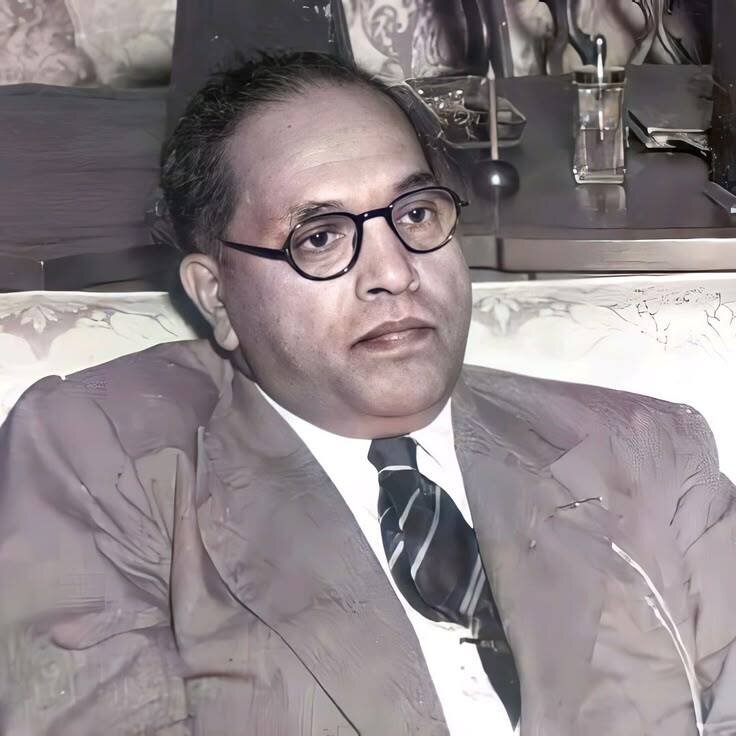
Details
Bhimrao Ramji Ambedkar, affectionately known as Babasaheb Ambedkar, was undoubtedly one of the most illustrious sons of India. He appeared on the Indian socio-political scene in the early 1920s and remained at the forefront of the social, cultural, economic and political transformation of India during the closing decades of British Rule. After India became independent in 1947, Ambedkar became the principal architect of the Constitution of India and, thus, in effect, shaped modern India’s democratic republic, and defended it till his Nirvana in 1956.
Ambedkar’s life is an incredible saga: an Untouchable boy, humiliated every step of the way from childhood to youth, beats all odds, securing degrees from world-class universities – MA and PhD from Columbia University, USA and DSc from the London School of Economics, besides Bar-at-Law degree from London. He then returns to India and devotes his life to the destruction of the caste-ridden old order, characterised by injustice and denial of human rights. Without being favoured either by family fortune or political lineage, but by the sheer grit of his determination and back-breaking hard work, supreme courage, and selfless sacrifice, he overcomes bitter political opposition and the perils of caste discrimination to become a national leader. He dedicates his life to building the safeguards of affirmative action to establish a more equitable society that is capable of delivering social justice to millions of downtrodden, thus heralding in India a new age of social equality and rationalism. In this process, Ambedkar comes to the forefront not only as a valiant upholder of the Indian Republic, but also emerges as the conscience keeper of modern India.
No wonder there are more statues of Ambedkar in India than of any other leader in the history of our nation. It is also not surprising that Ambedkar was voted, in August 2012, as the ‘Greatest Indian after Gandhi’ in an e‑poll initiated by some TV channels (History, TV18 and CNN-IBN) with an overwhelming majority of votes!
Against this background, it is grossly unfair to characterise Ambedkar simply as a leader of Untouchables or Dalits, as is often done even in otherwise responsible quarters. He was a national leader. His erudition, his mass movements, and his role in the government and outside, clearly show that he was a patriot of a sterling order. His brand of nationalism was not merely confined to the transfer of political power to the Indians from the British Colonial Rule. It was focused on a much broader notion of sustainable national reconstruction, that is, building of a democratic republic through the creation of social equality and cultural integration in the age-old, caste-ridden, and inherently unjust and discriminating society.
In the course of his most eventful life, Ambedkar made outstanding contributions as a scholar, educationist, journalist, as an authority on comparative religion, as a policymaker and administrator, and as a parliamentarian.
In spite of being a statesman and a mass leader, Ambedkar always remained a reflective thinker and erudite scholar. Ambedkar was a prolific writer. Perhaps no other mass leader in India has produced anywhere even close to the voluminous writings that he did. He wrote remarkable treatises on economics, sociology, anthropology, politics, law, religion and culture which is clearly the mark of an intellectual colossus. The analytical rigour and lucidity, insights and passion that exude his writings are truly phenomenal.
Ambedkar’s great contribution as the principal architect of the Indian Constitution is widely acclaimed. Besides law, his scholarly contributions in diverse fields are well recognised. His outstanding contributions as a parliamentarian, educationist, journalist, and above all, as a great social reformer, champion of human rights and as an emancipator of the downtrodden masses in India are also widely appreciated. Yet, there is one crucial aspect of his multifaceted genius that has remained surprisingly neglected far too long, namely his phenomenal contribution as an economist.
As a matter of fact, Ambedkar was an economist in his basic training. He was awarded the degrees of MA and PhD in economics by the Columbia University, USA, in 1915 and 1917, respectively. Again, the degree of Doctor of Science (DSc) which the London School of Economics conferred on him in 1923 was also for research in economics.
Ambedkar’s professional career bears a distinct imprint of an economist. Various memoranda and statements that he submitted to the Government (under British rule as well as in independent India) are indicative of his deep insights into India’s economic problems. His speeches were replete with stimulating economic thoughts. He was probably the first thinker to analyse economic dimensions of social maladies in India, such as the caste system and untouchability. Even the fact that the Constitution of India is said to have embodied more economic and financial provisions (for example, provision for the Finance Commission) than any other Constitution in the world can be attributed, in part, to the influence of Ambedkar as an economist.
Indian society has done a grave injustice to itself by ignoring the economic thoughts of Ambedkar. After all, his economic thoughts were not parochial. What Ambedkar always had in mind was in the best interest of the nation as a whole. To brand him as only a leader of the downtrodden in India is an insult to this great patriot. What is equally disheartening is depriving Indian society of the benefit of his economic thoughts, an act which is self-defeating for India as a nation. It is, therefore, imperative to bring out the contributions of Ambedkar, both in the field of economics in general, and in addressing India’s economic problems.
Ambedkar’s career as an economist is characterised by two distinct phases: the first one up to 1923, which led to several scholarly contributions in the form of dissertations for various advanced degrees that he earned in universities of repute, and the second one covering the period since his return to India until his nirvana in 1956, during which he made significant contributions as a professional economist in addressing India’s economic problems and in managing economic affairs of the country.
Ambedkar wrote three scholarly books on economics:
1. Administration and Finance of the East India Company
2. The Evolution of Provincial Finance in British India
3. The Problem of the Rupee: Its Origin and Its Solution
The first two represent his contribution to the field of public finance; the first one evaluating finances of the East India Company and the second one analysing evolution of the Centre-State financial relations in British India. The third book, his magnum opus in economics, represents a major contribution to the field of monetary economics. In that book, Ambedkar has examined the evolution of the Indian currency as a medium of exchange and has discussed the problem of the choice of appropriate currency system for India. Not many economists are even aware of the fact that on the currency question Ambedkar crossed swords with influential economic thinkers such as John Maynard Keynes.
There is a section of people in India who believe that Ambedkar established India’s central bank i.e. the Reserve Bank of India (RBI). This is simply not true. It may be noted however, that when Hilton Young Commission, formally the Royal Commission on Indian Currency and Finance, came to India in 1927, and on whose recommendations the RBI was established eight years later in 1935, Ambedkar had presented, among others, an important testimony and statement before the commission.
Ambedkar published in 1918, an interesting research paper titled ‘Small Holdings in India and Their Remedies’ addressing the problem of low productivity of agriculture in India. In this brilliant paper, Ambedkar concluded that industrialisation of India is the soundest remedy for the agricultural problems in India. Rapid industrialisation would not only reduce the pressure on land, but it would also enhance savings and the capital goods sector. As a combined effect, it would forcibly create the economic necessity of enlarging the land holdings and improving their productivity.
Notably 36 years later, Arthur Lewis wrote a strikingly similar paper: ‘Economic Development with Unlimited Supplies of Labour’, which developed the so-called Dual Sector model of Development Economics, for which Lewis was awarded the Nobel Prize in Economics in 1979. Ambedkar did not even get a citation.
Besides his seminal research paper on agricultural economics, Ambedkar wrote a research paper on exchange rates (in two parts) titled “The Present Problem of Indian Currency 2 shillings versus 1s. 4d. Ratio”, first published in April 1925.
In addition, Ambedkar published two reviews in the arena of economics: Book Review ‘Currency and Exchanges’ (April 1925) and Review of the Report of ‘Taxation Enquiry Committee’ (April 1926).
Ambedkar’s scholarship in economics was not confined to academic contributions alone. Indeed, he had a unique distinction of blending professional expertise in economics with leadership of mass movements aimed at socio-economic emancipation of the poor and the oppressed.
On his return to India in 1923, Ambedkar did not write any book on economics per se, though several of the other books that he authored during that period had significant elements of economic analysis and reasoning embodied therein. Numerous thought-provoking speeches that Ambedkar delivered are full of perceptive remarks on major economic issues which were being debated during that period.
As a nominated Member of the Bombay Provincial Legislative Council (1926 onwards) and later as an elected Member of the Bombay Legislative Assembly (1937 to 1939), Ambedkar offered critical appraisal of the provincial budgets presented then. He also dealt with problems of Indian agriculture and poverty, and fought against the oppressive institutions such as Khoti System, and Mahar Vatan.
In the 1930s, Ambedkar emerged as a Labour Leader and played a significant role in India’s labour movement. He even founded a political party, the Independent Labour Party (ILP), which carved out a unique place of its own in the pre-Independence political dynamics of the country.
In July 1942, Ambedkar was appointed as a Member (Ministerial Rank) in the Viceroy’s Executive Council. In that capacity, Ambedkar emerged as an economic administrator par excellence with remarkable contributions in labour, employment and skill development. It was Ambedkar who started skill development programmes and established employment exchanges in the country. Moreover, it was Ambedkar who laid the foundation of the labour welfare measures in India. In addition, he also made several important contributions in the field of power, water management, mineral resource management and public works. (e.g. Hirakund Dam).
Ambedkar presented a perceptive critique of the doctrine of Marxism in his essay entitled, Buddha or Karl Marx, and spelt out his views on the ideal strategy for India’s economic development in his Memorandum States and Minorities (1947). In the interregnum, Ambedkar provided a provocatively original analysis of economic dimensions of the social maladies that plagued India, especially the caste system and untouchability in his book ‘Annihilation of Caste’ (1936).
This monumental book was in fact, based on a speech prepared for a conference in Lahore which was not delivered. Mahatma Gandhi in his critique of the book defended Chaturvarna (the four Varnas) on the basis of division of labour and resultant social stability. Ambedkar’s brilliant rebuttal of Gandhi’s argument emphatically noted: what was involved here was not the division of labour. Superimposed on the division of labour was unnatural division of labourers which was based not on inclination, liking or talent of the individuals, but on sheer accident of birth.
After independence, Ambedkar’s work on the Constitution of India shows him to be a true Social Democrat. The Indian Constitution emphasises that political democracy in India cannot be sustained unless it is backed by social and economic democracy.
Throughout this momentous journey, Ambedkar’s entire contribution to economics, as a scholar as well as a professional economist, evidently emanates from a well-defined and consistent socio-economic philosophy.
Ambedkar’s economic philosophy could be captured in his own phrase: Bahujan Hitaya, Bahujan Sukhaya (i.e. greatest good for the largest number of people). Couched in social, religious and moral terms, the focal point of Ambedkar’s philosophy was the oppressed, the downtrodden and the marginalised strata of Indian society. This philosophy underscored the values of liberty, equality, fraternity, and social justice, which have also been enshrined in the Indian Constitution. The establishment of a caste-less democratic society based on Pradnya (Intellect), Sheel (character) and Karuna (compassion) is indeed the essence of Ambedkar’s economic philosophy.
Ambedkar, B.R. (1918). Small Holdings In India And Their Remedies. Journal of the Indian Economic Society, 1.
Ambedkar, B.R. (1919). The Evolution of Provincial Finance in British India. P.S. King & Sons.
Ambedkar, B.R. (1923). Problem of the Rupee: Its Origin and Its Solution. P.S. King & Sons.
Ambedkar, B.R. (1936). Annihilation of Caste.
Ambedkar, B.R. (1925). Statement of Evidence to the Royal Commission on Indian Currency. In V. Moon (ed.) Dr. Babasaheb Ambedkar: Writings and Speeches, Vol 6. Government of Maharashtra.
Ambedkar, B.R. (1994). Speeches in the Constituent Assembly. In V. Moon (ed), Dr. Babasaheb Ambedkar: Writings and Speeches, Vol 13. Government of Maharashtra.
Jadhav, N. (2015). Ambedkar An Economist Extraordinaire. Konark Publishers.
Jadhav, N. (2013). Ambedkar Awakening India’s Social Conscience. Konark Publishers.
Jadhav, N. (1993). Dr Ambedkar’s Economic Thought and Philosophy. Popular Prakashan.
About the author
Narendra Jadhav is an economist and member of Rajya Sabha. He has served as member of Planning Commission, member of the National Advisory Council, and chief economist for the Reserve Bank of India. [Full profile]