
Birds, Beasties and Bachhas
Prolific children’s writer Ranjit Lal tells us why creatures great and small (rather than people) inspire him and how he uses them as characters in his fiction.
Details
I’ve always been more interested in animals — be they mammals, birds, reptiles, insects et al than perhaps in people which is probably why these beasties figure in nearly all the stories I’ve written for children. I think children have a greater affinity to the natural world than most adults. Small children, closer to the ground, notice insects, older children love baby animals, and later on the ferocious wild beasts of our (ever diminishing) jungles. Writers through the ages have used animals as ‘human substitutes’ — something the scientific world abhors and calls anthropomorphism. But really the world would be a grimmer place without Mr. Toad of Toad Hall, Bagheera and Kaa of The Jungle Book, Donald Duck & Co. and a whole menagerie of others.
My first book (ironically written for adults but loved by eleven-year-olds) The Crow Chronicles has birds, animals, and in a minority, humans as the main characters. The Life and Times of Altu Faltu, a soap opera, has monkeys as the protagonists. Frankly, by writing about animal characters — who may be mirror images of people you might know — you can get away with murder! In Altu Faltu, some of the monkey characters were based on people I knew (and disliked), and I knew that even if they recognised themselves in the book there was no way they could complain to a judge: ‘Your Honour, I am that monkey in the book!’
So, what do you need in order to concoct animal stories for children? Firstly, an abiding interest in, and curiosity about animal life and the natural world. This leads to observation — keeping your eyes and ears (and sometimes nose) and notebooks open at all times and asking yourself questions: why does this insect behave the way it does? Why is this spider mom, who so lovingly protected her eggs, ready to eat her offspring when they hatch? Did they cling to her for too long? Why does a praying mantis chomp off the head of her beloved during their honeymoon? Answers to these questions will give rise to ideas for your characters and plots.
You do need to research these things, and if your story is based on an actual location, like a particular national park or sanctuary, you need to do the legwork. The Crow Chronicles was set in the Keoladeo National Park at Bharatpur, where I had tramped up and down and high and low for years together, apart from looking at Survey of India toposheets. An easier way out is to simply invent a fictitious location, based on an actual one: no one can accuse you of getting the geography wrong and you can arrange it to suit your story — as I did in The Small Tigers of Shergarh.
One short story I wrote (‘Mad Mozart Gives a Concert’ I think it was called) was based precisely on this — fiction arising out of fact. In Goa for a holiday, I was awoken at 4 am by a magpie-robin singing beautifully from one of the adjoining buildings in the complex I was living in. The next morning there appeared to be two magpie-robins competing with each other. One would sing for five or ten minutes and stop, and the second would begin an even more melodious tune a little later. On the third morning there was, hey presto a third participant in the concert! I knew that gentlemen birds sang for three main reasons: to tell the world they had survived the night, to inform other gentlemen that this property had been taken and to attract a lady. Which, in this case I found ‘they’ had done, though to my puzzlement there was only one magpie-robin couple I found in the garden. Hmm… there the matter rested until I came across a book on bird song which mentioned that sometimes gentlemen birds deliberately sang different songs from the same general area, pretending to be different birds in order to keep the competition at bay. A competitor may have been willing to fight one male, but certainly not three! So, the gentleman performing the subterfuge in the adjoining building was ensuring he had a territory (which, in this case, included a swimming pool) much larger than he would otherwise have been able to possess, and which lady could resist that?
These were the facts on which I based my short story. There was Mad Mozart, the ‘hero’, there was Melody, the lady he was wooing, and there were sundry competitors in the surrounding gardens eyeing his patch. Mozart sang for Melody, and asked her to live with him, but she, being sensible, wanted to sleep it over for a night. He panicked and sang two songs the next morning — the second a lot more melodious than the first and waited for her. Sure enough, she arrived but seemed distracted. When he asked her if anything was wrong, she looked around and told him: “Well yes, you see I know you sing beautifully, but this morning I heard someone singing even more beautifully, and I want to find him!” And off she went!
Of course, not all animals need to be of the ‘talking’ variety. In The Small Tigers of Shergarh, the main protagonist, recently orphaned fourteen-year-old Shikha, looking after her dumbstruck five-year-old brother Sunny, learns to regain her self-confidence and joie-de-vivre — and the courage to battle against a devious, moralising social worker — by observing the life of, and being inspired by, the tigers in the Shergarh National Park.
I have even used trees and flowers as characters in my books. In The Trees of Medley Gardens, the trees communicate with the brother and sister protagonists, revealing an astonishing world of hidden plant life and disclosing a deadly secret.
One word of caution: do be aware of your facts and don’t tell fantastical tales based on unrealistic optimism. For example, the dodo (like so many other animals and birds) is extinct. A story in which the dodo is suddenly discovered alive and well would go counter to the facts and be misleading. (Until the day of course, dodos are actually discovered waddling about somewhere! Let’s keep our fingers crossed.) Even so, there are a myriad of creatures that are alive and kicking, to observe, research and write marvellous stories about!
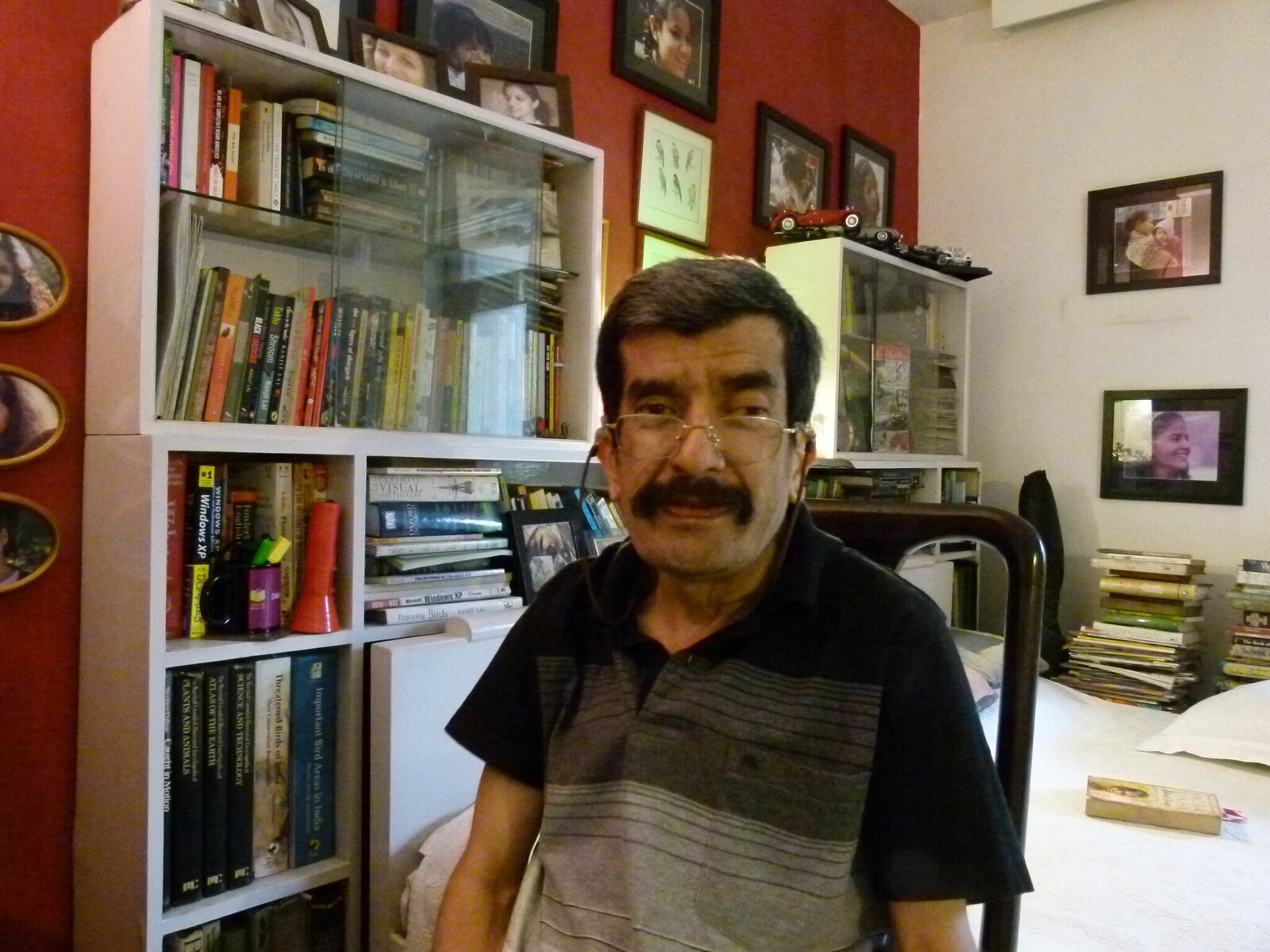
About the author:
Ranjit Lal is an author of around fifty books, many of which feature birds and beasties (and people, of course).