A Life in Language
Come, reflect on the profound relationship between language and identity
Details
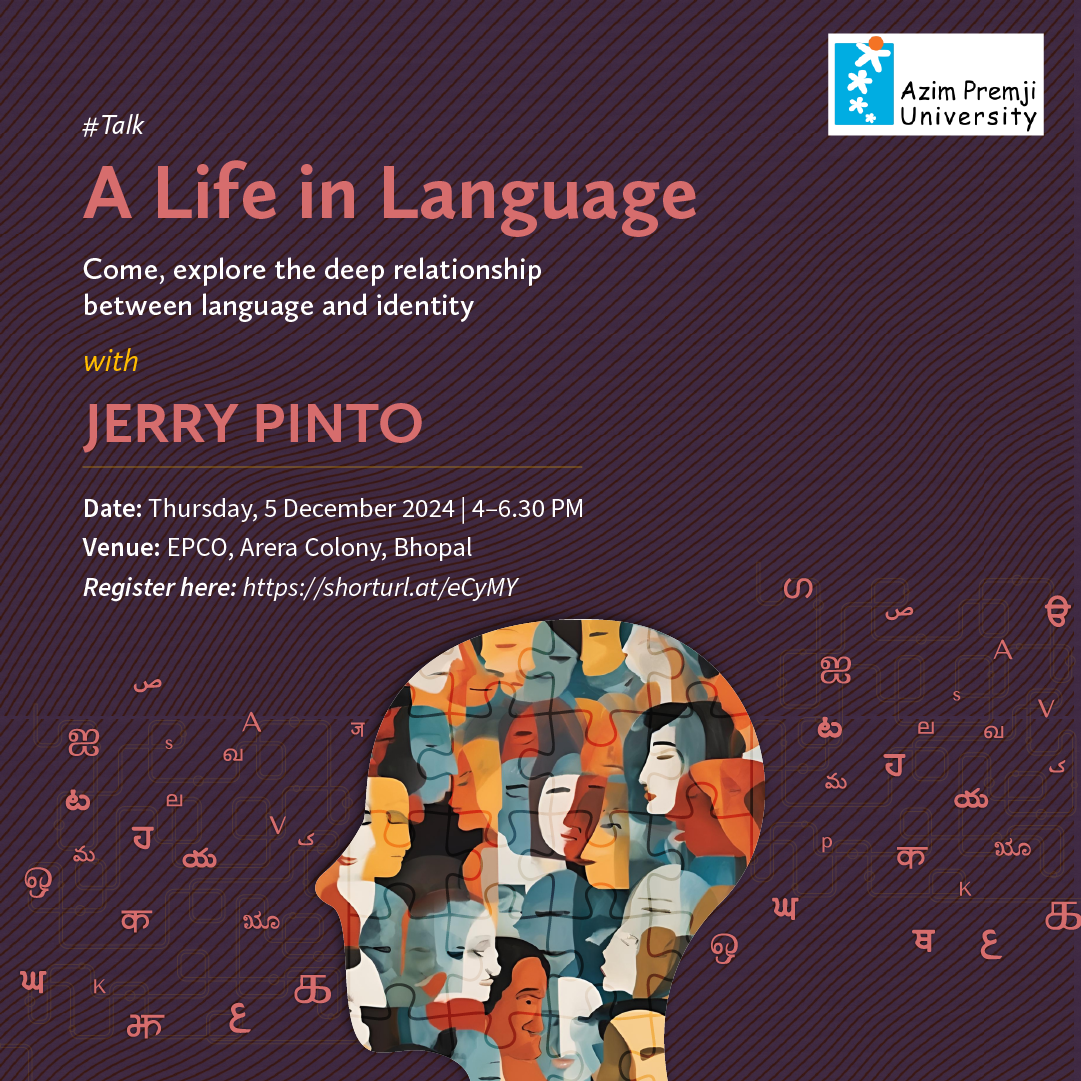
We invite you to “A Life in Language”, in which Jerry Pinto, poet, author and translator will reflect on the ways in which words define us and we in turn make words into worlds. This session invites participants to reflect on the profound relationship between language and identity, exploring how words shape our understanding of ourselves and the imaginative, emotional, and conceptual world around us.
In 2016 Bob Dylan received the Nobel Prize in Literature for “having created new poetic expressions within the great American song tradition.” This decision affirmed a strain of thought within English studies that has been gathering momentum for a while: “something’s gotta give”.
The category of the literary has existed long before print culture – in drama, in music, in poetry and will no doubt continue to thrive in new and emergent forms. We believe that the literary need not be consumed or experienced exclusively through print culture. We seek to detonate the category of the literary, in favour of envisioning a continuum that accommodates multiple performative traditions.
With this invigorating vision, the English group at Azim Premji University, Bhopal plans to bring to the city experienced writers, artists and practitioners whose work embodies the literary in distinctive ways.
About the speaker
Jerry Pinto, an acclaimed Indian poet, novelist, translator (from Marathi, Hindi and Konkani to English) and journalist, is celebrated for his contributions to contemporary Indian literature. Known for capturing the essence of Mumbai, his works often reflect urban life’s vibrancy and challenges.
Pinto began his literary journey with poetry, blending humour with deep emotional insight to explore themes of identity, loss, and human relationships. His debut novel, Em and the Big Hoom, earned widespread acclaim, winning the 2016 Sahitya Akademi Award.
A polyglot, Pinto’s work as a translator has allowed works from Marathi—Cobalt Blue by Sachin Kundalkar, Daya Pawar’s Baluta and Ganesh Matkari’s Half-Opened Windows, to name a few — to reach a global audience. Most recently, he has translated Swadesh Deepak’s autobiography I Have Not Seen Mandu from Hindi, making his work particularly significant to readers from Madhya Pradesh.
Beyond literature, Pinto has contributed to journalism, writing on diverse topics such as culture and social issues in leading Indian publications. His influential work has garnered numerous awards and inspired a new generation of writers, cementing his legacy as a vital voice in Indian literature.