
Beasts behind Bars
Zoos have long been places of wonder for children, where the wild seems just within reach. Varsha Varghese explores how they are portrayed in Indian children’s literature.
Details
Almost all of us are likely to have at least one childhood memory about going to the zoo and the unforgettable thrill of spotting an animal up close. Yet zoos are also sites of difficult questions: about captivity, conservation, care, and what it really means to protect animals. Children’s literature on zoos captures this fascinating mix of curiosity and complexity, opening up space for young readers to look, wonder and think a little more deeply about wildlife within human-made enclosures.
Living Classrooms
A number of zoo books serve as introductions to wildlife for the youngest readers. In Narendra Kumar Jain and Alankrita Amaya’s bilingual picture book I’m Going to the Zoo!/Main Chali Chidiyaghar!, young readers learn about animals through illustrations and text that exaggerate their features. For instance, the giraffe’s long neck and the hippo’s size contrasted with a frog sitting on its back. A similar visually-rich reading experience plays out in Sanat Surti’s A Visit to the Zoo. Meanwhile, in Nandini Nayar and Soumya Menon’s What Did You See?, Amma imitates the animals Meera might have seen on her school trip to the zoo, but, to her surprise, Meera hasn’t seen any of them!
Rod Campbell’s hugely popular lift-the-flap book Dear Zoo begins with the line: I wrote to the zoo to send me a pet. They sent me a…. This is followed by a box illustrated on a flap on the very next page. Small clues in the text and the illustration of the box invite young readers to guess which animal it might be before lifting the flap. One Night in the Zoo by Judith Kerr takes place on a magical, moonlit night, where the animals do things one would not expect them to. Doubling up as a silly counting book, it has an elephant who jumps and flies, a crocodile and a kangaroo riding a bicycle together and three lions doing magic tricks!
Sometimes, the zoo also becomes a site for life lessons. In All for a Roar byNandini Nayar and Ankita Thakur, Pranav wants to roar like a lion and visits the zoo to hear a real roar. Would he still want to roar when he understands what the lion’s roar does to other animals?
The Humans Behind Zoos
In many zoo books, humans take centre stage — often to hilarious effect. Some of the most delightful books in this vein come from Ruskin Bond’s wide-ranging oeuvre. In Mukesh Starts a Zoo, he shares the story of an enterprising young boy who is determined to start a zoo in his small town after visiting the one in Delhi. Of course, procuring animals is no easy feat, and there is absolute chaos on the opening day! Grandfather’s Private Zoo is a collection of some of the author’s most delightful stories of the animals a young boy’s grandfather brings home. It includes ‘The Adventures of Toto’ featuring a mischievous little red monkey and ‘The Conceited Python’ starring a young python. These animals turn up around the house in odd places and at odd times, hindering the grandmother’s efficient housekeeping!
Badlu Singh Zordar, the protagonist of Pratibha Nath’s Barber at the Zoo, is no ordinary barber — he cuts the hair of animals in the zoo! The story follows him on a round, where some animals refuse to get a haircut, some are up to mischief, and Badlu has to come up with inventive ways to reach some of his clients.
A Zoo in my Luggage covers the six-month journey that naturalist GeraldDurrell and his wife took through the then-British Cameroon in West Africa to collect animals, particularly rare and threatened species, for their own zoo. Another memoir, We Bought a Zoo by Benjamin Mee narrates the experiences of the author and his family after they buy a country house in Devon attached to a zoo, and find themselves responsible for two hundred animals, including tigers, lions, pumas, bears, a tapir and a wolf pack! The book was eventually adapted into a movie that was released in 2011.
The Ethical Question
While supporters of zoos talk about the important role they play in conservation, one can’t shake off the discomfort that many wild animals in zoos live in cramped cages, far away from their natural habitats. Nandini Nayar’s Are There Bun Shops in the Jungles of India? is creative non-fiction about the animals that were sent from India to England during colonial times, their appalling living conditions and the reactions they drew from the clueless yet curious English public. Devika Cariapa and Satwik Gade’s picture book Uncle Nehru, Please Send An Elephant! narrates a true story of India’s ‘jumbo diplomacy’ in the early years after independence. When many children from Japan wrote letters to India’s first prime minister requesting him for an elephant, Jawaharlal Nehru promptly sent one to the Tokyo zoo. Eventually, many other elephants made similar journeys to zoos in other parts of the world. However, these journeys weren’t the easiest for the elephants, and in narrating their struggles, the book raises important questions about animal rights.
Many books, though, also offer favourable portrayals of zoos. In Harini Gopalaswami Srinivasan’s Zoo Duck, a duck finds refuge in a zoo after the lake in which it lives dries up following three years of no rain. A similar sentiment shows up in the early chapters of Yann Martel’s widely acknowledged literary and philosophical novel, Life of Pi. One of these chapters begins with the statement: Well-meaning but misinformed people think animals in the wild are ‘happy’ because they are ‘free’.
Scanning the landscape of young people’s literature featuring zoos also reveals a distinct dearth of middle-grade and YA books. One wonders whether zoos are seen as too safe and curated a space to engage older readers. Among the notable exceptions is Taronga, a YA dystopian novel by Victor Kelleher that is set in a post-nuclear-holocaust world, where the teen protagonist Ben develops telepathic powers to communicate with animals. A large part of the story is situated in Taronga Zoo, the only place unaffected by the general chaos.
In Middle School: It’s a Zoo in Here! by James Patterson, Brian Sitts and Jomike Tejido, the protagonist Rafe finds out on the last day of the academic year, that he hasn’t turned in an assignment on tadpoles and must attend summer school. His teacher offers an alternative. Instead of summer school, he can undertake an independent project working with a zoo that helps animals get back on their feet.
Ultimately, the zoo isn’t merely a place — it’s an idea shaped by human choices. As these choices evolve, so do the stories. Children’s literature reflects this evolution through books that range from entertaining to unsettling. Hopefully, in turning the pages of these books, readers will not just build memories of the animals they see, but also learn to question the idea of wildlife in captivity.
Bibliography (in order of appearance)
- I’m Going to the Zoo! / Main Chali Chidiyaghar! (Tulika)
- A Visit to the Zoo (National Book Trust)
- What Did You See? (Tulika)
- Dear Zoo (Pan Macmillan Children’s Books)
- One Night in the Zoo (HarperCollins)
- All for a Roar (Eklavya)
- Mukesh Starts A Zoo (Penguin)
- Grandfather’s Private Zoo (Rupa Publications)
- Barber at the Zoo (Children’s Book Trust)
- A Zoo in my Luggage (Penguin)
- We Bought a Zoo (HarperCollins)
- Are There Bun Shops in the Jungles of India? (Hachette)
- Uncle Nehru, Please Send an Elephant! (Tulika)
- Zoo Duck (Children’s Book Trust)
- Life of Pi (Penguin)
- Taronga (Puffin)
- Middle School: It’s a Zoo in Here! (Scholastic)
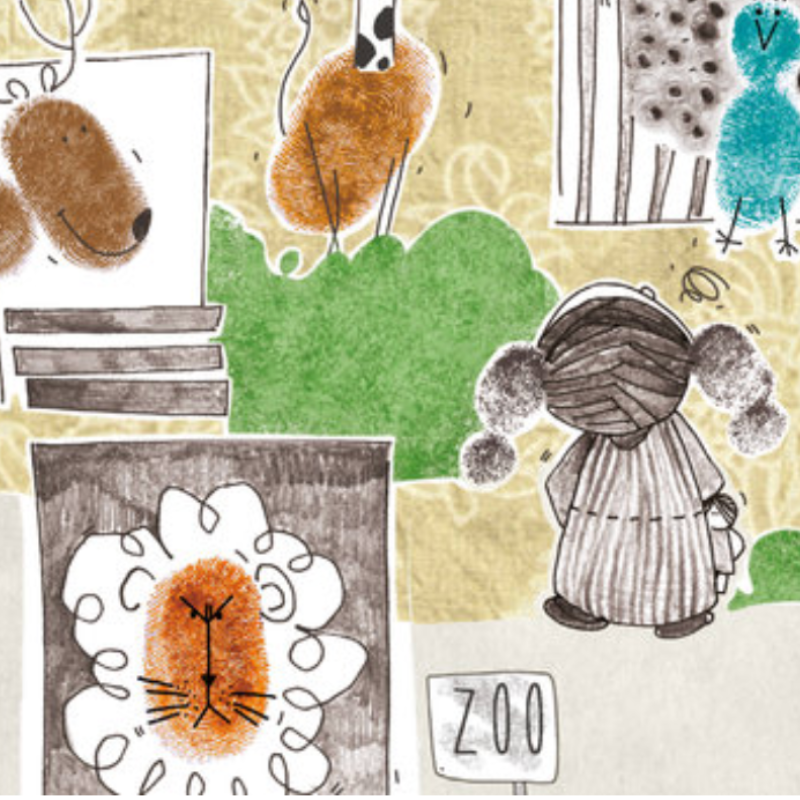
Image by Ruchi Shah/Storyweaver
About the author:
Varsha Varghese’s book Dear Author, You Are Wrong! won the Scholastic Asian Book Award, 2023.