
Forest to Fortune: Empowering tribal women farmers
Satendrasingh Lilhare, MA in Development (2014−16), founder of ‘Bastar Se Bazar Tak,’ on empowering smallholders and tribal women farmers in Chhattisgarh.
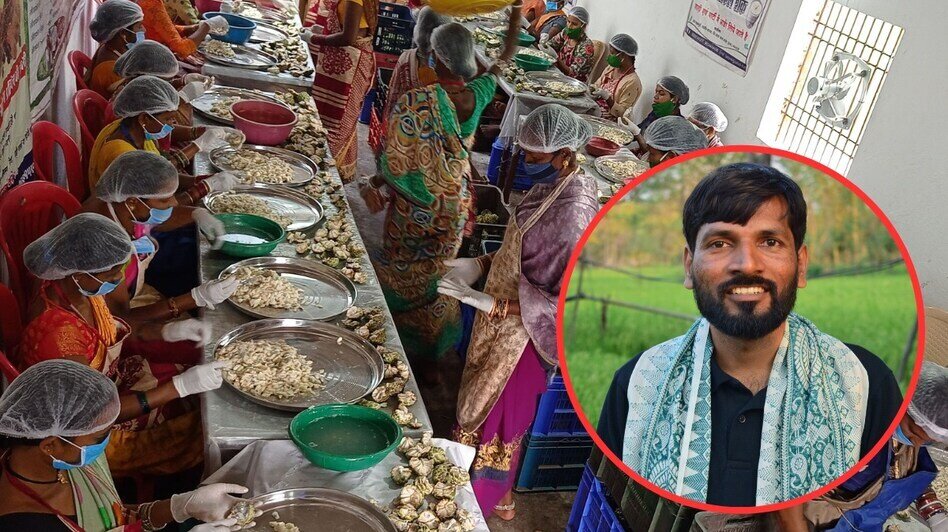
Details
Would anyone think of starting for-profit social entrepreneurship at the heart of India’s Naxalite – Maoist insurgency?
Bastar Se Bazar Tak tak is an initiative by our alumnus, Satendrasingh Lilhare, to enhance the livelihood of Bastar’s forest dwellers. The participatory model called provides additional income with 100 days of employment opportunities to poor forest dwellers.
Let’s get to the inside of his journey to know how he achieved it.
What is the vision and mission of Bastar Se Bazar Tak?
The vision of Bastar Se Bazar Tak is to enhance the contribution of the forests to the national economy and welfare of the present and future generations, considering the preservation of biodiversity and climate change. To achieve this, we need to reduce minor forest produce losses, build the natural forest products, and create flexible & supportive local employment through collective action. Our mission is to help end extreme poverty and improve livelihoods of tribal farmers by creating pure and natural forest products.
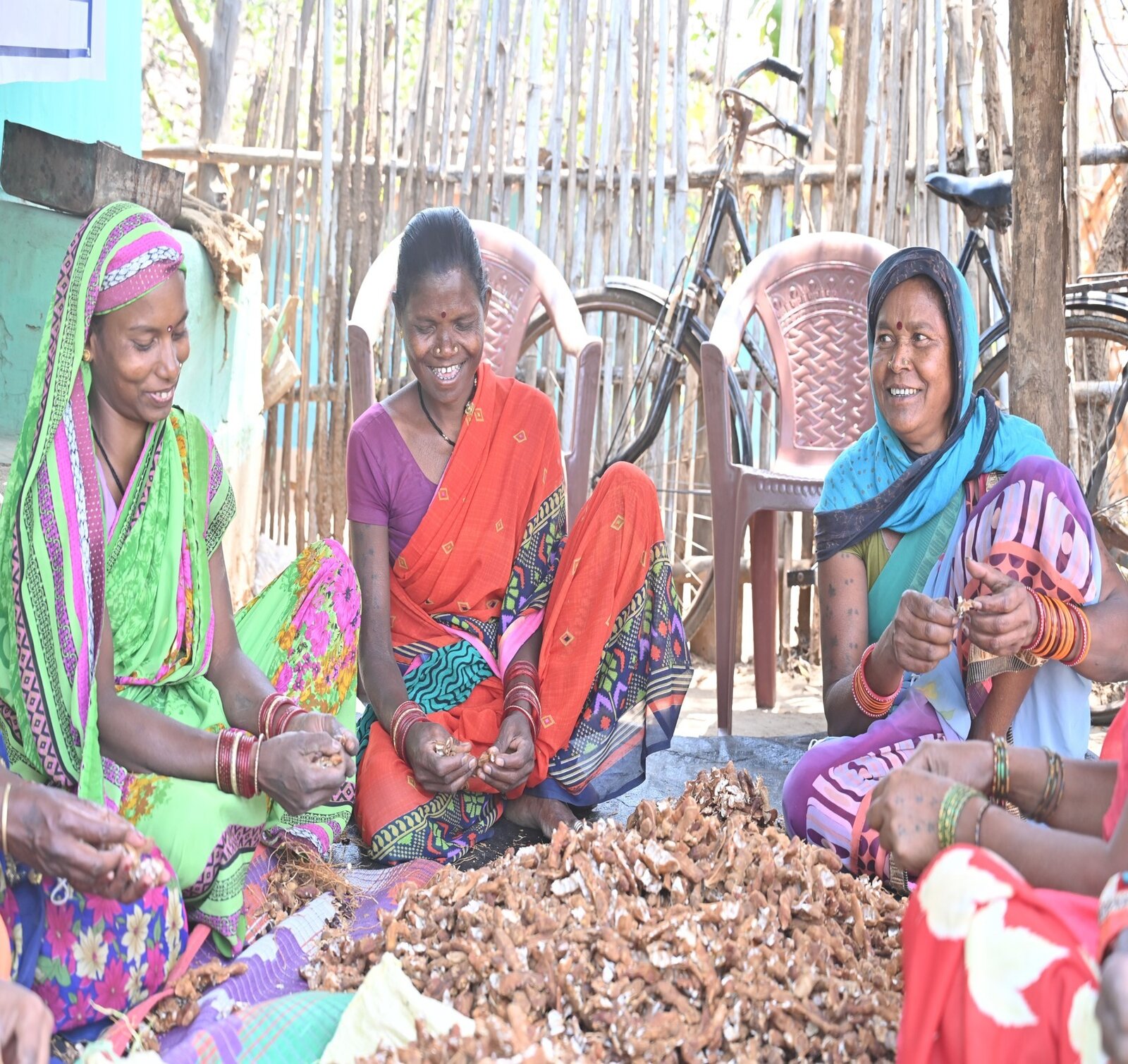
Bastar Se Bazar Tak primarily works with smallholder farmers and tribal women forest dweller farmers on post-harvest management of non-timber forest produce like tamarind, mango, custard apple, palash flower, and black plum (jamun). It converts the forest produce into pulp, paste, and powder, supplying them to institutional buyers, caterers, dealers, and distributors.
What inspired and motivated you to embark on this journey?
I am from Gondia — Gadchiroli district of Vidarbha region in Maharashtra, which is mostly a forest area. Since childhood, I have been familiar with forest products and come from a smallholder family background.
During my MA in Development at Azim Premji University, I did my specialisation in livelihoods as it was very close to my heart and helped me gain a better understanding of the sector. It helped me gain knowledge about various form of social enterprise in agriculture and the current state of India as an agrarian country.
After University, I joined Catalyst Group, a Bengaluru-based non governmental organisation with a farmer collective project in Chhattisgarh. Working on this project helped me learn how to build a rapport and engage with communities.
During this time, a chance reading of a NITI Aayog report about Chhattisgarh’s aspirational districts and their poor condition nudged me to think, ‘hame rajya ke vikas ki bhagidari me, gaonke jungle se kuchh karna chahiye.’ (I should contribute towards the development of my state from the forests in the villages).
This thought inspired me and during the same time I met a fascinating farmer Haresh ji to imagine how we could contribute and strengthen the rural Bastar economy.
This is how I started to develop the idea for my social enterprise.
The foundation and evolution
Bastar is an aspirational district of Chhattisgarh, and I had some experience working in this forest area and with forest products. I chose and decided to start in Bastar as it looked ideal for my social enterprise. I believe that both Bastar’s soil and I are one and the same.
The journey from 2020 to 2023
- 9 Products
- 1100 Smallholder farmers
- 84 Days of employment to 167 farmers
Jobs created
- 4 Full time
- 64 Part time
The journey of Bastar Se Bazar Tak started on 28 September 2020 with just one product. Currently, we offer nine products and work with 1,100 smallholder farmers. We also have a procurement programme that provides 84 days of employment to 167 farmers. We have created four full-time jobs and 64 part-time jobs, and we have three volunteers. This is the impact of our social enterprise in Bastar within a span of 3 years.
The story of Ambika, a community member, is one of the success stories amongst many. She owned only three acres of land and used to work under the MGNREGA programme. But now she has overcome the many challenges in her life and feels empowered as she leads the operations at our social enterprise. She currently manages more than 100 teams of women and is an inspiration to other community members.
Community support is crucial to our success and trust has been built over time. The community members actively participate in our initiatives, making our collaboration stronger. I live among the local community to give them the sense that I am one of them. Involving the community in every step to maintain transparency and accountability in our operations and financial management is inherent in our processes. We discuss our investments and profits with them openly and honestly and are always accountable to them for our decisions.
What are some of the challenges your organisation has faced?
Every day is a new day and comes with new challenges. Bastar, being an underdeveloped area, lacks infrastructure and persistent power issues. Initially, finance was a major hurdle and so was cold storage, given the perishable nature of our products.
Additionally, travelling in this remote district is quite challenging as there is poor bus connectivity and relying on local buses or auto rickshaws leads to wastage of time. I don’t own a jeep, and do not know how to ride a bike which presents another layer of challenge for me. So every time I need to travel, I have to find and request someone who can ride the bike. This presents an endless challenge.
Recognition and awards for Bastar se Bazar Tak
Our model of a social development enterprise has been accepted by global companies and won many national and international awards for its innovative approach and significant social impact. The World Economic Forum has selected us as one of 15 global companies in Southeast Asia.
The company’s achievements have been recognised by prestigious awards such as the ‘TATA Social Enterprise Challenge 2021’ and the ‘Young India Challenge Award 2020’. We have also been awarded by the Government of India and have collaborations with the state and central governments. In addition, we have raised investment and collaborated with five other organisations for research and development.
Personally, I have been awarded the Buddha Fellowship, a programme which helps build capacity by linking the fellows with rural community, unlocking grants and private capital, providing grassroots mentoring by leading development experts with clear business and social goal These accolades reflect the company’s commitment to creating long-lived environmental and social outcomes that benefit both the tribal farmers and the consumers.
Read more stories from our alumni here →
Want to connect?
Connect with Satendrasingh Lilhare at satendrasingh.lilhare14@apu.edu.in