
Student Research Conclave 2026
Bringing together student-led research projects from across programmes
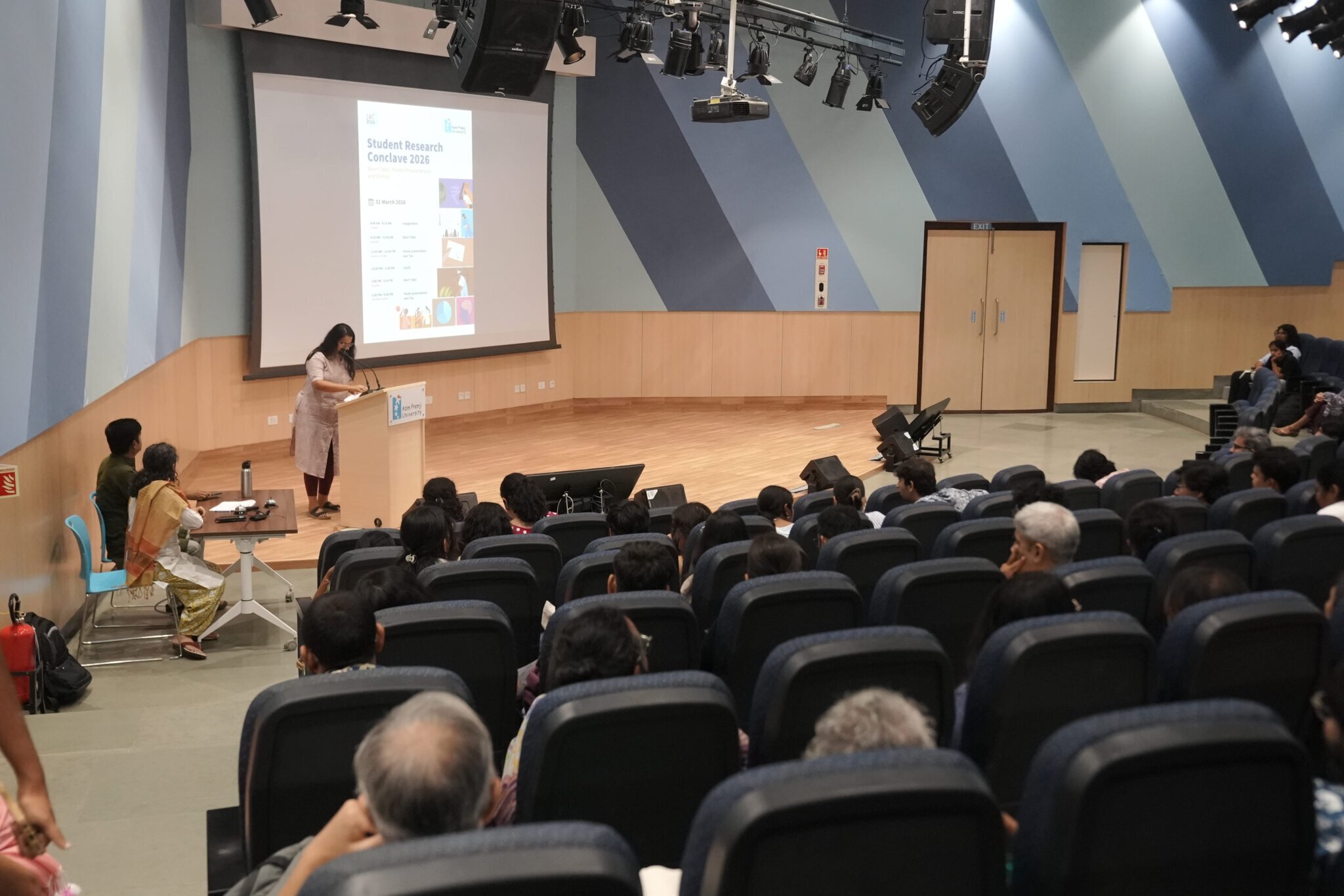
At Azim Premji University, research and student projects are integral to learning. Through fieldwork, data analysis, and critical inquiry, students engage deeply with real-world questions and social contexts. Student Research Conclave 2026 was held on 31 March 2026.
Like each year, our goals were as follows:
- To encourage exchange of research ideas across programmes and majors, intensify conversations around student research and stimulate wider cross-learning.
- To showcase individual and collaborative research conducted by students at the University
- To foster research, encourage conversations and promote new ideas and ways of thinking
Presentation categories: Teaching, experiential, and intervention projects | Field studies and exploratory studies | Conceptual enquiries | Narratives | Experimental projects and lab demonstrations
Highlights from Bengaluru Campus
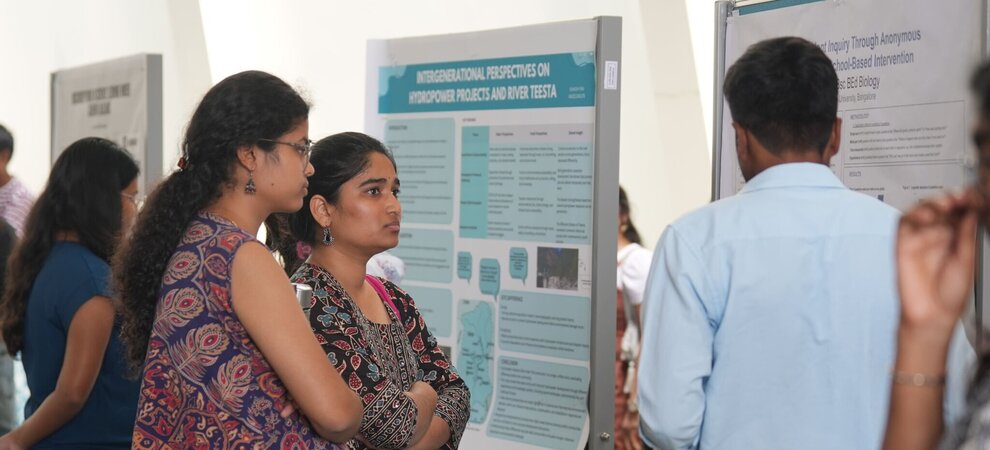
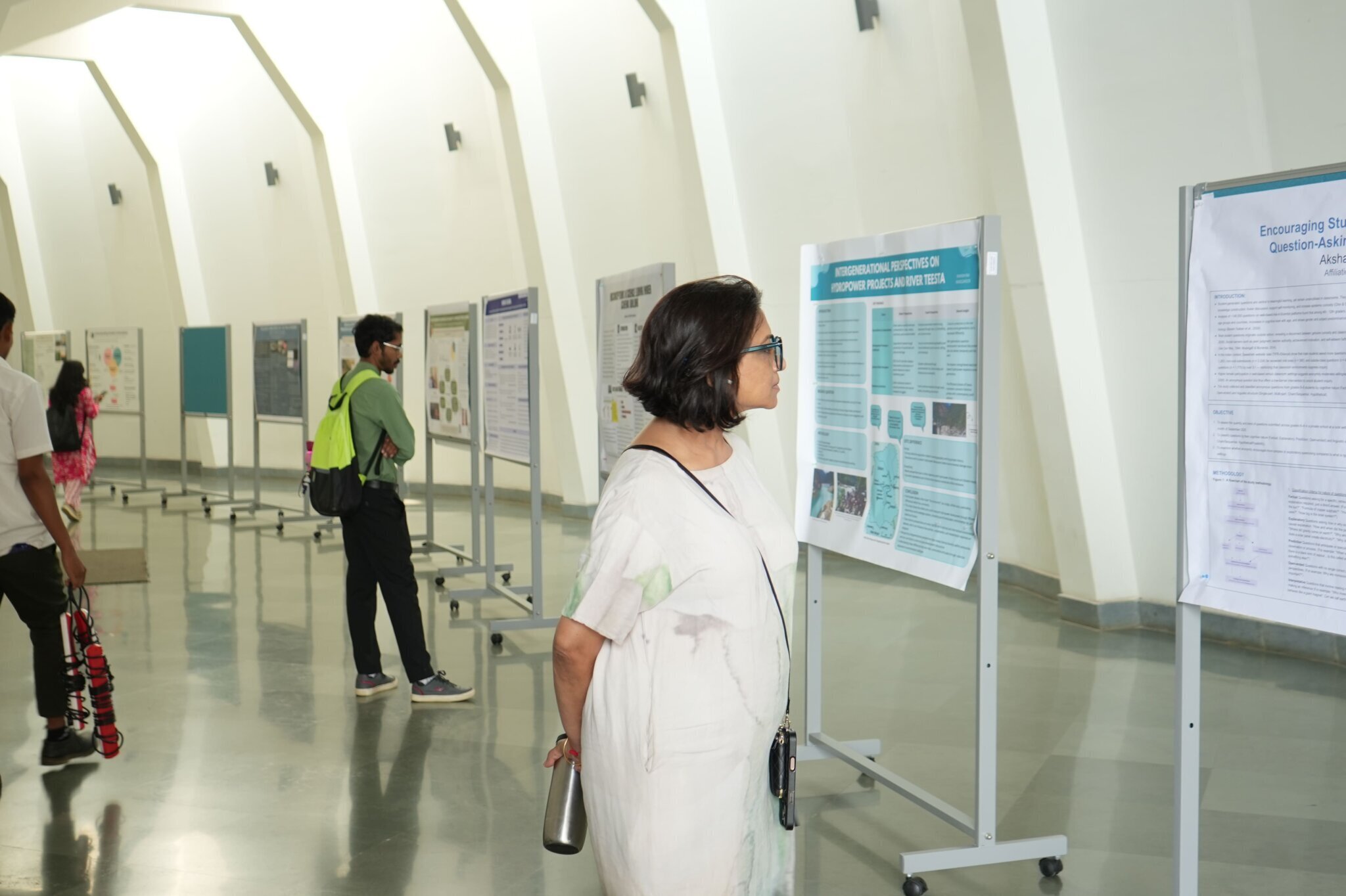
- 53 Poster presentations
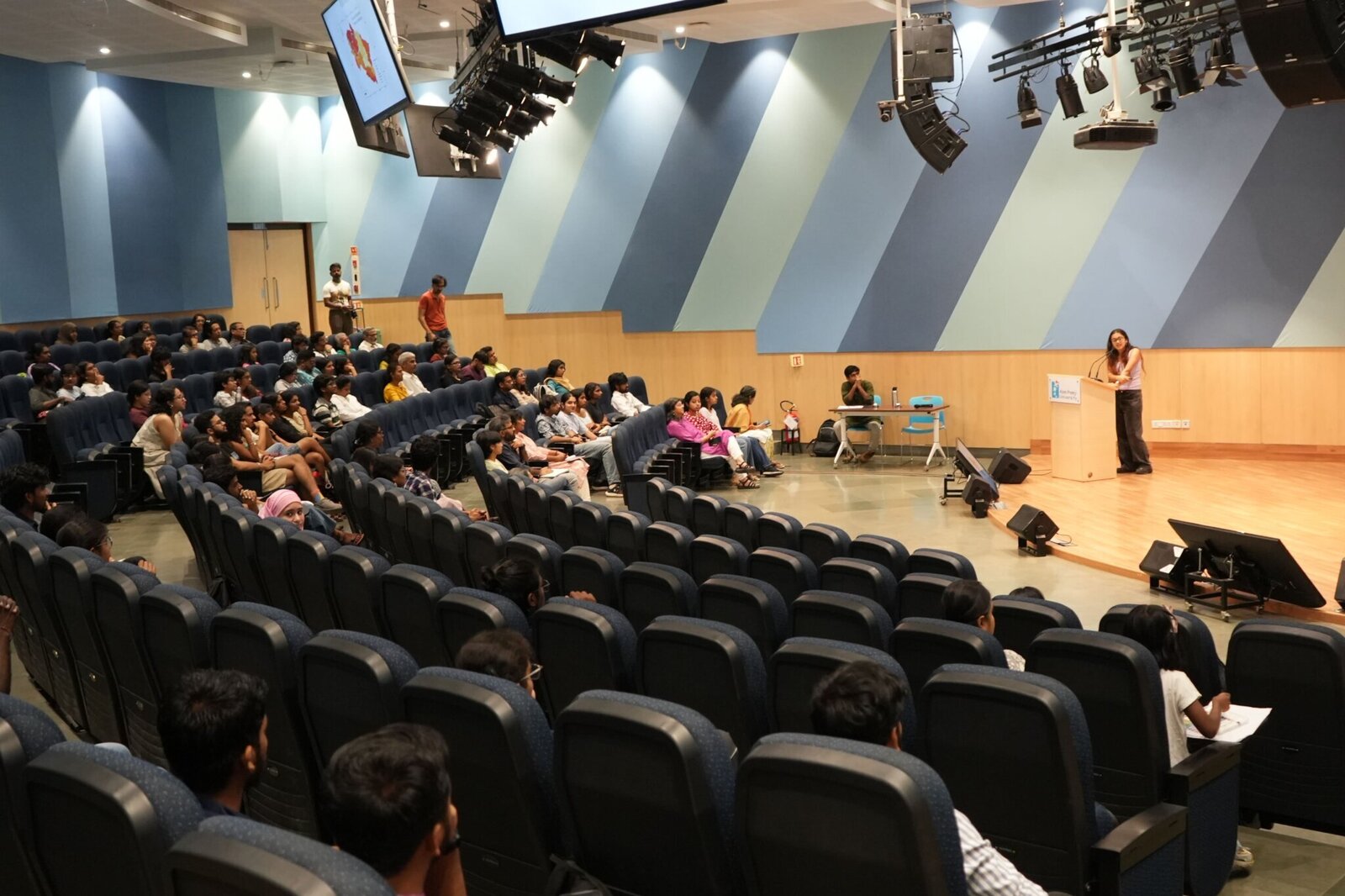
- 30 Lightning talks (5 mins) with Q&A
- 1 Documentary film
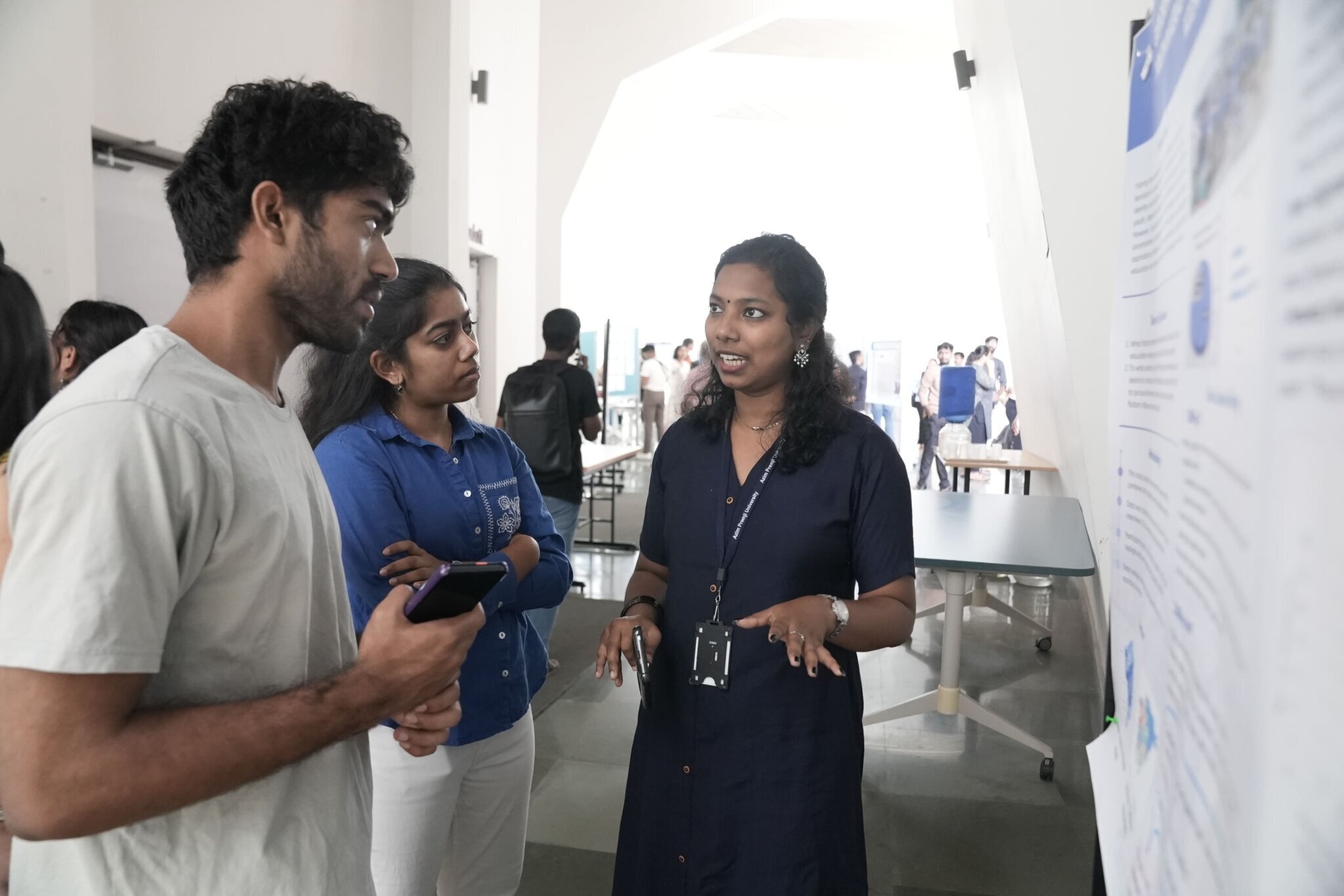
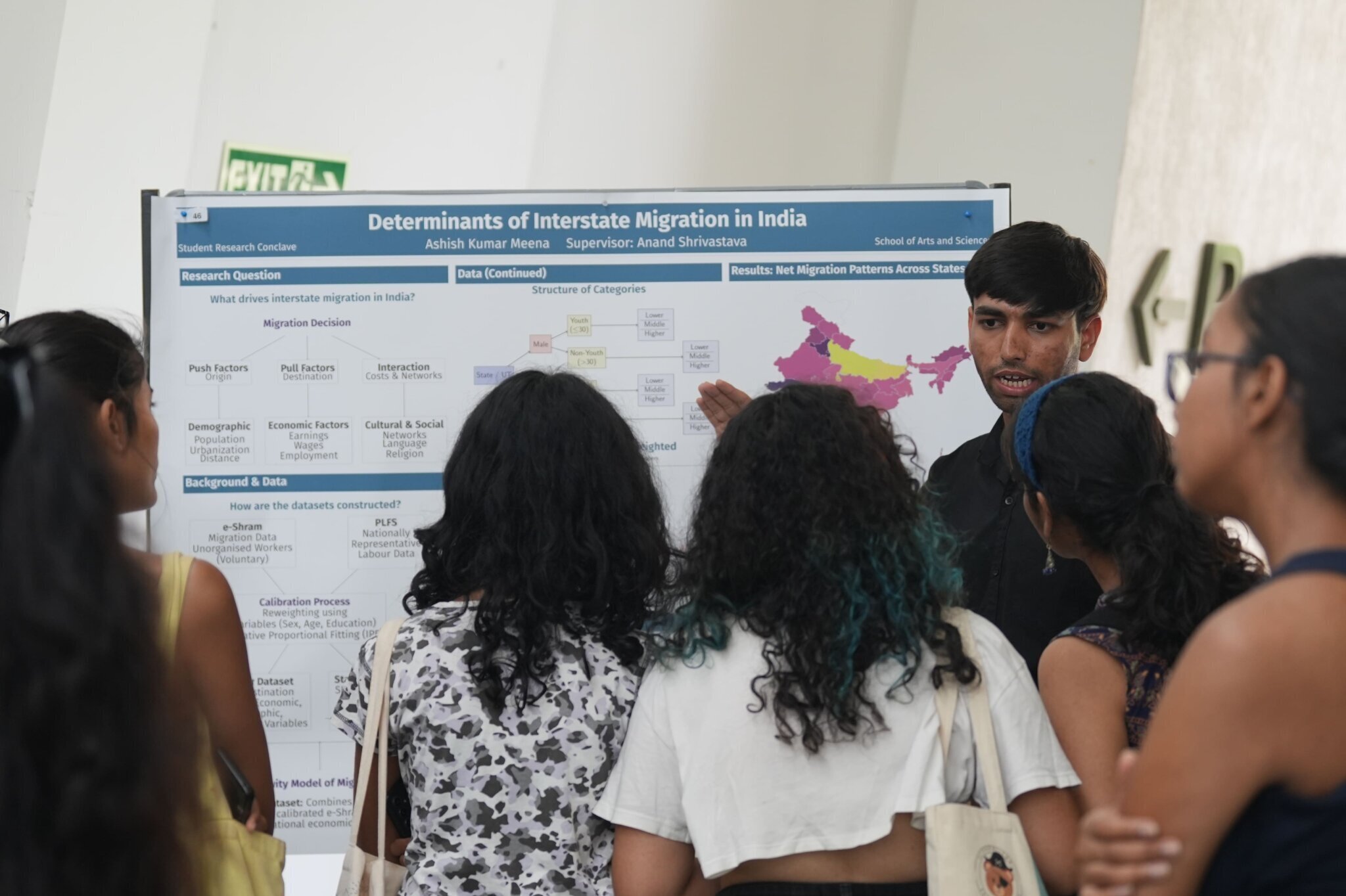
The engagement levels were high with participation by undergraduate and postgraduate students, with each topic a new discovery, a new learning for the audience.
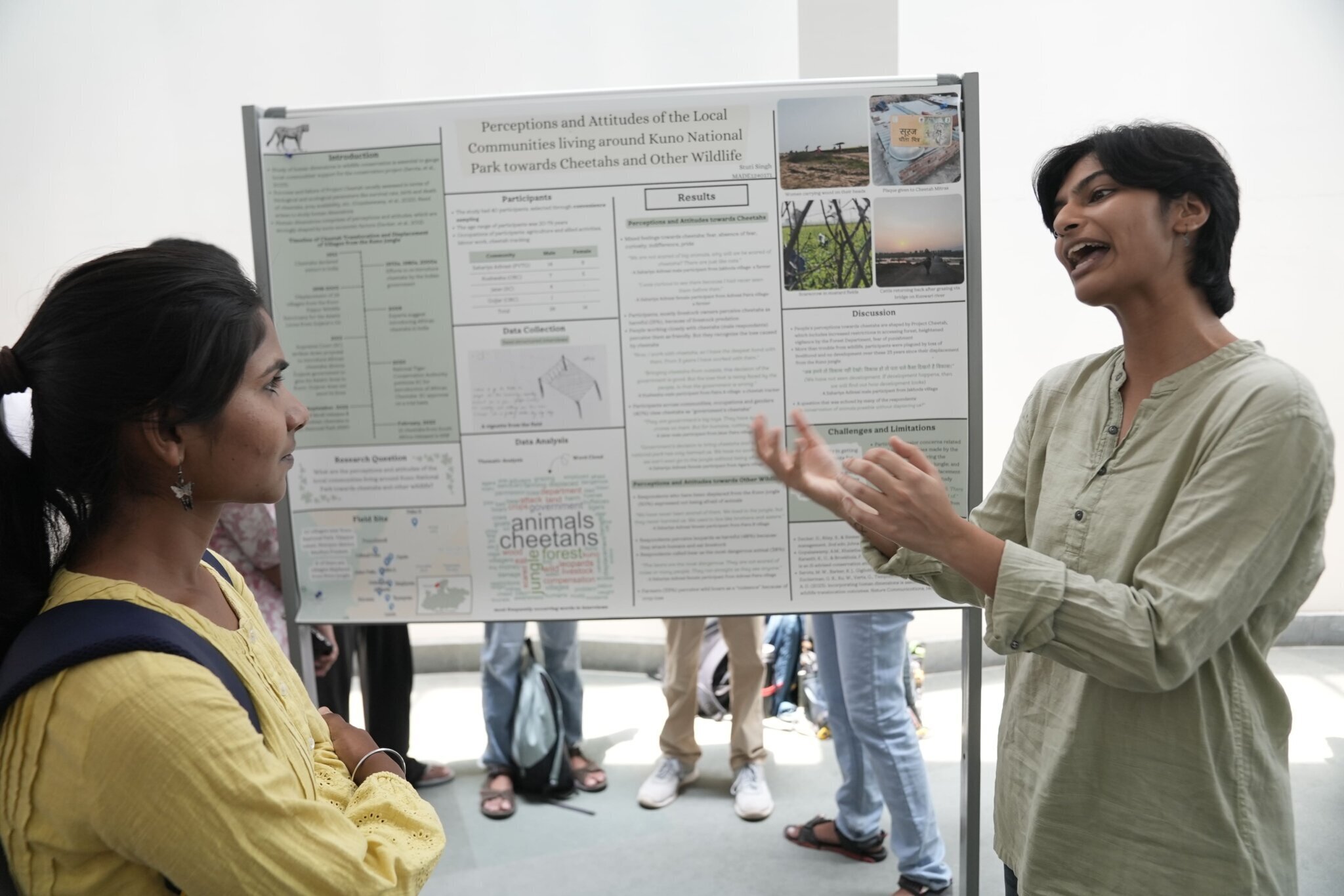
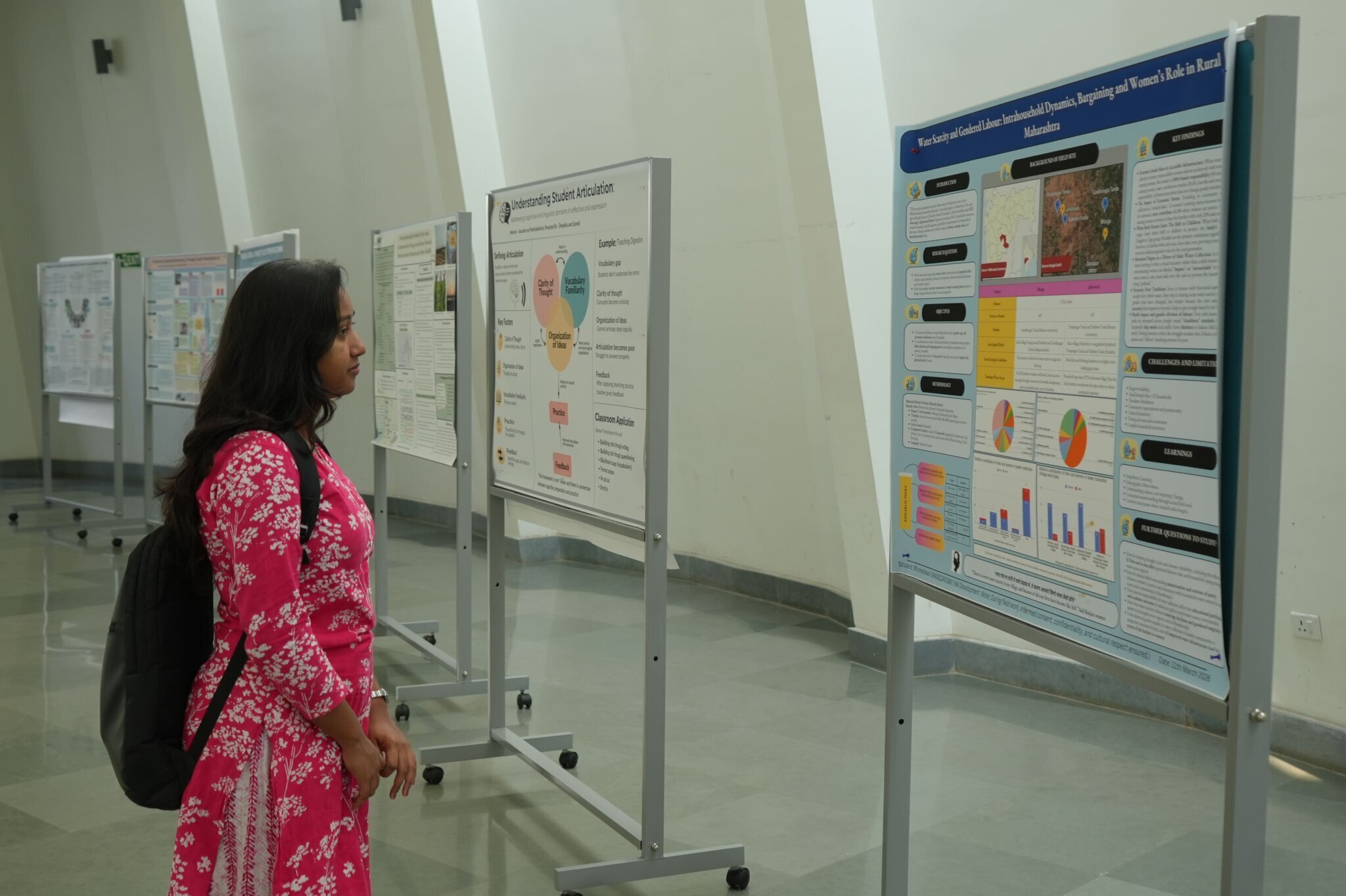
“Poster presentations drew quite a crowd. Who wouldn’t get attracted to these, especially when topics like ‘Hungry at midnight: Chips or salad?’ or ‘Are cities’ public spaces truly for the public good?’ greet you?”
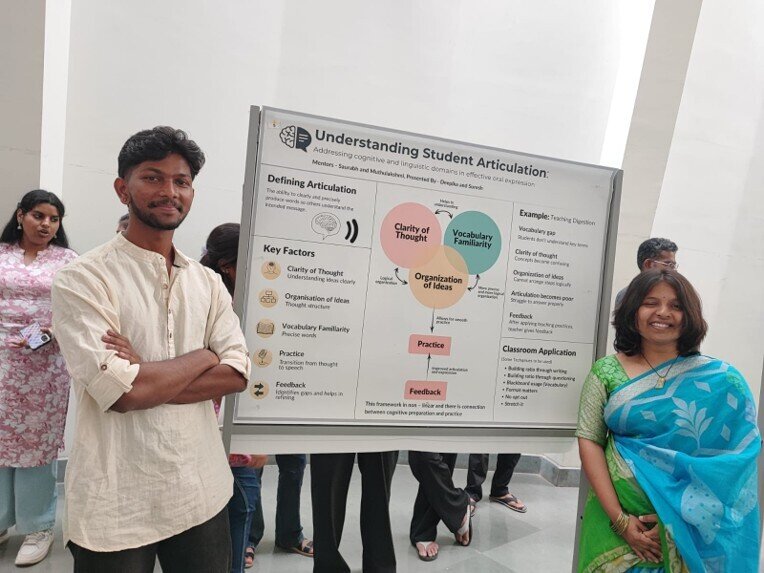
It was worth noting that since we started in 2023, the quality of posters have significantly improved. Exposure to various such posters and discussions enable students to think more creatively. A structured activity to understand learners’ articulation levels and how they navigate and overcome the factors that affect articulation by Deepika and Suresh (BSc BEd) was one of these posters that proved this.
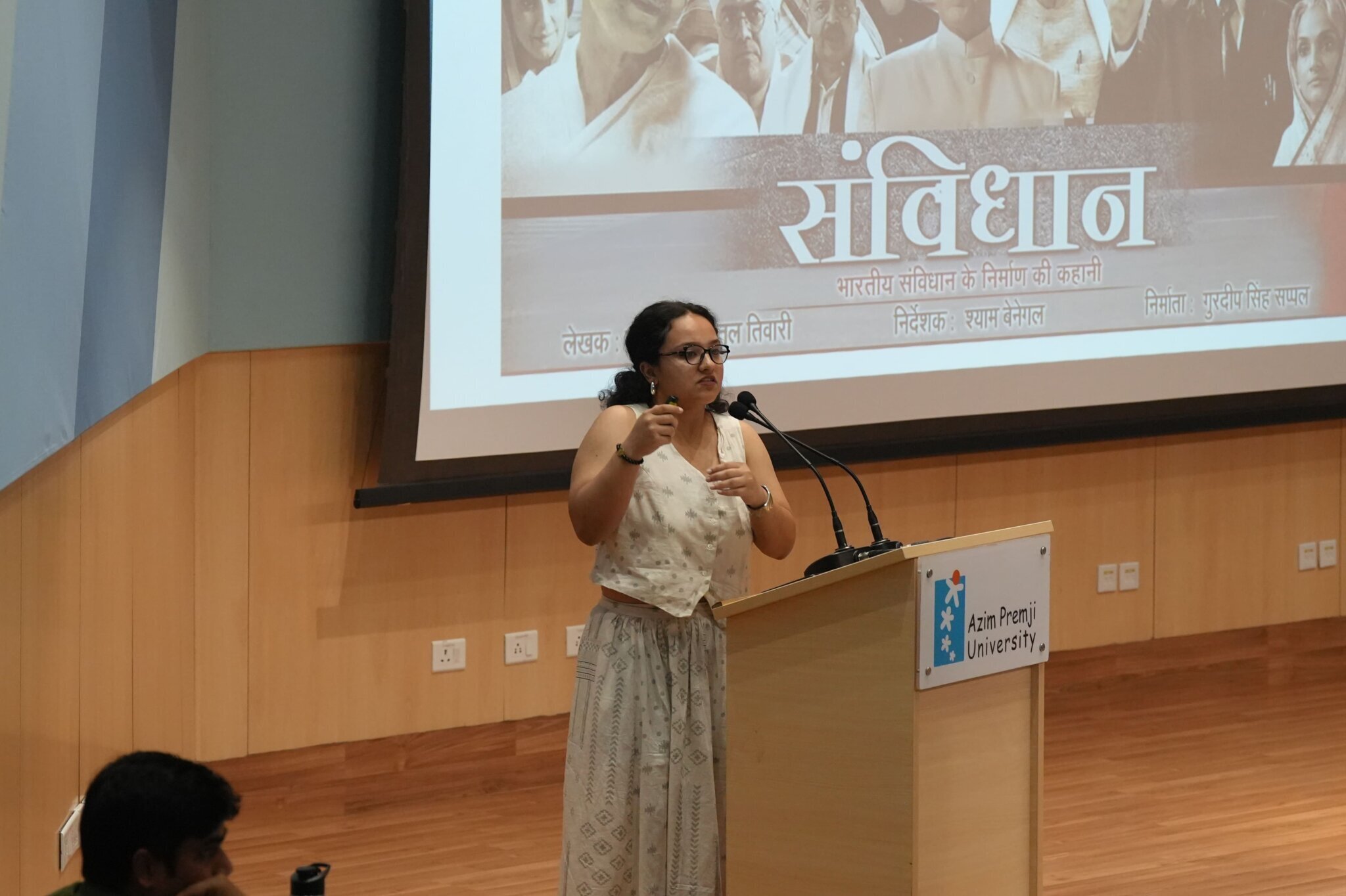
Pakhi Joshi’s (MA in Education) presentation was on Media, Knowledge, and Democratic Education: Samvidhaan as Public Pedagogy. Instead of presenting our constitutional history as smooth and agreed upon, it highlighted debates, differences of opinion, and ethical questions involved in making the Constitution. This highlighted democracy as a process involving discussion, disagreement, and compromise.
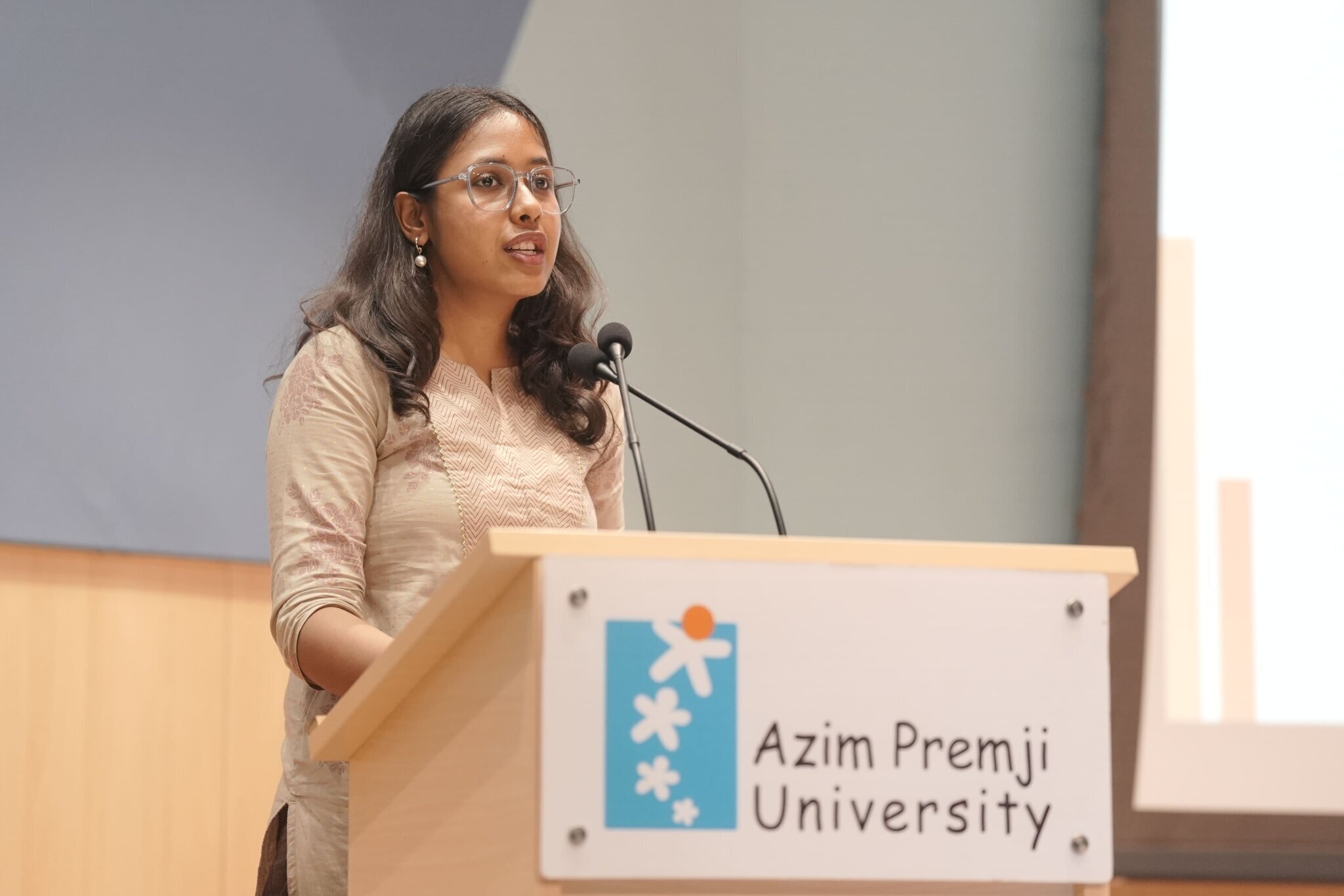
Maaya Ravi Kashyap (BSc in Mathematics) presented the triangle subdivision problem and its extensions. Sathyavathi Y (BSc BEd) spoke about building foundational English vocabulary without a shared language in rural Indonesia. Parvathy S (MA in Economics) discussed how exposure to conflict influences social trust by way of a cross-country analysis. More on these here.
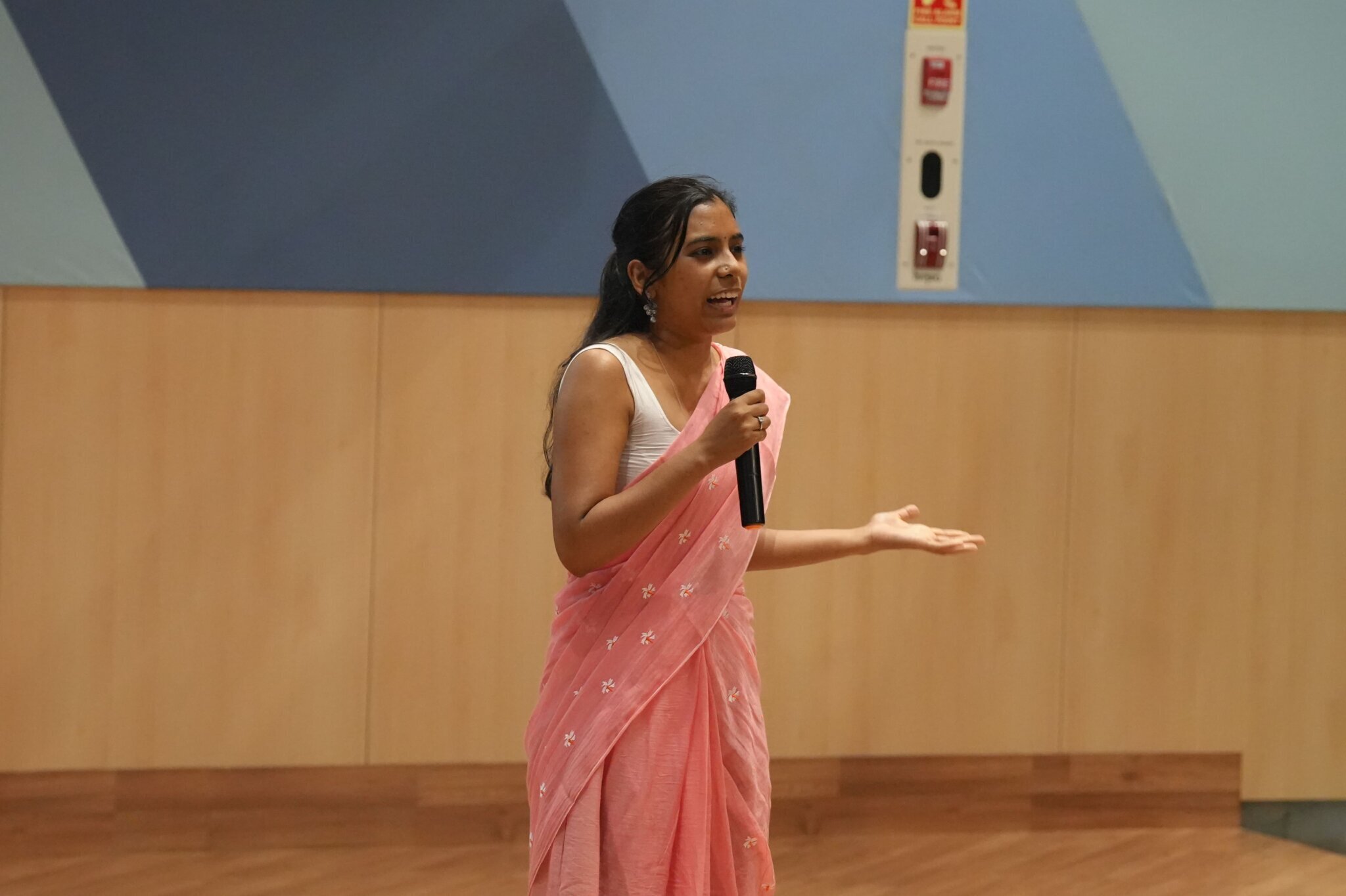
Building foundational English vocabulary without a shared language: A Total Physical Response (TPR) and game-based programme in Rural Indonesia
In rural Indonesia, children speak a local language at home, a different national language at school, and English is introduced as an additional instructional language. In such multilingual contexts, exposure to English remains largely limited to classroom learning, with limited opportunities for repeated, meaningful lexical configuration and engagement. The focus of the study was on foundational words such as action verbs, spatial terms, descriptives, body parts, numbers, and social expressions. Existing games, such as dog and bone, musical chairs, and hopscotch, were adapted for language-learning tasks, such as vocabulary introduction or practice. In every session, learners moved, spoke, listened and acted out target words.
Note: TPR combined with game-based learning is a highly effective educational approach, particularly for language acquisition, as it links verbal input with physical actions
How does exposure to conflict influence social trust? A cross-country analysis
The student investigated how exposure to conflict influences social trust for individuals. To address potential endogeneity in the relationship between conflict and social trust, she used droughts as an instrument variable for conflict. She developed an empirical strategy that combines geo-coded data from multiple data sources, constructing measures of drought incidence and conflict occurrence at the level of local administrative units (typically districts) across the countries in sample.
The triangle subdivision problem and its extensions
The field of geometry has several incredible patterns and properties to appreciate. The student defined the geometric arrangement of points and determined the condition for when they are not going to be in general position. The properties and polynomial conditions related to this were also discovered. She aims to continue looking at the properties of the regions formed and extend this problem to higher dimensions too.
Glimpses from SRC 2026

Contact us
For more information or in case of any queries, you may reach out to research@apu.edu.in