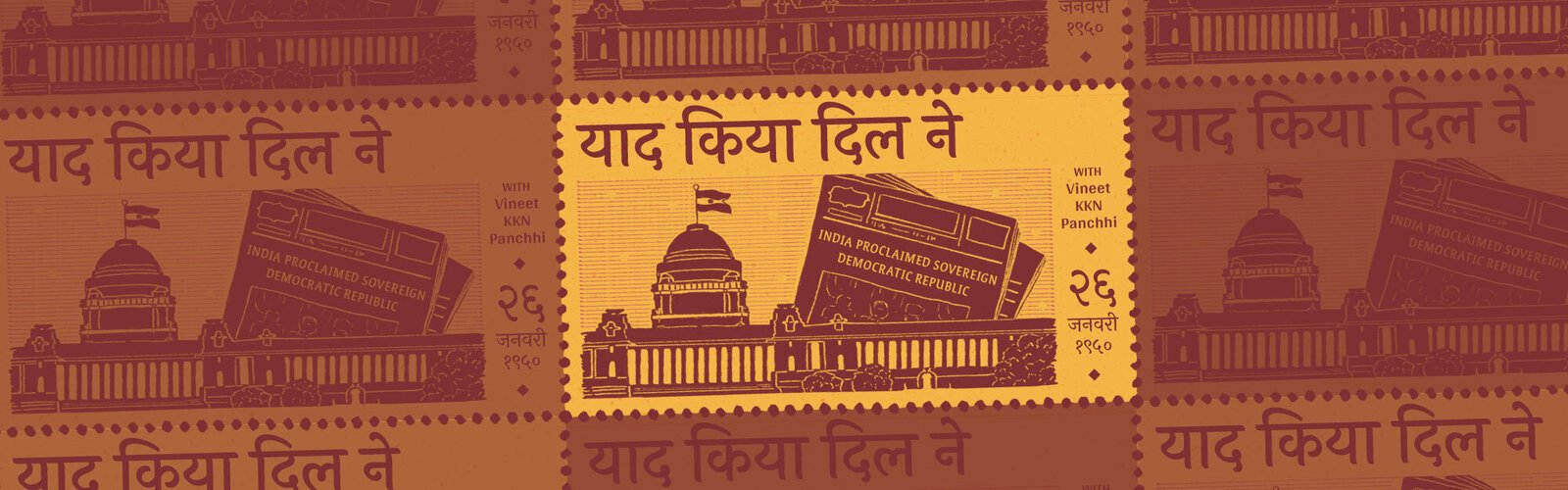
याद किया दिल ने — Remembering India’s First Republic Day
How is Republic Day different from Independence Day? Why is January 26 a significant date? What transpired on the very first Republic Day? Watch Yaad Kiya Dil Ne, a special video episode of Samvidhaani Pitaara, which cherishes the memory of the nation’s transformation into a republic and bringing to life the vision enshrined in the Constitution of India. Presented by Vineet KKN Panchhi and set to archival footage, it relives the events of January 26, 1950.
Details
Yaad Kiya Dil Ne is a special video episode of our series Samvidhaani Pitaara that cherishes the memory of India’s first Republic Day. Presented by Vineet KKN Panchhi, this audio excerpt is set to archival footage and visuals commemorating the events that transpired on January 26, 1950.
The First Republic Day
India’s first Republic Day was a momentous occasion. Several important events transpired, marking the beginning of India’s new chapter as a constitutional democracy.
- At 10:18 am, India was declared a Sovereign Democratic Republic at Durbar Hall in Government House, which was since renamed as Rashtrapati Bhavan, the official presidential residence.
- Dr Rajendra Prasad, who had presided over the Constituent Assembly that drafted the Constitution of India, was sworn in as the first President of India at 10:24 am, followed by a 21-gun salute.
- A grand procession began at 2:30 pm, with the President of India riding in a coach drawn by six horses, cheered by crowds in New Delhi.
- At 3:45 pm, a ceremonial parade at Irwin Amphitheatre (now Major Dhyan Chand National Stadium) featured military bands, armed forces, and police contingents. Dr Prasad unfurled the national flag, and Indonesian President Sukarno, the chief guest, joined the celebrations.
How Republic Day Celebrates India’s Democratic Spirit
Most of us know that Republic Day is a national holiday, but what exactly is its significance to us as citizens of India?
It was on this day in 1950 that the Constitution of India came into effect, replacing the Government of India Act of 1935. The event was a culmination of the efforts of the Constituent Assembly, whose members had convened between December 9, 1946 and January 24, 1950 to debate and draft the constitution of the republic-to-be.
On November 25, 1949, Dr Babasaheb Ambedkar, Chairman of the Drafting Committee, presented the final draft of the Indian Constitution to Dr Rajendra Prasad, who had presided over the Constituent Assembly. After two years, 11 months, and 18 days, the members of the assembly signed and accepted the Constitution of India, which contained 395 articles, 8 schedules, and 22 parts.
On January 26, 1950, this Constitution officially came into effect, proclaiming India as a republic.
The Meaning of a Republic
A republic is a form of government where supreme power rests with the citizens. The concept, originating from the Latin term res publica (“public affair”), emphasises governance for the common good. In a republic, citizens elect representatives to make decisions on their behalf. Unlike monarchies, republics are not ruled by hereditary leaders but typically have elected presidents as heads of state.
In India’s case, the adoption of the Constitution declared the nation a sovereign socialist secular democratic republic, operating under a parliamentary system. The President of India serves as the ceremonial head of state, while the Prime Minister, elected by the majority party in the Lok Sabha (lower house), acts as the head of government.
India’s federal structure divides powers between the central and state governments, with a bicameral legislature comprising the Rajya Sabha (upper house) and Lok Sabha. Additionally, the Constitution guarantees fundamental rights, promotes social justice, and empowers citizens.
The significance of January 26
India became independent on August 15, 1947, ending colonial rule. This day is commemorated as Independence Day in India. January 26, on the other hand, was chosen for Republic Day to honour the declaration of Purna Swaraj (complete independence) by the Indian National Congress in 1930. On the same day in 1950, the Constitution came into effect, marking India’s transformation into a sovereign democratic republic.
Republic Day Traditions In The Present Day
While the Constitution of India does not explicitly mandate how Republic Day should be celebrated, the day has evolved into a reflection of the Constitution’s ideals. The Ministry of Defence organises many of the traditions that are observed today.
Flag Hoisting and National Unity: The President of India unfurls the national flag at Kartavya Path (formerly Rajpath) in New Delhi. Similar ceremonies occur across states and union territories, symbolising unity.
The Grand Parade: The Republic Day Parade is the highlight of the celebrations. Military contingents, cultural floats, and schoolchildren display India’s diversity and achievements. The event concludes with a flypast by the Indian Air Force, symbolising India’s military strength and technological prowess.
Tribute to Martyrs: The Prime Minister pays homage to fallen soldiers at Amar Jawan Jyoti (its current equivalent is the National War Memorial), followed by two minutes of silence.
Chief Guest Tradition: Each year, a foreign head of state or government is invited as the Chief Guest, reflecting India’s commitment to global relations.
Beating Retreat Ceremony: On January 29, the Republic Day celebrations conclude with the Beating Retreat Ceremony at Vijay Chowk. Military bands play patriotic tunes, and the national flag is lowered, symbolising a return to peace and respect for national pride and unity. The lowering of the national flag on this occasion signifies the conclusion of India’s Republic Day celebrations. Historically, this tradition is rooted in a centuries-old military custom where troops would retreat from the battlefield at sunset, marking the end of combat for the day.
The Broader Significance of Republic Day
While Independence Day celebrates freedom from colonial rule, Republic Day honours the establishment of India’s democratic framework. It is a day to remember the sacrifices of those who fought for independence and the vision of those who crafted the Constitution.
Republic Day is an annual reminder of our collective responsibility to uphold the principles of justice, liberty, equality, and fraternity enshrined in the Constitution. It celebrates India’s unity in diversity and its aspirations as a modern republic. In celebrating Republic Day, we reaffirm our commitment to democracy and the values that define us as a nation.
Discover this series
-
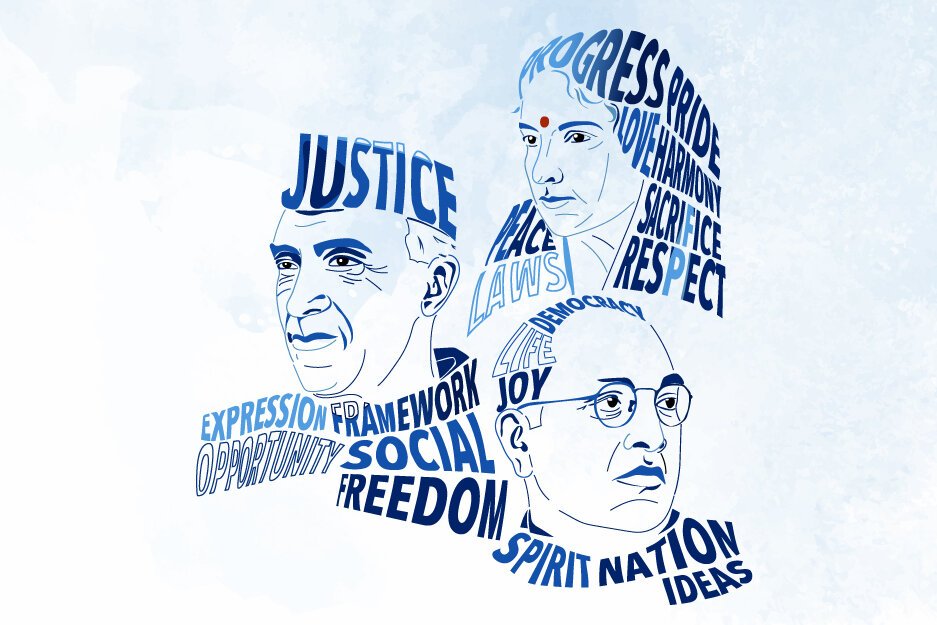

Dastaan-e-Samvidhaan — दास्तान ए संविधान | Greatest Speeches of the Constituent Assembly
In the second episode of this series on the story of the Constitution of India, we remember the landmark speeches made by prominent members of the Constituent Assembly. These addresses signified several important decisions that shaped the Constitution.
-
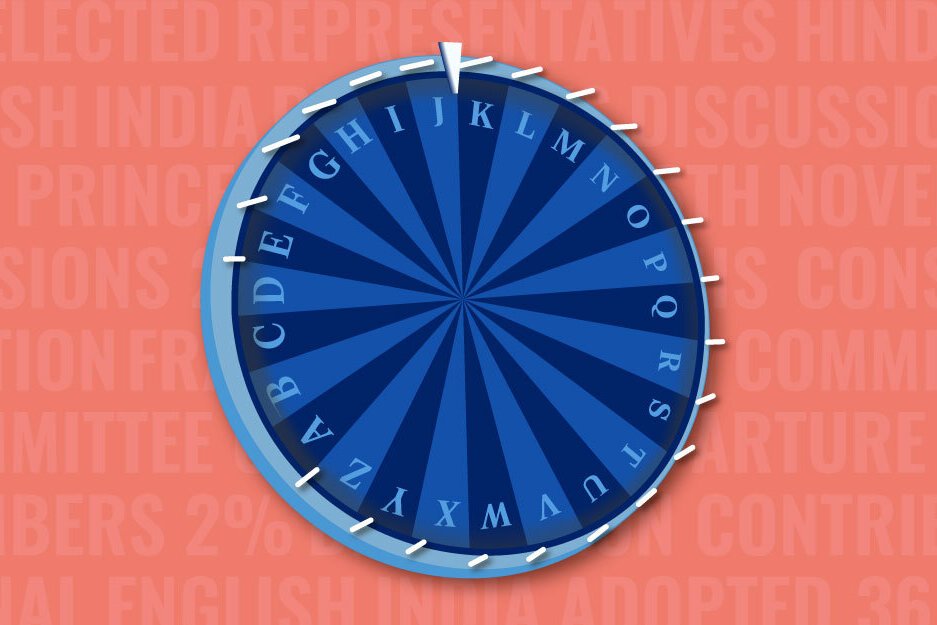
Samvidhaan Ke Naam| संविधान के नाम — Spin the Chakra, Test Your Constitution Quotient
This special episode of Samvidhaani Pitaara — Samvidhaan Ke Naam — is presented as a game show with Vineet KKN Panchhi and the students of Azim Premji University. Spin the wheel and test your Constitution Quotient!
-
An Independence Day playlist for love and harmony
Hosted by Vineet KKN Panchhi of The Jai Hind Project, this special edition of Samvidhaani Pitaara is aptly titled “Hindustan Ki Nayi Geetmala — Azaadi Special” — a playlist of songs to celebrate our yearning for true freedom. Listen on your favourite streaming channels.
-

1952 — A Love Story (For Democracy in India)
Welcome to Pehla Pehla Chunaav, our special episode of Samvidhaani Pitaara. Hosts Seetal Iyer and Vineet KKN Panchhi take you on a time machine trip simulating a retro radio broadcast as they recount the exciting events of the historic day when the results of India’s first free and fair parliamentary election are being declared
-
Hindustan Ki Nayi Geetmala | हिंदुस्तान की नयी गीतमाला — A Playlist To Celebrate Diversity
In the first episode of our series Samvidhaani Pitaara, we present a playlist for celebrating our diversity. The sounds of India represent our pluralism. The music of this unique Indianness finds resonance in the Constitution of India, a document foundational to our democracy, a tapestry tailored from disparate elements that make us Indian — our shared values, our history, and our diversity. Listen to Hindustan Ki Nayi Geetmala with Vineet KKN Panchhi.