
Reimagining Geography and Feel to Learn
Titiksha Rangari shares her perception on inclusive and tactile learning practices at the Geography lab at the University
Details
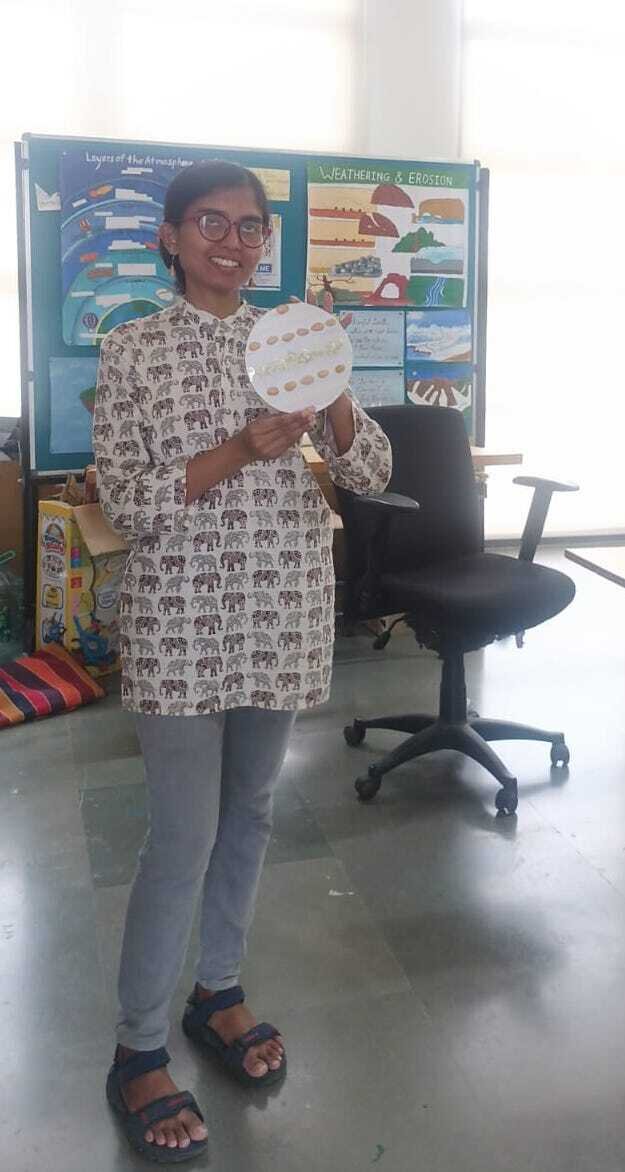
After completing my Master’s in 2024, I visited the Geography Lab at Azim Premji University again in 2026. During my time at the university, I once shared with my professor, Saswati ma’am, that I found it difficult to understand many concepts in geography in class. To help me learn better, she began creating inclusive and accessible Teaching Learning Materials (TLMs) for concepts such as the equator, maps, the Tropic of Cancer, the Tropic of Capricorn, and more. She designed tactile and accessible models so that I could understand these concepts more clearly. This was just the beginning!
After two years, when I visited the same lab again, I was amazed to see how beautifully it had transformed into a completely inclusive and accessible learning space. There are now detailed accessible models and maps related to rivers, mountains, regions, continents, and other models in connection with layers of the Earth, layers of the atmosphere, volcanoes, galaxies, and many more. These models make learning geography much easier and more meaningful for everyone.
What makes this initiative even more inspiring is that almost all of these materials are made using waste and low-cost materials such as cardboard sheets, pistachio shells, rubber balls, paper pulp, and other materials. Along with her assistant, Elwin, Saswati Ma’am has been continuously working on developing accessible models. During my days as a student, my classmates, Ritu and Anupriya, were also involved in this work, and now the initiative has grown even further.
Currently, these accessible TLMs are being experimented with in government schools through collaboration with an organisation in Bengaluru, and they are receiving positive responses from both students and teachers. This is truly an example of inclusive practices happening in schools. Creating inclusive education is not only about making accessible models, but it is also about building safe, welcoming and sensitive learning spaces where every student is included and valued.
About the author
Titiksha Pradip Rangari has been working with the Eklavya Foundation under EGRIE (Enabling Gender Responsive and Inclusive Education) project as a Project Assistant for the past two years.