
Musings on the Liminal Spaces of a Summer School on Science Education
Musings on the unscripted moments of science education.
Details
Production of the liminal
The campus comes alive differently during semester breaks. While immediately after the semester ends it appears deserted and bleak, the new silences begin growing. It was a couple of weeks after the semester ended and a few days after our grading deadlines. We were organising a summer school in science education called ‘Introduction to Research in Science Education’ together with another summer school on Maths Education. A palpable excitement on the first day led to focused sessions led along with colleagues, exploring research paradigms, nature of science, inquiry-based science education, cognition and learning and socio-cultural perspectives. Our participants were quite diverse yet cohesive in their curiosity and drive.
I have always been drawn to liminal spaces – the in-between passages, boundaries and areas leading from one meaningful or designated ‘place’ to another1. It has also been conceptualised as ‘hybrid’ spaces2 between two conventional places. These are not merely physical, but also metaphorical, such as between disciplines, or temporal between the past and future. Possibilities and meaning emerge during this movement between formally delineated places.There are metaphors of horror and nostalgia in dimly lit and aesthetically lackluster liminal structures. However, minimally organised, natural spaces become sites of potential, quite differently.
Every morning, walking down from my workstation at the Kaveri Poompuhar block to the Hampi block where sessions were held, I sensed a strange quiet energy in the campus and classrooms. Dogs happily sprawled on walkways, the gentle passing of breeze and movements of leaves: all demanding to be noticed. An alluring familiarity — also offering pause — after the frenzy of constant attention during the semester. I walked through the classroom, the venue of the summer school, while conducting sessions and when other sessions were in progress. Occasionally, I trudged around the space, under gloriously alive and flowering trees, listening to birds and soaking in the sunlight forming refracted patterns through leaves.
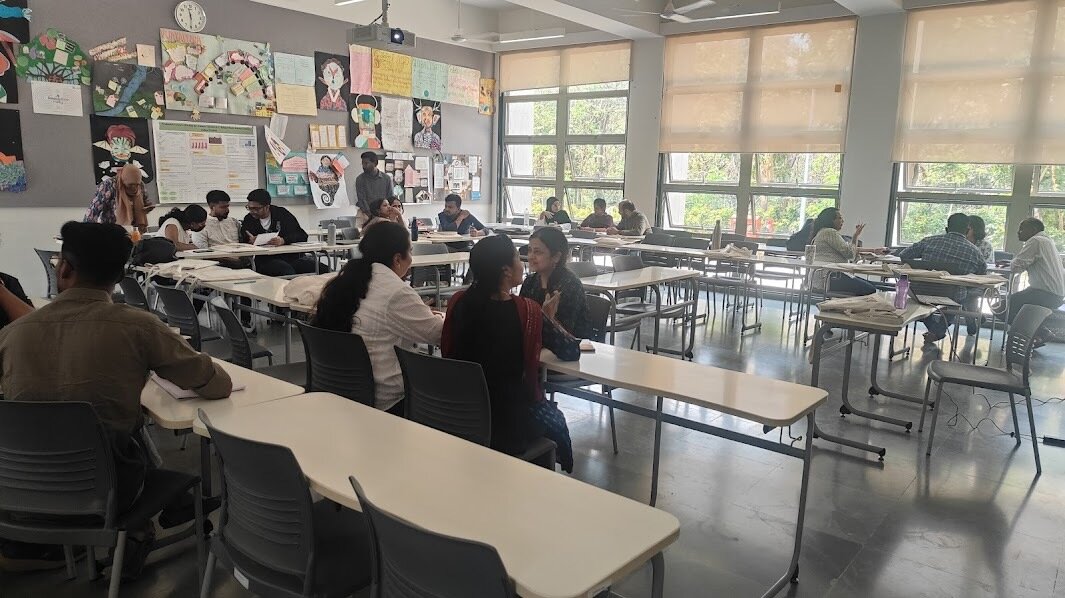
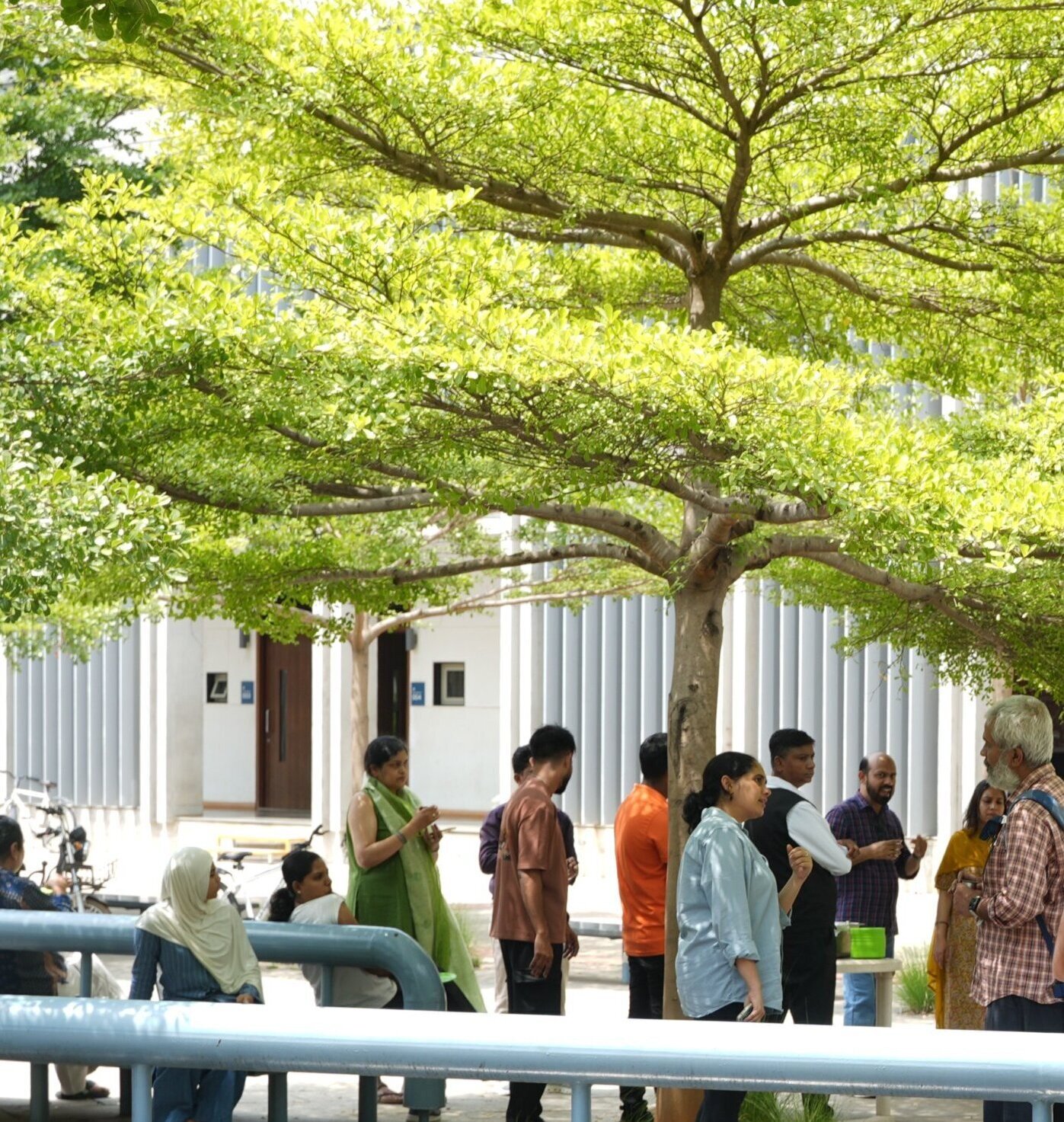
Participants in the classroom, and outside during a tea-break.
Being a peripheral participant during group discussions, I sensed a non-performative enthusiasm: puzzled expressions, quiet reflection and the occasional frustration. A couple of campus dogs decided to sleep everyday towards the back of the classroom, abandoning vacant open spaces. I wondered if they yearned for the enthusiasm of students, often stroking and talking to them.
As with formal group discussions, there was plenty happening during tea and lunch breaks, and informal gatherings at night on campus, more than immediately apparent. Participants were discussing connections with their work: deepening ongoing pedagogic practices; understanding similarities and differences in approaches from the life sciences to the physical sciences; discussing shared interests in science education and possibly higher education and research; sharing reflections on their experiences from the sessions, and so forth. Typical academic conferences with packed formal schedules tend to become exhausting gatherings. Here, languid, unstructured time besides its replenishing function, allowed for consolidation. The near vacant, spacious campus became an appropriate setting for this churn and rest.
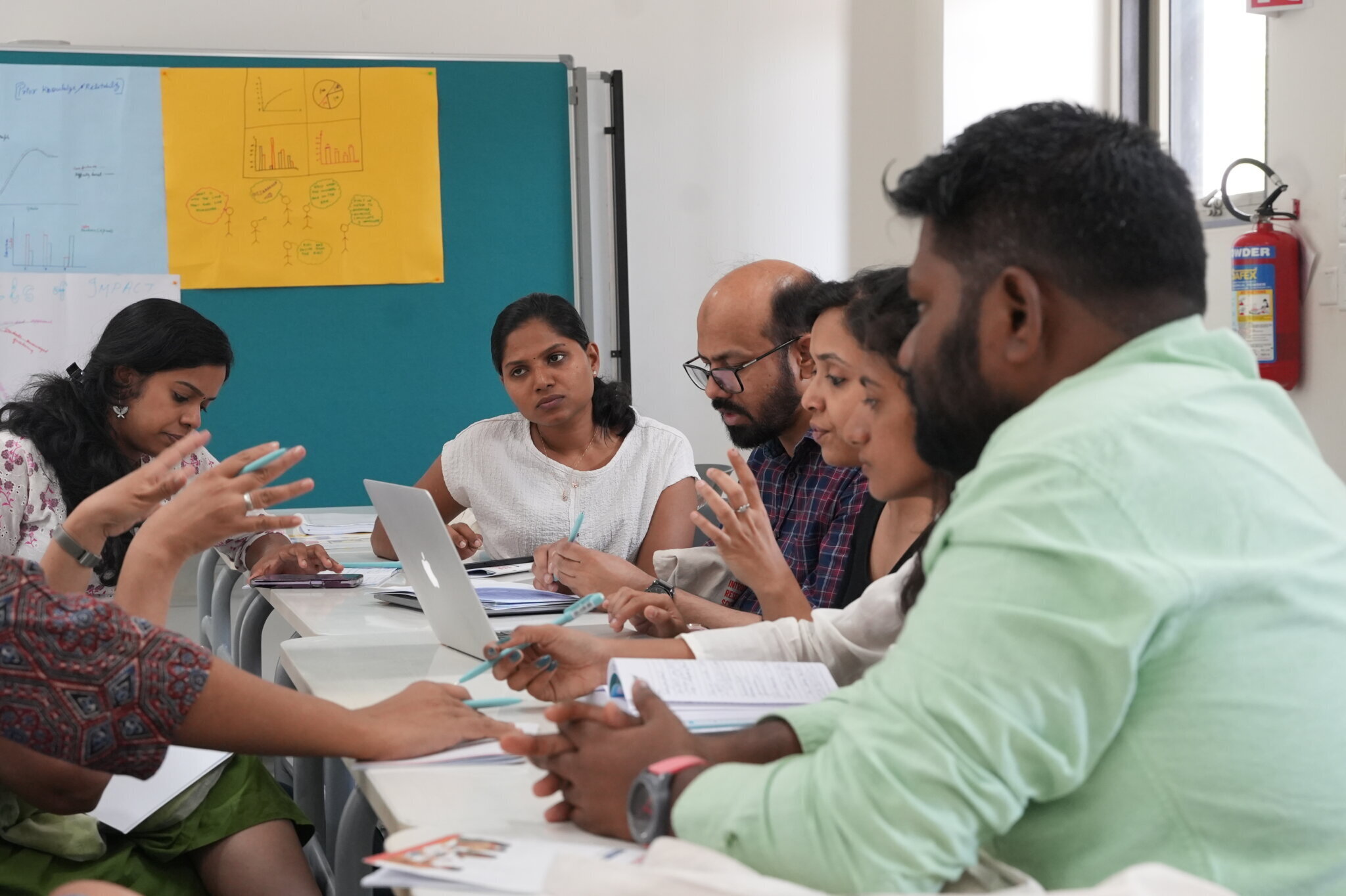
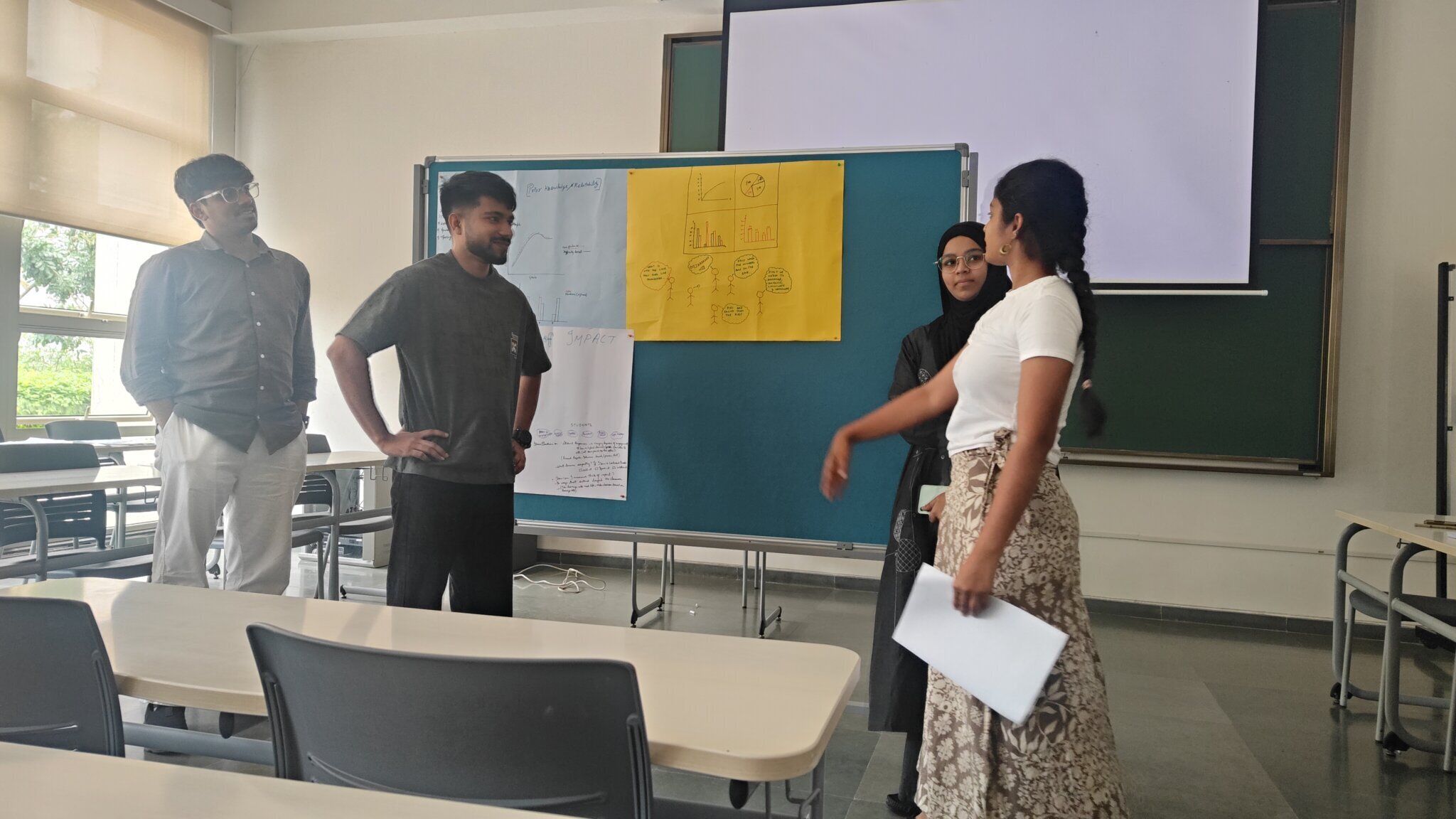
Group discussions and presentations during sessions.
On a side note, I caught up with a colleague over breakfast who shared his discipline with writing every day. Meanwhile, a puppy under the table in the cafeteria was checking if he could feed off crumbs from my plate and did so every day that week. Such conversations continued with another colleague over tea on our favourite existential problems in understanding current events in the world, and perennial qualms about the (im)possibility of its resolution. In class before sessions began for the fourth day, similar angst surfaced during casual conversation with participants, regarding our work outside the summer school. I was moving in and out of the venue amidst the paraphernalia of coordination and plethora of materials: bags, stationery, paper clips, printouts, charts and pins…
Emergent possibilities from the liminal cauldron
While I occasionally expressed frustration with the chaos of coordination, I wondered later if being thoughtful became the critical element in this seeming disarray. As organisers it is important to be forgiving ourselves while ensuring that the concoction in the cauldron was available and brewing with good intentions. That way we allow the organic container to take care of the rest.
During sessions, participants were keen to understand research linked to their pedagogical practices in formal and informal science educational settings. There was openness in grappling with new ideas and having discussions over lunch on topics ranging from teacher autonomy in alternative educational settings, and connections with their work as teachers, archivists, students and NGO members. Curious expressions and careful attention throughout led to nuance and perspective. There were moments of insight and recognition through understanding Darwinian evolution by natural selection while comparing metaphors of the ‘ladder’ and ‘tree of life’, understanding children’s conceptions, and frameworks organising sociopolitical perspectives. Listening to insights after structured discussions which drew from patterns in the compendium articles, textbook content, statements on the board and pictures, I wondered if there was something hidden in these materials, emergent only when one individually and collectively engaged with them.
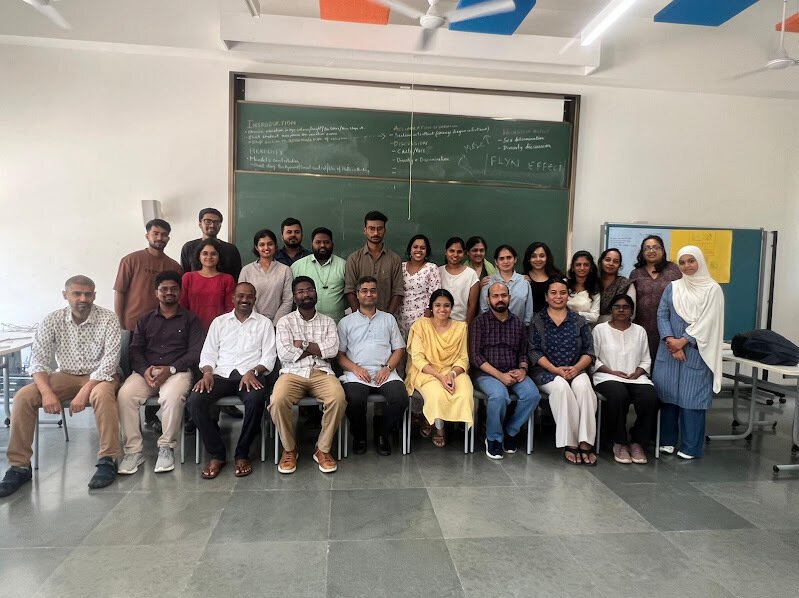
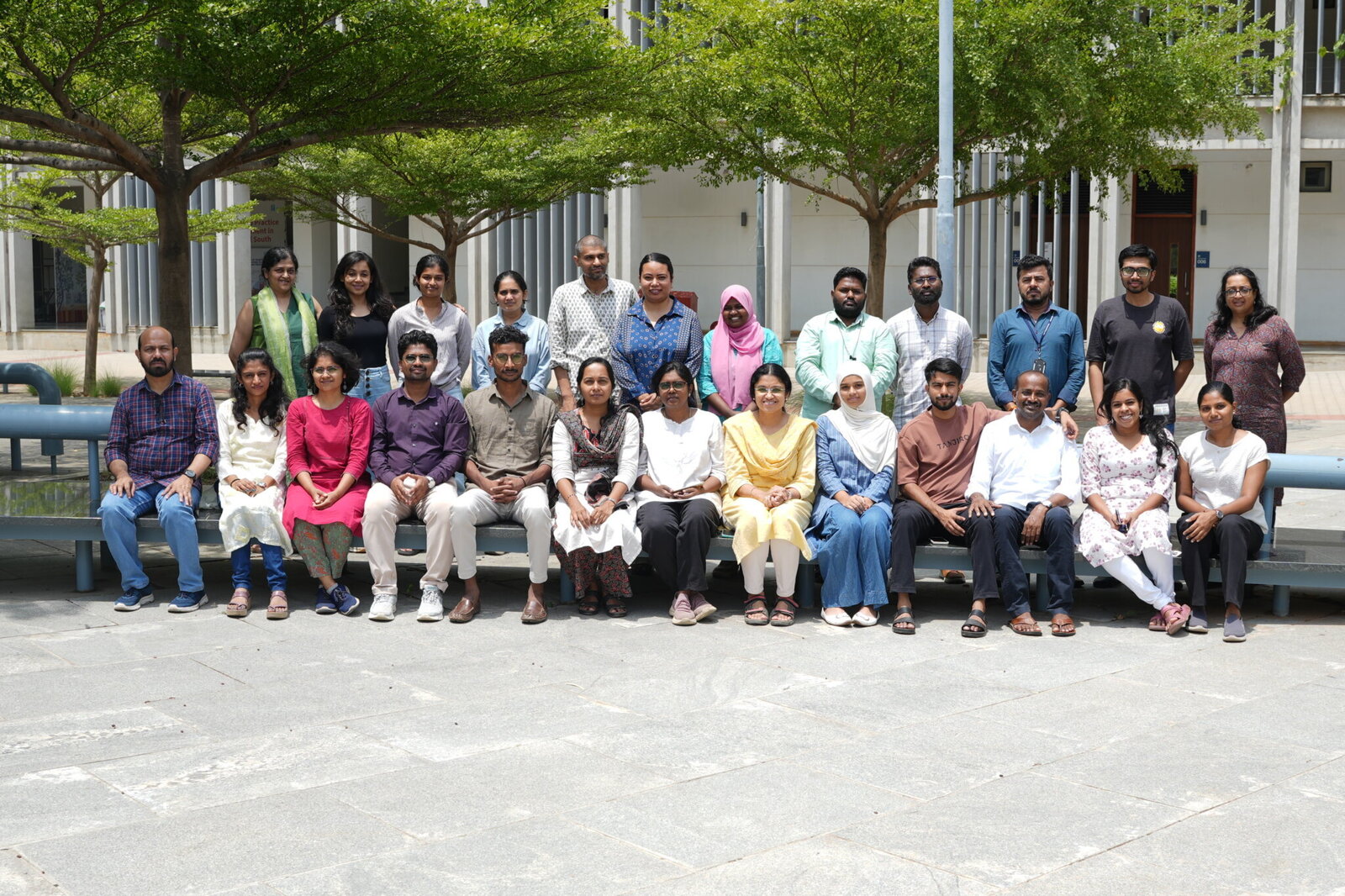
The lively participants and faculty on the final day.
Throughout the week, I kept sensing a drift, like a fairy passing through the campus and our classrooms and later moving towards informal spaces holding a distinctive magical wand. Something seemed to be emerging congruously from the stillness, the angst, the materials, the camaraderie and the informal settings. The liminal spaces between blocks, between informal interactions outside classrooms and structured spaces inside them, were already full of possibilities while more such were being generated anew. Perhaps I was traversing liminal boundaries between the factual and imaginal too!
My thoughts that week and memories later kept returning to the open area between Gurudutt and Hampi blocks, where participants of both summer schools gathered for tea breaks over conversations. Along with the two classrooms which were venues, and the Gurudutt corridor where we had lunch, the setting became a cauldron for meandering, pausing, and occasionally sprinting. Inhabiting these liminal spaces permitted situating oneself outside the flux, occasionally stirring the expansive container, and sensing what emerged through participants’ speech and gestures, while conceptualising the many faces of research in science education.
About the Author
Sindhu Mathai is an MA in Education faculty member at Azim Premji University. She teaches courses in science education and curriculum studies. Her recent projects are in the areas of informal science learning, graphical literacy, and space-time relationships in the classroom.
Image Credit: Sindhu Mathai, Prasad
References:
Van Gennep, A. (1960). The rites of passage (M. B. Vizedom & G. L. Caffee, Trans.). Chicago, IL: University of Chicago Press. (Original work published in 1909.)↩︎
Van Gennep, A. (1960). The rites of passage (M. B. Vizedom & G. L. Caffee, Trans.). Chicago, IL: University of Chicago Press. (Original work published in 1909.)
Bhabha, H.K. (2004). The location of culture. Routledge. (Original work published in 1994.)↩︎
Bhabha, H.K. (2004). The location of culture. Routledge. (Original work published in 1994.)