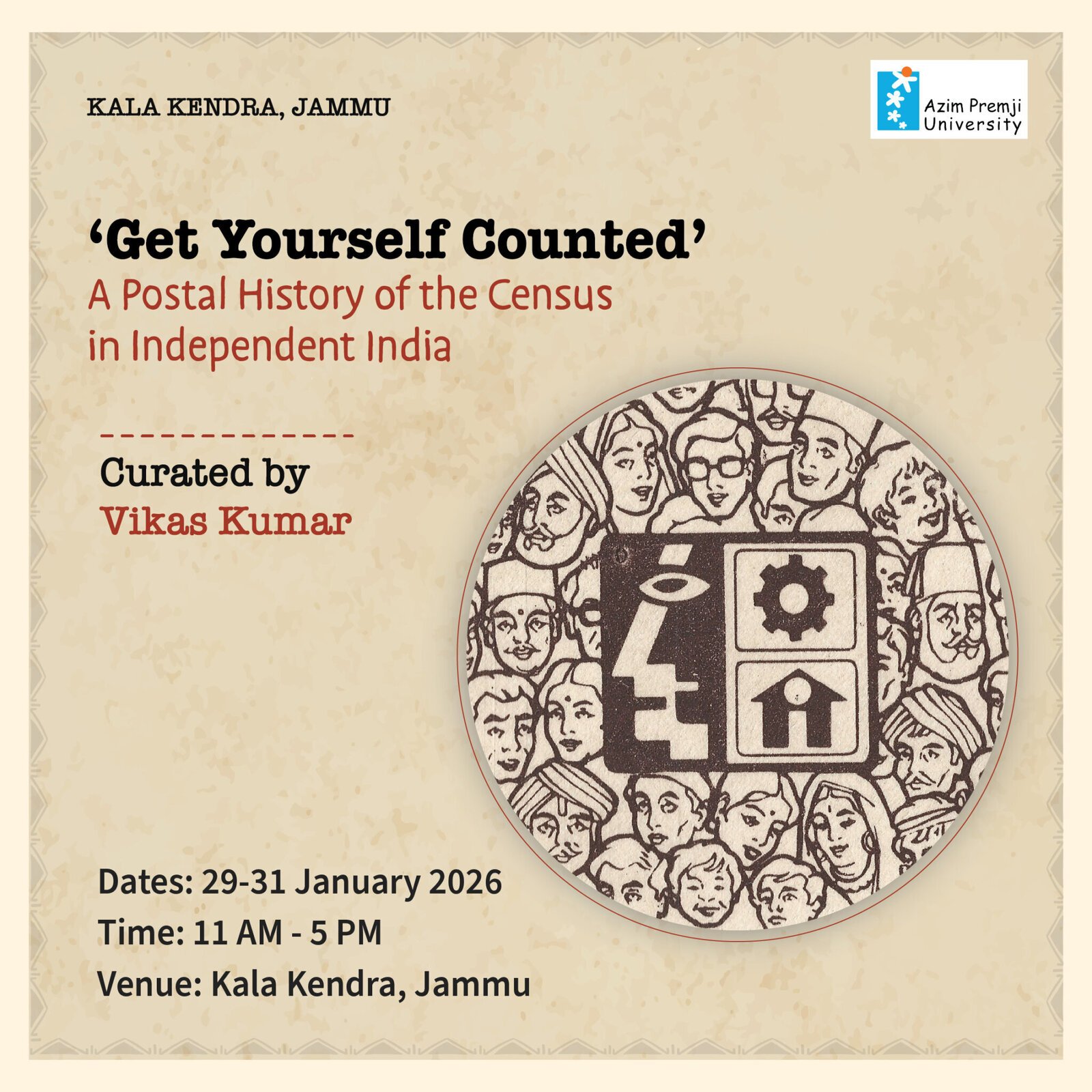
‘Get Yourself Counted’: A Postal History of the Census in Independent India
Explore how the humble post office facilitated decennial population censuses, backbone of India’s statistical system.
Details
India enacted a law to govern headcounts, the Census Act, 1948, two years before the adoption of its constitution. Later, the constitution made the census a sine qua non of power and resource sharing across tiers of government. The nascent post-colonial state, though, valued the census for yet another reason: the ability to successfully execute a large-scale scientific administrative exercise was integral to its self-imagination as a modern democracy. But low literacy rates and limited means of communication made it difficult to build awareness about this crucial exercise. So, the government relied on postal networks to advertise the census.
Apart from building awareness, the postal department also helped manage logistics of the gigantic exercise and track its progress by facilitating communication between field enumerators and census officers. These functions of the postal department are going to be largely redundant after the introduction of mobile-based applications to collect data. So, this is perhaps the right time to revisit the story of how the humble post office facilitated decennial population censuses that are the backbone of India’s statistical system.
This exhibition puts together a novel and extensive archive from 1951 to 2011 to highlight the support offered by the postal system to the census and uncover the conceptual as well as linguistic and graphic shifts in the use of postal networks to spread the word about the exercise across India. In doing so, the exhibition foregrounds non-statistical labour involved in the collection of statistics and presents postal materials as a valuable archive about the post-colonial state and its statistical practices in India.
- –
Inauguration: Kuldeep K Sidha, Director of Archives, Archaeology and Museums, Jammu & Kashmir
- –
Panel discussion: Mrinalini Attrey (Law School, Jammu University), Vikas Kumar (Azim Premji University), Ellora Puri (Department of Political Science, Jammu University) and Vishav Raksha (Department of Sociology, Jammu University)
- –
Exhibition (In parallel)
- –
Exhibition
- –
Exhibition