
Delimitation and its Multiple (Dis)contents
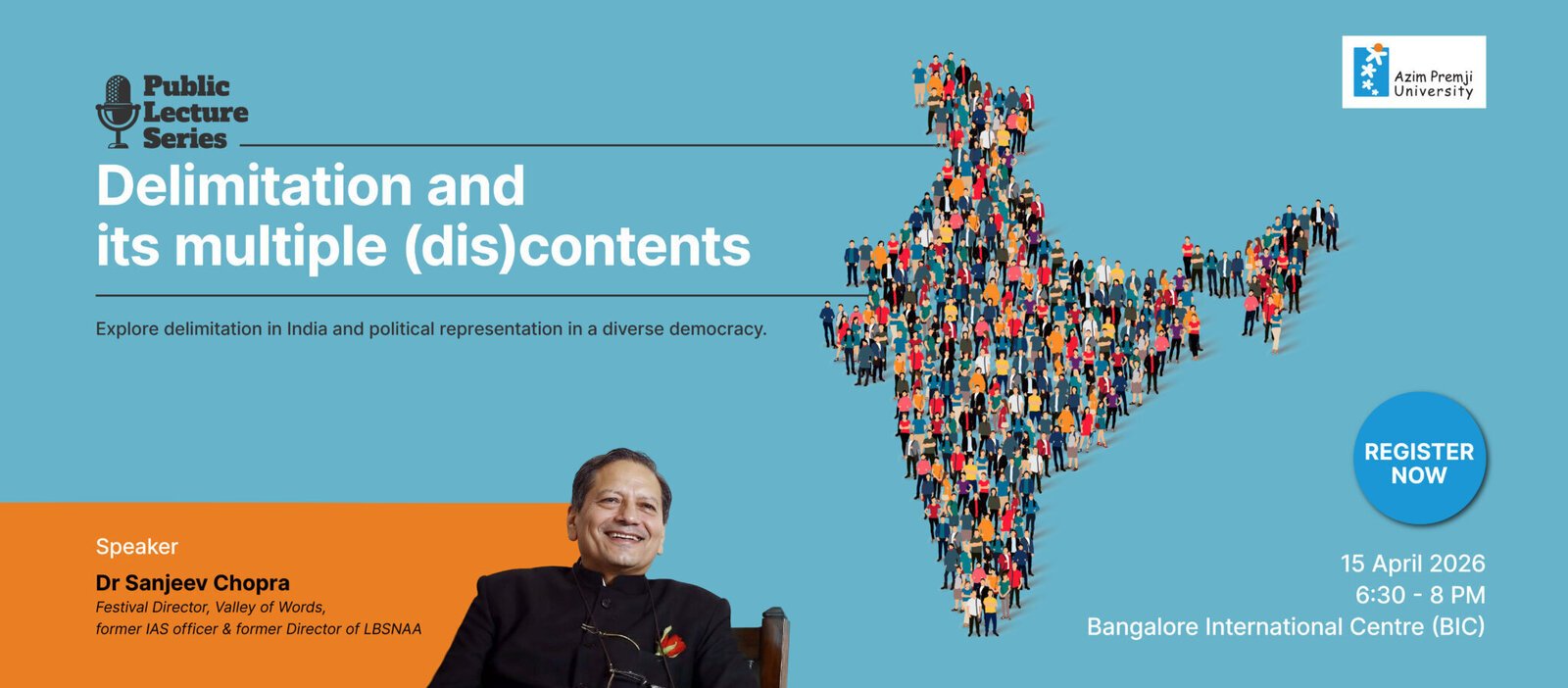
In this lecture, Dr Chopra will explore how the 2027 census will trigger long-frozen delimitation and the fault lines it will surface across India’s federal landscape.
Details
About the Lecture: India’s delayed 2027 census will also open the floodgates of delimitation of constituencies — a process on hold from 1971 on account of the 42nd and 84th Constitutional Amendments passed in 1976 and 2001, under the premierships of Indira Gandhi and Atal Bihari Vajpayee, respectively.
This will stir the hornet’s nest, as it will bring to the surface multiple divides: north versus south, urban versus rural, domiciliary status versus migrant rights, as well as demands for reorganisation of districts and states into manageable administrative units.
Yet delimitation also carries within it the possibility of a more equitable distribution of political voice, one that better reflects where Indians live today, and what they need from their democracy.
Watch the recording
About the Speaker: Dr Sanjeev Chopra is a historian, columnist, and former Indian Administrative Service officer whose work sits at the intersection of Indian history, political economy, and governance. Over a 36-year career in public service, he held senior positions in agriculture, rural development, and administrative reform at state and central levels, culminating in his role as Director of the Lal Bahadur Shastri National Academy of Administration.
He is the author of The Great Conciliator: Lal Bahadur Shastri and The Transformation of India (Bloomsbury India, 2025) and We the People of the States of Bharat: The Making and Remaking of India’s Internal Boundaries (HarperCollins India, 2022) — works that bring rigorous historical inquiry to questions of nationhood, federalism, and democratic governance.
Dr. Chopra is currently Festival Director of Valley of Words, Dehradun, and is Distinguished Visiting Professor of Public Policy at UPES University and Swami Ram Himalayan University. He is a Fellow of the Royal Asiatic Society of Great Britain and Ireland and a World Bank Robert S. McNamara Fellow.