
The Virtuous Researcher: How a Virtue Philosophy of Science Can Help Reframe How We Understand Research Integrity
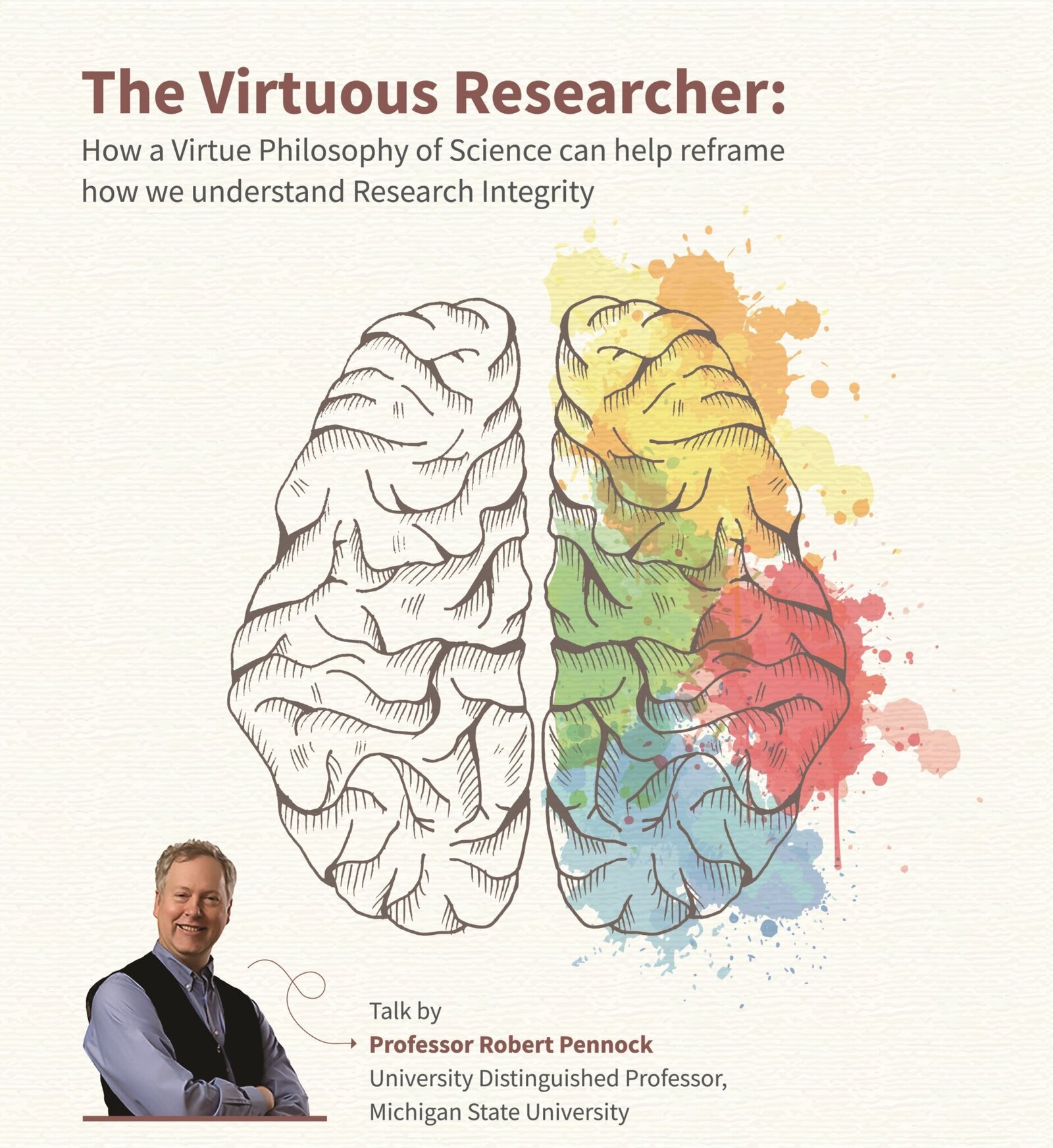
Talk by Professor Robert Pennock, University Distinguished Professor, Michigan State University, United States
Details
As a part of the course, Ethics and Education, Prof. Robert Pennock has been invited for a talk by School of Education, Azim Premji University. This talk is based on the Prof. Robert Pennock’s decades of research work, writings, and studies.
It would be of interest to our students to understand more about philosophy of science; how organisms become knowers and how science can help systematise and improve this process. Professor Pennock’s research is conducted through a combination of disciplines, including evolutionary biology and computer science.
He teaches the use of social science methods to study scientists’ attitudes about scientific values. Special interest in curiosity and other vocational virtues that are important for excellence in scientific research and how we can do better to help science students cultivate these as part of their vocational identity.
A virtue philosophy of science serves as a normative reconstruction of the mindset and characteristic practices of scientists — a uniquely curious population of knowledge-seekers. Arising from the scientific task of discovering the causal structures of the natural world, curiosity and other scientific virtues provide a value structure through which scientists’ practices and methods can be explained, evaluated, and improved.
Professional ethics has most often been conceptualised within a deontological ethical framework that emphasises rights, responsibilities, and rule-following. While this is important, it is incomplete. Virtue theory, on the other hand, focuses on agents’ moral character, conceived as a settled set of dispositions that motivate and guide action, and the circumstances that contribute to its cultivation and expression. Having a good character makes it more likely that an agent will make good decisions and act accordingly. Character is developed by modeling and habituating appropriate dispositions — the virtues.
This presentation will discuss the theoretical and evidential basis of this approach for science and how it can help improve responsible conduct training and STEM education generally.
Join us!