Understanding Gender, Work, and Education in India
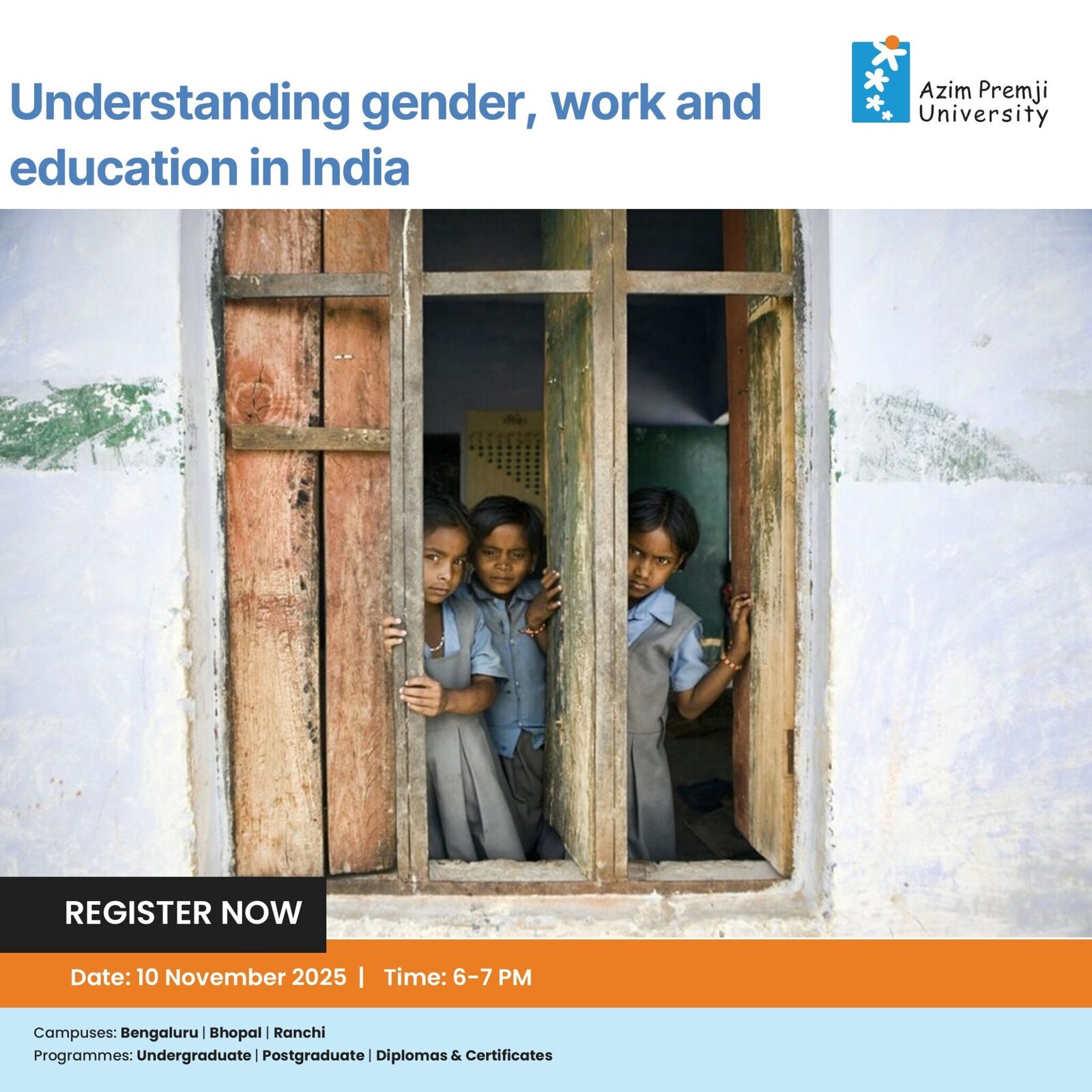
Details
About the session
How do gender and social structures influence women’s participation in the workforce and young people’s educational choices in India? This session brings together two complementary studies that offer fresh perspectives on these questions, grounded in empirical evidence and data-driven research.
Rosa Abraham explores “Women and Work: Why Aren’t Indian Women Working – or Are They?” Drawing on primary surveys and official statistics, her research investigates patterns in women’s work and employment over the past few decades, challenging dominant narratives about India’s declining female labour force participation and questioning how we define and recognise women’s work.
Anand Kumar examines “How Social Identity Shapes Stream Choice?”—a study that looks at how gender and caste influence students’ academic pathways at the higher secondary level, a key gateway to STEM education and future careers. His work highlights how deeply social identity continues to shape educational aspirations and opportunities.
Together, these discussions offer a nuanced understanding of the intersections between gender, education, and employment, and the structural factors that continue to influence life choices in India.
Who should attend?
This session is ideal for students exploring higher studies in the social sciences, educators and researchers interested in issues of gender and inequality, and professionals working in education, policy, or social development sectors. It will also be valuable for counsellors, youth facilitators, and development practitioners who engage with questions of access, aspiration, and opportunity in education and employment.
Whether you are studying, teaching, or working in the field, this conversation will help you understand how social identity and gender dynamics shape people’s educational and economic journeys in India.
Why attend?
- To gain insights from leading researchers on gender, work, and education.
- To understand the intersections between social identity, opportunity, and inequality.
- To learn how evidence-based research can inform social and policy change.
Have questions?
Write to us at admissions@apu.edu.in.