
Bookmarked with Mallika Ravikumar: How I Became a Tree by Sumana Roy
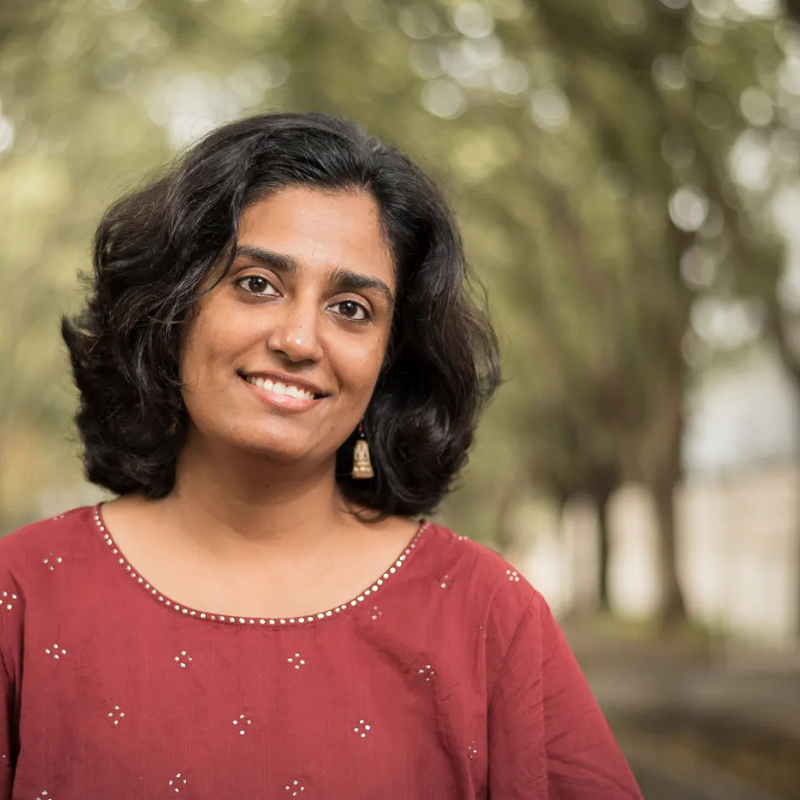
Author Mallika Ravikumar writes about a lyrical and philosophical book that celebrates oneness with trees.
Details
In an interview about her book How I Became a Tree, author Sumana Roy said she did not believe in the binary of nature-writing and other-writing because she did not see nature as something separate from the rest of life. It is hence a little ironic to be writing this column for a Nature Writing newsletter. And yet, when asked about my favourite book about nature, it is this one that sprang to mind.
As the title suggests, the book is about the author’s relationship with trees. To call it a love affair would be to trivialise it because it is more than that. Lyrical, philosophical, autobiographical and transcendental, the book draws readers into this world through the eyes and words of someone in a meditative state of oneness with trees: An epiphany wrapped me like a tendril…I began envying the tree, its disobedience to human time…it was impossible to rush plants, to tell a tree to ‘hurry up’. In envy, in admiration and with ambition, I began to call that pace ‘Tree Time’.
In Bengali literary imagination — whether in the works of celebrated writers like Rabindranath Tagore, or lesser-known ones like Mustafa Siraj — trees have been more than backdrop. They have been characters, metaphors, witnesses, emotions. Roy’s book pays tribute to these and other works of literature centred around trees, such as Jean Giono’s The Man who Planted Trees and, more recently, Mathew Hall’s Plants as Persons: A Philosophical Botany. It is a joy to scurry down these rabbit holes.
From Krishna’s Vrindavan to Bibhutibhushan Bandyopadhyay’s Pather Panchali, from emails written to trees in modern-day Melbourne to stories of the dead transforming into trees in mythical lore, the book takes one on a journey across time and space that is as wondrous as it is wide-ranging.
Roy mentions how girls are often named after flowers but seldom after trees. I felt she was speaking to me, because my name is the Tamil word for jasmine, and I had decided long ago that if I were to have a daughter, I would name her Taru (Hindi for tree). Trees have also quietly rooted themselves into almost everything I write: from my first book Tracing Roots: Stories About Trees to the recently published The Battle for Baramulla, where I cast the Chinar tree as a silent witness to a searing saga set in Kashmir.
Unlike Roy, I have never aspired to become a tree, but the sight and company of trees sparks a joy I cannot quite describe. If you feel the same way, this book will double your delight. And if you’re not quite there yet, this book may gently lead you there.