
The 500-Year-Old Epic That Refused to accept Caste | ಮಂಟೇಸ್ವಾಮಿ ಕಾವ್ಯ
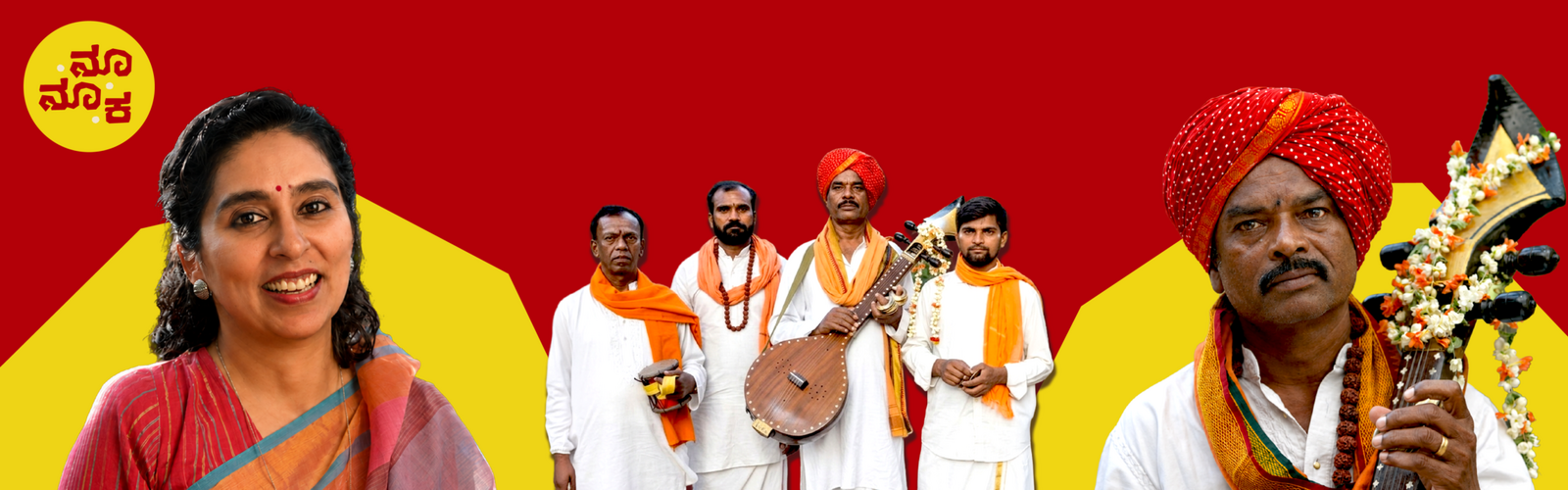
In this episode, Dr. Mysuru Gururaj and Krishnamurthy Hanur explore why Manteswamy Kavya remains one of Karnataka’s most important oral traditions.
Details
Some stories survive because they are written down.
Others survive because people refuse to forget them.
For over 500 years, Manteswamy Kavya has travelled across southern Karnataka through the voices of Neelagaras. It has no single author, no definitive manuscript, and no central institution preserving it. Instead, it lives in memory, music, performance, and devotion. It is sung in villages, carried from generation to generation, and sustained by communities who see their own histories reflected in its verses.
At the heart of the kavya is Manteswamy, a saint believed to have journeyed into what the tradition calls ಕತ್ತಲೆ ದೇಶ — a land of darkness, ignorance, and social inequality. His journey is not one of conquest but transformation. Through songs, stories, and miracles, he challenges power, questions hierarchy, and stands alongside those pushed to the margins of society.
Subscribe on YouTube
In the oral tradition, Manteswamy is often remembered as ಧರ್ಮಗುರು and ದೊರೆಗೆ ದೊಡ್ಡೂರು — a teacher of humanity and a protector of those denied dignity. His miracles, or ಪವಾಡಗಳು, are acts of social reversal. The powerful are humbled. The powerless are uplifted.
Unlike many oral epics, Manteswamy Kavya combines philosophy, music, theatre, humour, devotion, and social critique. It is at once a performance and a political imagination. A world where power can be questioned, dignity belongs to everyone, and humanity itself becomes the highest dharma.
Perhaps that is why its central message still feels familiar today.
One of the most powerful songs in the tradition speaks of the ಪರಂಜ್ಯೋತಿ — the supreme light that shines equally on everyone:
ಆದಿ ಒಳಗಲ ಜ್ಯೋತಿ. ಬೀದಿ ಒಳಗಲ ಜ್ಯೋತಿ.
ಅರಮನೆಯ ಜ್ಯೋತಿ. ಗುರುಮನೆಯ ಜ್ಯೋತಿ.
ಬಡವನ ಮನೆಯ ಜ್ಯೋತಿ. ಬಲ್ಲಿಗನ ಮನೆಯ ಜ್ಯೋತಿ.
ಹೆತ್ತ ಮನೆಗೂ ಜ್ಯೋತಿ! ಸತ್ತ ಮನೆಗೂ ಜ್ಯೋತಿ.
Light of the inner self. Light of the outer world.
Light of the palace. Light of the guru’s house.
Light in the poor man’s home. Light in the rich man’s home.
Light in every house of birth. Light in every house of death.
And later:
“ತಿಪ್ಪೆ ಮೇಲೆ ಹಚ್ಚಿಟ್ಟರು ಭಿನ್ನ‑ಭೇದ ಇಲ್ಲದೆ,
ಉರಿವ ಏಕದುಡ ಪರಂಜ್ಯೋತಿ”
Just as a fire lit on a heap of refuse burns without discrimination, the supreme light shines beyond all divisions.
Centuries before equality became the foundation of modern democracy, these songs were already imagining a world in which every human being possessed the same dignity.
Or, as Dr. Gururaj puts it in the episode, the values we celebrate in the Constitution today were already being sung in these villages centuries ago.
Five hundred years later, the song continues.
Credits
Akshay Ramuhalli, Ajmal Muhhammad A, Bruce Lee Mani, Gorveck Thokchom, Hindu, Kishor Mandal, Kruthika Rao, Narayan Krishnaswamy, Prashant Vasudevan, Ram Seshadri, Ritika Soun, Sananda Dasgupta, Sanoob Puliyanchali, Shilpi, Tanvi Avlur Venkat, Varsha Ramachandra, Vishnupriya, Seema Seth, & Velu Shankar
Special thanks to Dr. Mysuru Gururaj and Krishnamurthy Hanur for being part of the episode.