
Dharma Kumar
Pioneering liberal economic historian
By Ramachandra Guha
Details
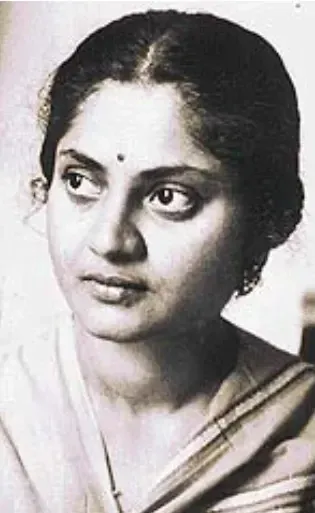
Dharma Kumar (née Venkataraman)(1928 – 2001) was a pioneering economic historian, the long-time editor of an influential scholarly journal, and a key member of the faculty of Delhi School of Economics for almost three decades. She came from a family of modernising Tamil Brahmins, who followed the ancestral path of learning while eschewing the prejudices of caste and religion. She took two degrees in economics: the first at Elphinstone College, Bombay; the second at Newnham College, Cambridge. Returning to India in 1948, she spent more than ten years working in the Reserve Bank of India (RBI).
Dharma Kumar escaped the world of babudom to return to Cambridge, where she did a PhD in economic history. She then left the RBI, and held short-term fellowships at the Indian Council for World Affairs and the Institute for Economic Growth before moving to Delhi School of Economics in 1966, as Reader in Economic History. Seven years later she was appointed Professor. She stayed at the Delhi School until her retirement in 1993. While she came to regard her years at the RBI as wasted, her years at the Delhi School were unquestionably the happiest of her life, spent in a place which, as she later wrote, was “civilised and liberal, with friendly and cooperative colleagues and intelligent students”.
Just before joining the Delhi School, Dharma Kumar published her first book, Land and Caste in South India. This was based on her Cambridge PhD thesis, which was awarded the Ellen Macarthur Prize for the best dissertation in economic history. Land and Caste was a work of methodological innovativeness. Where other historians of rural India had closely examined the relations of production, Dharma Kumar also studied the social framework of agriculture, the linkages of production to caste and the cultural (as distinct from economic) power exercised by landowners. There was an attentiveness to indigenous categories, which she sought to understand in themselves rather than explain in terms of imperfect Western equivalents. In a mere 200 pages the book covered a very wide range of themes: patterns of landholding and bondage, population growth, emigration, wages, and of course, caste. A particular strength was the awareness of regional variations within the Madras Presidency. There was also a judicious but not excessive use of statistics.
Land and Caste was ground-breaking in its methods, and in its conclusions. In particular, it demolished the argument then prevalent among nationalists and Marxists alike, that British rule had destroyed the organic village community of pre-colonial India and created a polarised society of landowners and labourers. As Dharma Kumar (1965, p. 47) demonstrated, “agricultural servitude was obviously deep-rooted in South Indian society”. Her data showed that agricultural labour constituted a high proportion (in some parts, as much as 20 percent) of the rural population in 1800, that is, when the British had barely begun to consolidate their empire in South India. During the course of the century this proportion does not seem to have altered very much. The key chapter where this was demonstrated, Chapter IV, ends with the sentence: “It is highly unlikely therefore that agricultural labour was a quantitatively insignificant group at the time when British rule began”.
Through the 1970s and 1980s, Dharma Kumar wrote a series of important essays in social and economic history, these compiled in book form as Colonialism, Property and the State. Some of the essays focused on South India: these included an analysis of landownership and inequality, a study of the forgotten services sector, and an exploration of the idea of private property in pre-colonial South India. Other essays were wider and comparative, studying taxation patterns in British India and Dutch Indonesia, for example, or comparing the performance of the Chinese and Indian economies. A third category of essays were historiographical: these included a fascinating analysis of how Indians have ‘imagined’ states and governments in modern times, and a critical account of attempts by ‘left’ historians to construct a useable past. Here, Dharma Kumar pointed out that the granting of minority rights in the present was an issue unrelated to how religious groups had related to one another in previous times.
These essays, some of which are very rich in empirical terms, and others which are rich in suggestive speculation, have some underlying themes. There was the interest in intermediate classes — merchants, artisans, and professionals, for example — generally ignored in the literature, which tended to privilege the polar oppositions of capitalist/worker and landowner/labourer. There was, as in her early work, an interest in indigenous categories (here, specifically, legal categories), and a serious engagement with other social science disciplines, such as demography, law and, especially, anthropology. Indian historians needed to learn from other disciplines as well as from other societies. “We have been geographically narrow”, she remarked, “as if India and Britain were the whole world. Our narrowness is understandable — if we are parochial, our parish is a very crowded one, and is, in my view, one of the more interesting parts of the world. But the narrowness and parochialism may also reflect the defects of our education, and the omission of world history from school and university curricula. We have found in the Delhi School of Economics that students see British India in much better perspective when they study about imperialism elsewhere. And I myself have learnt to ask better questions about India after learning something about Malaysia, Indonesia and Burma, to name former colonies, and from China and Japan.”
In between her two books, Dharma Kumar had co-edited the second volume of the Cambridge Economic History of India. This was a major exercise, the commissioning and editing of twenty-two essays by almost as many scholars. Running to over a thousand pages, the volume was organised both by region and by theme, and included a separate section on the economy of post-independence India.
Apart from its conception and editing, Dharma Kumar also wrote three substantive chapters of the Cambridge Economic History. Two dealt with her old study area, the Madras Presidency. It is instructive to compare her essays on South India with the contributions on Eastern India by Benoy Chaudhuri. Chaudhuri started one chapter with the question of colonialism: “The exact impact of British rule on the Indian rural society continues to be a debatable issue”, ran his first sentence. Likewise, his essay on the regional economy had a section with the meaningful title: “The adverse initial effects of British rule on agriculture”. Dharma Kumar, by contrast, began by noting that South India “is a region of great physical diversity”. This was then briefly outlined: the diversity of forests, crops, social customs, and agrarian regimes. Here were two different approaches to the study of society: once glossed, in research methodology primers, as inductive versus deductive or ideographic versus nomothetic approaches. One approach first stated a thesis and then looked around for evidence to confirm or refute it; the other worked from the bottom up, piling up the evidence and letting it more directly speak for itself.
Dharma Kumar’s essays on agrarian structure and the regional economy were deeply grounded, introducing the reader to variations in land revenue regimes, in the status of agricultural labourers, in forms of cultivation and its social arrangements. (She also devoted a separate section to the important princely states of Mysore and Hyderabad.) In sum, she sought to convey the facts of rural production and distribution, rather than advance a historiographical or ideological thesis. Colonialism was too complex and contradictory a process to be painted in monochromatic colours. On the one hand, she had no hesitation in identifying a certain writer as “an official apologist” or in noting that government statistics were often tailored to make a particular case; on the other, in pointing out that while the “most urgent need” of the British was for land revenue, it was here that “the high rates charged by their immediate predecessors were very helpful”.
At the Delhi School of Economics, Dharma taught both compulsory and optional courses for the flagship MA programme. She initiated the Sri Ram Travelling Fellowship Scheme that introduced generations of economists and sociologists to the craft of field research. She was a prime mover behind the series of seminars that brought together historians of colonialism from Indonesia, India, Holland, and Great Britain. She also supervised a number of doctoral theses, among them those by J. Krishnamurty on occupational structure, by M. Atchi Reddy on tenurial relations, and by Minoti Chakavarty Kaul on common property resources. Dharma Kumar’s devotion to the institution was immense; shortly before she retired in 1993, she conceived and jointly edited a wide-ranging volume on the history of the Delhi School itself.
Apart from her own teaching and research, Dharma Kumar made a major contribution to academic life through her editorship of the Indian Economic and Social History Review (IESHR). She was a founding associate editor, taking over the main job after Tapan Raychaudhuri left for Oxford in 1971, and overseeing the journal’s operations for the next quarter of a century. Like T.N. Madan’s Contributions to Indian Sociology, the IESHR was a world-class journal published by Indians out of India. It was the chief vehicle and showcase for the revolution in history-writing that commenced in the 1960s: the place where scholars young and old, foreign and Indian, Marxist and non-Marxist, most wanted to be published. It printed many original essays on agrarian relations, industry, handicrafts, trade, and finance. It promoted subjects previously ignored by historians of India: such as the history of law, the history of women, and the history of forests.
As a woman in what was then a very heavily male-dominated field, Dharma Kumar stood out. She herself refused to make an issue of her gender; though surely it must have on occasion hurt or harmed her professional advancement. However, we cannot end this essay without remarking on her personal qualities; her sparkling wit in conversation, her extraordinary wide range of interests outside scholarship, her remarkable generosity to her friends, her colleagues, and her students.
Kumar, D. (1965). Land and Caste in South India: Agricultural Labour in the Madras Presidency During the Nineteenth Century. Cambridge University Press. (The book was republished by Manohar Publishers, New Delhi, in 1992, with a new introduction by the author.)
Kumar, D. (ed.) (1983). The Cambridge Economic History of India, Volume II. Cambridge University Press.
Kumar, D. (1998). Colonialism, Property and the State. Oxford University Press.
Kumar, D., & Mookerjee, D. (eds.) (1994). D School: Recollections of the Delhi School of Economics. Oxford University Press.
About the author
Ramachandra Guha is a historian and biographer based in Bengaluru. He is currently Distinguished University Professor at Krea University. His books include The Unquiet Woods, Speaking with Nature, and India After Gandhi. [Full profile]