Lightbulb Moment — The Dazzling Story Of Electric Lighting In India
In Unboxed — The Lightbulb in India, Sharmadip Basu and Proteep Mallik explore the story of electric lighting in India through the lenses of history, science, popular culture, and more. They are joined by guests Antara Das and Sunandan K.N. for an enriching and enlightening conversation. Listen to the episode on Radio Azim Premji University.

Details
Until about two centuries ago, the earth’s natural cycle of light and darkness dictated how humans lived, worked, and dreamed. Diurnal organisms, including humans, were active under the sun and rested after sunset.
Let There Be Light!
Humans associated darkness with fear and danger — and in popular culture and folklore, often with mystery and evil. Today, however, pure darkness has been almost entirely banished, blurring the once-clear boundaries between night and day. Credit — and blame — for this transformation belongs to one pivotal invention of the late 19th century: the electric lightbulb.
The incandescent lightbulb was developed over many years through the contributions of different inventors. In 1802, Humphry Davy created the first electric arc light, but it was too bright and impractical. In 1840, Warren de la Rue made a bulb using a platinum filament in a vacuum, but platinum was too expensive. In 1879, rivals Thomas Edison and Joseph Swan created longer-lasting bulbs using carbonised bamboo filaments, bringing the lightbulb closer to everyday practicality.
The Age of Tungsten and Argon
The discovery of tungsten was a game-changer. In 1906, General Electric introduced tungsten filaments, which became the standard due to the metal’s high melting point and longer lifespan compared to carbon filaments. In 1910, William Coolidge further improved tungsten filaments, making bulbs even more efficient.
Since metals burn in oxygen, manufacturers initially removed air from the lightbulb’s glass casing to create a vacuum. However, even this method had limitations. Eventually, an alternative emerged — manufacturers began filling bulbs with argon, an inert gas discovered in 1894, to slow tungsten evaporation and extend the bulb’s life. These innovations made incandescent bulbs the primary source of light until fluorescent and LED technologies gained popularity.
Although Edison is often credited as the inventor of the electric lightbulb, a closer look at history and science reveals that he was more of a resourceful systems engineer — integrating various contemporary inventions — and a visionary entrepreneur who commercialised electric lighting. His marketing strategies were so effective that the tungsten filament bulb, with its iconic shape, is still commonly referred to as the “Edison Bulb.”
Lighting Up India
Electric lighting first arrived in India in 1879, when P.W. Fleury & Co. demonstrated it in Kolkata (then Calcutta). In 1881, electric lights were installed at the Garden Reach Cotton Mills. By 1889, Harrison Road (now Mahatma Gandhi Road) became the first street in the city to have electric lamps. Calcutta’s first power station, built in 1899, marked the beginning of thermal power generation in India.
Mumbai saw electric lighting as early as 1882, when Crawford Market was illuminated with electric lamps. However, gas lamps remained common until 1923, when tungsten filament bulbs became widespread. As electricity spread, more cities — and eventually rural areas — gained access to electric lighting.
The arrival of electric lighting in rural India was often met with fanfare and celebration. Sunandan K.N., a member of the social sciences faculty at Azim Premji University, shares a personal anecdote about the arrival of electric lighting in his Kerala village — listen all the way to the end of the segment for an ironic twist!
Swadeshi Lightbulbs
The Roy brothers — Hemen, Suren, and Kiron — played a key role in developing India’s early lighting industry. In the early 20th century, they founded Bengal Lamps, one of India’s first companies to manufacture incandescent bulbs. At a time when most bulbs were imported, Bengal Lamps helped establish local production, reducing costs and making electric lighting more accessible. This pioneering effort contributed to the wider adoption of electric bulbs across India. Bengal Lamps, which sparked a wave of local manufacturing, was an early “Make in India” initiative — nearly a century before the term became mainstream.
Over time, electric lighting transformed Indian society, enabling longer work hours, improving safety, and enhancing living conditions. With widespread electrification, the lightbulb played a vital role in India’s modernisation.
Sunset of the Incandescent Bulb
Following the incandescent bulb, lighting technology evolved to become more efficient. Tube lights, or fluorescent lamps, emerged in the 1930s, offering longer lifespans and improved energy efficiency. By the 1970s, Compact Fluorescent Lamps (CFLs) were developed as a smaller, more energy-efficient alternative. However, CFLs contained mercury, raising environmental concerns.
The 1990s saw the rise of Light Emitting Diodes (LEDs), which revolutionised lighting with their high efficiency, long lifespan, and low energy consumption. Today, LEDs dominate the market, replacing older technologies and promoting sustainable lighting solutions for homes, businesses, and public spaces.
Switching Off
The widespread presence of artificial light raises several concerns, chief among them what neurobiologist Antara Das describes as “social jet lag,” or what sleep scientists identify as Delayed Sleep Phase Disorder (DSPD).
Artificial lighting affects the circadian rhythm by disrupting the body’s natural sleep-wake cycle. Light exposure influences melatonin production, the hormone that regulates sleep. Natural daylight supports a healthy cycle, while artificial light — especially blue light from device screens and LED bulbs — can delay melatonin release, making it harder to fall asleep.
Prolonged exposure to artificial lighting at night can lead to sleep disorders, fatigue, and reduced cognitive function. It has also been linked to long-term health issues such as obesity, diabetes, and cardiovascular disease. Shift workers and those who frequently use electronic devices before bed are particularly vulnerable.
Experts recommend reducing screen time before sleep, using warm-coloured lighting in the evening, and maintaining a consistent sleep schedule. Managing light exposure can help maintain a healthy circadian rhythm and overall well-being.
No Light = Good Night?
As artificial lighting spreads, efforts to preserve natural darkness are gaining momentum.
Dark Sky Reserves are designated areas where artificial light pollution is minimised to protect natural nightscapes. These reserves are demarcated in regions with little human-made light, allowing clear views of the night sky. They function by enforcing strict lighting regulations, such as using shielded outdoor lights, limiting unnecessary illumination, and promoting warm-coloured lighting to reduce skyglow.
Managed by organisations like the International Dark-Sky Association (IDA), these reserves support scientific research, astronomy, and wildlife conservation, as excessive artificial light disrupts ecosystems and human circadian rhythms.
Dark Sky Reserves also promote eco-tourism, attracting stargazers and astrophotographers. In India, the first Dark Sky Reserve was established at Hanle, near Leh, Ladakh. Communities near these reserves engage in education and advocacy efforts to maintain low light pollution levels. By preserving darkness, these reserves help protect biodiversity, improve human well-being, and foster appreciation for the natural night sky.
For the entire story, tune into this illuminating episode of Unboxed and don’t forget to catch up on other episodes in this series.
Credits
Akshay Ramuhalli, Bijoy Venugopal, Bruce Lee Mani, Gorveck Thokchom, Kishor Mandal, Narayan Krishnaswamy, Prashant Vasudevan, Sananda Dasgupta, Seema Seth, Shraddha Gautam, Supriya Joshi, Vaishnavi Ramanujam, and Velu Shankar
Acknowledgements
- YouTube: Power for Progress by Madhav Kunte
- YouTube: Ask History: Who Really Invented the Light Bulb? | History
- YouTube: Vande Mataram Vande Mataram_ Anand Math 1952
- YouTube: World’s Longest Dam Inaugurated In India By Nehru Listed On Sleeve As World’s Longest Day (1957)| British Pathé
- YouTube: ‘A Fluorescent Bulb II’ sound effects library
- YouTube: Kayou Shree Gowri (ಕಾಯೌ ಶ್ರೀ ಗೌರಿ)
- YouTube: Swades
Further Reading
Journal Articles
- Virk, Hardev. “History of Luminescence from Ancient to Modern Times.” Defect and Diffusion Forum 361 (2015): 1 – 13
- Thomas, Daniel Robert, and Johannes Urpelainen. “Early Electrification and the Quality of Service: Evidence from Rural India.” Energy for Sustainable Development, Forthcoming (February 7, 2018). Available at SSRN
- Guarnieri, Massimo. “Switching the Light: From Chemical to Electrical [Historical].” IEEE Industrial Electronics Magazine 9 (2015): 44 – 47.
- Kale, Sunila. “Structures of Power: Electrification in Colonial India.” Comparative Studies of South Asia, Africa and the Middle East 34 (2014): 454 – 75.
- Rajender, B., and G. K. Lieten. “The Sovereign Power of Philips in India.” Social Scientist 13, no. 3 (1985): 49 – 64
Books
- Sarkar, S. Let There Be Light: Engineering, Entrepreneurship and Electricity in Colonial Bengal, 1880 – 1945. Cambridge University Press, 2020.
- Kale, Sunila S. Electrifying India: Regional Political Economies of Development. 1st ed. Stanford University Press, 2014.
- Brandi, Ulrike, and Christoph Geissmar-Brandi. Light for Cities: Lighting Design for Urban Spaces. A Handbook. 2007.
- Nye, David E. American Illuminations: Urban Lighting, 1800 – 1920. Cambridge, MA: The MIT Press, 2018.
- Bailey, Diane. How the Light Bulb Changed History | Amazon.com
- Schivelbusch, Wolfgang. Disenchanted Night — The Industrialization of Light in the Nineteenth Century, 1995 | Amazon.com
Other Web links
- MIT Libraries — Digital Exhibits | Kiron Chandra Roy 1929
- Bulbs.com | History of the Light Bulb
- Springer.com | Materials for Incandescent Lighting: 110 Years for the Light Bulb
- Energy.gov | History of the light bulb
- Tungsten: an extraordinary discovery by the Elhuyar brothers
- The Discovery of Argon: a Case Study in Scientific Method — Le Moyne
- The Better India| India’s 1st Swadeshi Electric Bulb Company Was Philips’ Top Competitor in The 1930s
- News Medical | Artificial Light Exposure and Circadian Rhythm
- Dark Sky International
- Hanle Dark Sky Reserve | Indian Institute of Astrophysics
Explore the series
-

The Harmonium In India | Part 1 — Is It Really Indian?
Once scorned by purists as ‘harm-omnium’ and criticized by nationalists as an assault on the Indian musical ear, the harmonium has firmly entrenched itself in India’s musical landscape. Sharmadip Basu presents the first episode of an engaging two-part story of the harmonium’s journey in India. Listen to Unboxed, our series on the history and culture of quintessentially Indian objects and ideas.
-
The Harmonium In India | Part 2 — Equally Loved And Hated
Unboxing the second part of the story, Sharmadip Basu explains why some Indians hated the harmonium while many others loved it, why some banned it, and others patronised it. Listen to the second episode of our series, Unboxed.
-
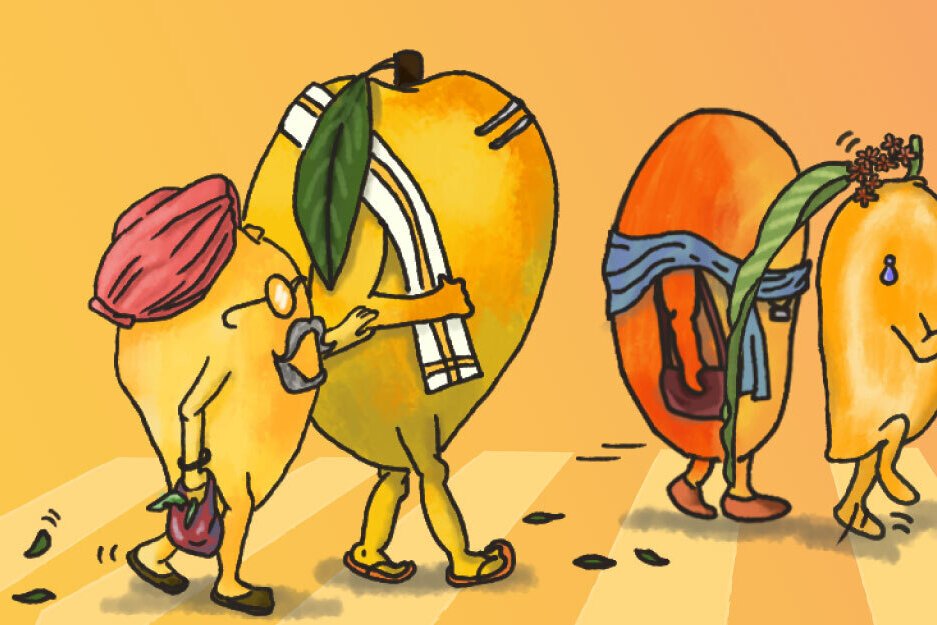
Mango People — How The King Of Fruits Unites And Divides India’s Aam Janata!
The proverbial King Of Fruits unites and divides Indians equally. Whether you call it aam, mangai, aamra, or mango, just uttering the word can evoke a plethora of sensations and emotions. Presented by three die-hard mango aficionados, this slice of Unboxed is a juicy celebration of a fruit that embodies the essence of Indianness for the Aam Janata – the Mango People.
Featured in this episode
-

Sharmadip Basu
Sharmadip (Toy as he is fondly known) obtained his doctorate degree from the social science programme at Syracuse University. His undergraduate training and early graduate training were in Economics, with a BSc degree from Calcutta University and an MA degree from Jawaharlal Nehru University (JNU), New Delhi. He also has an MPhil in American Studies…
-

Proteep Mallik
He grew up in Bengaluru and completed his schooling at The Valley School. He pursued further education in America, obtaining a bachelor’s degree in Physics (honours) and Mathematics from the University of Oregon and a master’s degree in Optical Sciences from the University of Arizona. Thereafter, he worked for several years as an optical engineer,…
-


Antara Das
Antara is a neurobiologist interested in studying how genetic mutations in ion channels leads to electrical imbalance in the brain, resulting in brain disorders such as epilepsy. Epilepsy affects about 1% of the world’s population including ~12 lakhs of people in India with active epilepsy. Epilepsy mutations can give rise to diverse clinical phenotypes and…
-


Sunandan K N
After attaining BTech in Production Engineering, I did MA in Sociology from Mahatma Gandhi (MG) University, Kottayam and MPhil in Science Policy Studies from Jawaharlal Nehru University (JNU), New Delhi. I completed the degrees of MA in History and PhD in History from Emory University, Atlanta, USA. After finishing PhD in 2012, I taught at…