
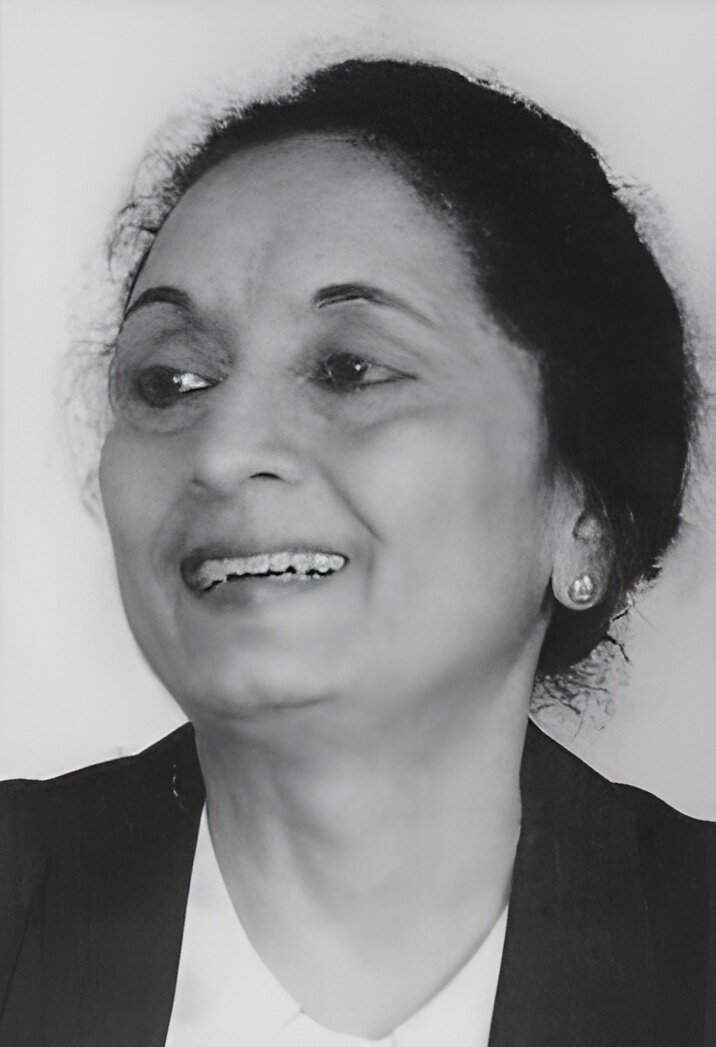
Padma Desai
Early critic of Indian planning
By Shruti Rajagopalan and Shreyas Narla
Details
Postwar economics promised a utopian vision: newly independent nations could achieve rapid industrialisation and development through state-led planning. Planning demanded increasingly sophisticated mathematical models. And, many economists embraced such abstraction, treating economies like sterile laboratories for testing axioms. Studying at the University of Mumbai in the early 1950s, Padma Desai encountered this vision in newly independent India, which was experimenting with the Fabian and Soviet models.
Yet Desai, whose remarkable talent for mathematics had led her into economics, took a different path. She used the technical tools not as ends in themselves, but as means to understand planned economies — India, the Soviet Union, and later post-Soviet Russia — as living systems shaped by institutions, politics, and human behaviour. She sought to understand how real economies functioned beneath their formal directives and targets.
Desai brought firsthand knowledge of developing economies to her graduate work at Harvard’s economics department. There, she explored crucial questions: How should India’s government shape its role in economic life — abandon planning or increase intervention in the mixed economy? Would the Soviet economy have been more productive without state constraints on market forces? She gravitated toward mentors and tools that could answer these questions.
From Alexander Gerschenkron, Desai learned that late-industrialising economies could leapfrog stages of development by borrowing technology and strengthening institutions. This framework later underpinned her critique of Soviet industrial decline, where institutional rigidity stifled such adaptive potential. Robert Solow’s growth accounting, which disentangled capital accumulation from technological progress, equipped her to diagnose the Soviet Union’s productivity collapse — not as a failure of ideology, but of institutional incentives. Wassily Leontief’s input-output analysis, which mapped interindustry dependencies, became her scaffold for understanding — and eventually critiquing — India’s industrial planning system (Desai, 2012).
In her doctoral thesis (partially published in the Review of Economics and Statistics in 1961), Desai adapted Leontief’s framework to the Indian system, constructing a short-term planning model that quantified intersectoral transfers based on data from Indian plans. Her model extended the input-output framework by incorporating household consumption patterns and integrating exogenous factors such as exports, capital formation, and government spending.
In her early inquiries, Desai challenged received knowledge on centralised coordination in India. She analysed W. Brian Reddaway’s model of India’s Third Five-Year Plan and noted how a static framework overlooked real-world constraints. By ignoring feedback loops, planners often set ambitious output targets without matching them to actual capacities. Later, in “Alternative Measures of Import Substitution,” she showed that different metrics for gauging import substitution could yield contradictory verdicts about the same industry — suggesting that protective barriers might mask inefficiencies rather than foster competitiveness. This article grew out of a broader research programme financed by the International Economics Workshop at Columbia University — where Desai was a research associate in early 1967 — and by the OECD Development Centre in Paris. Together, those grants supported the extended investigation that culminated in her collaboration with Jagdish Bhagwati, Planning for Industrialisation – A Study of Indian Industrialisation and Trade Policies since 1951.
The book dissected India’s industrial policy from 1951 to 1966, revealing a systemic flaw: planners fixated on setting rigid physical production targets — dictating how much each factory could produce — while lacking mechanisms to ensure industrial capacity could meet these goals. The result, they argued, was inefficiency and declining competitiveness — evident in the stagnation of India’s industrial growth by the late 1960s.
Bhagwati’s trade theory and Desai’s sector-level analysis further showed that import substitution produced high-cost domestic industries within protected markets. They advocated abolishing licensing in non-strategic sectors and adopting flexible exchange rates. The response to these ideas was, at best, lukewarm, and mostly deemed radical in the 1970s. But eventually, this book was foundational to India’s big-bang reforms in 1991. She deepened this analysis through subsequent monographs (Desai, 1970; 1973) examining import substitution patterns across industrial items and evaluating India’s tariff system.
By the late 1960s, Desai shifted her focus from India’s state-led industrialisation to an even more extensive experiment in planning. In 1968, she joined Harvard’s Russian Research Centre, drawing on the econometric methods she had developed while studying Indian industrial policies. Desai had immersed herself in Russian language and literature from a young age — driven by a fascination with Dostoyevsky — and had spent part of 1964 in Odessa, where her brother-in-law served as Indian consul (Desai, 2021, pp. 30 – 39). That stay gave her a firsthand view of local trade routines and everyday life under central directives, a vantage point that many Western economists lacked.
Throughout the 1970s, Desai refined ways of assessing Soviet industrial performance and published in top journals. In her 1976 American Economic Review paper, she refined Martin Weitzman’s analysis of Soviet productivity. Weitzman had calculated Soviet growth using only two inputs — capital and labour — and concluded that annual efficiency gains contributed 2 percent to growth. However, his model omitted raw materials due to data limitations. Desai addressed this gap by reconstructing Soviet data to explicitly include raw materials. Her three-factor model (capital, labour, materials) revealed higher efficiency gains — 3.5 – 4 percent annually. This showed Soviet industry was trying to innovate, but rigid central planning and poor resource allocation stifled growth.
Desai also examined how foreign resource inflows, by themselves, could not transform the Soviet growth path without accompanying institutional and policy reforms domestically to utilise capital more efficiently. With Jagdish Bhagwati, she identified several trade-related constraints in planned systems, from foreign exchange bottlenecks to suppressed payment deficits.
By 1980, Desai had moved to Columbia University. She edited a festschrift, Marxism, Central Planning, and the Soviet Economy, in honour of Alexander Erlich, who had then retired from Columbia. The volume included her chapter with Ricardo Martin on measuring efficiency loss in centrally planned systems. That chapter built on earlier works, including their 1983 Quarterly Journal of Economics paper. By analysing how eight branches used capital and labour, Desai and Martin demonstrated that resource misallocation accounted for about 3 – 4 percent of lost potential output in 1955, rising to roughly 10 percent by 1975.
For the International Food Policy Research Institute (IFPRI), she developed methods (Desai, 1981) to forecast Soviet grain and wheat imports by comparing domestic supplies against requirements, then refining these estimates with import-demand functions. While others blamed weather for shortfalls, she showed (Desai, 1986a) how fragmented procurement and weak incentives shaped grain deficits.
As the Soviet slowdown became clearer by the mid-1980s, Desai’s 1986 American Economic Review article traced the drop in growth rates to diminishing returns on capital, declining technical change, and structural inefficiencies. She argued that greater investment alone could not overcome these problems, urging reforms that tackled flawed incentives and stagnating innovation. Those findings, together with her earlier work on foreign resource inflows, agricultural forecasting, and industrial misallocation, converged in The Soviet Economy: Problems and Prospects, where she synthesised a decade of research to explain why Soviet growth had faltered so sharply.
By the mid-1980s, the rise of Mikhail Gorbachev offered a unique vantage point for Desai, who had followed Soviet affairs both at the macro level and on the ground. In Perestroika in Perspective, she went beyond the typical and sterile econometric analysis to examine the deeper cultural and institutional barriers to reform. She argued that Gorbachev and his allies, while earnest in wanting to revitalise the system, were “prisoners of a mode of thinking about the economic system that cannot readily encompass the true functions of a capitalist market.” Public ownership was not merely policy but ideology. Where other countries could introduce market mechanisms gradually, Soviet reforms had to navigate a system where such changes threatened fundamental political and cultural structures. By identifying this cognitive constraint — the inability of planners to fully grasp how market mechanisms actually worked — she helped explain why even well-intentioned reforms often fell short.
As post-communist transitions gathered momentum in the 1990s, Desai edited Going Global: Transition from Plan to Market in the World Economy, a volume that examined how a range of countries — from Central and Eastern Europe to Asia — sought to integrate into the global economy. Desai and the contributors discussed macroeconomic stabilisation, price liberalisation, and privatisation, asking how these reforms influenced each nation’s foreign trade, exchange-rate policy, and capacity to attract foreign direct investment. Desai identified “speed of reform” as a key variable for comparing outcomes, noting that some countries achieved higher growth and outward orientation more quickly, but sometimes faced social trade-offs such as rising unemployment.
This understanding of systemic constraints to market transitions took concrete form in Work Without Wages, co-written with Todd Idson. Desai and Idson documented a bitter irony of Russia’s economic transformation: the old Soviet pattern of paying workers who didn’t work had been replaced by a system where people worked without getting paid. They mapped how wage arrears (delayed or withheld payments) varied across different groups — managers targeted more vulnerable workers, women faced higher risks than men with similar qualifications, and wage denial pushed families into poverty. Beyond documenting these impacts, they showed how weak budget discipline and poor contract enforcement in the new market system, combined with resistance from powerful groups like the military and coal sector, blocked needed reforms.
The global financial crises of the late 1990s brought a new focus to Desai’s work. In the wake of the East Asian meltdown and Russia’s ruble collapse, she explored how contagion could spread from one economy to another through capital flows and investor psychology. In Financial Crisis, Contagion, and Containment: From Asia to Argentina, she surveyed an array of episodic crises, arguing that sudden capital movements amplified institutional weaknesses in emerging markets. Like her earlier work on India and the Soviet Union, she showed how institutional weaknesses interacted with policy choices: countries that opened their capital accounts without solid banking supervision and enforcement mechanisms became vulnerable to sudden capital flight when investor confidence wavered.
In Conversations on Russia, Desai innovatively employed oral histories to illuminate the political economy of Russia’s market transition, interviewing key figures who shaped the reforms. By capturing firsthand accounts, she revealed the complex interplay between economic policy choices and political constraints. The contrasts were stark: Boris Yeltsin described needing a “kamikaze crew” to force through rapid changes, while others like Grigory Yavlinsky saw this approach not as reform but as “Thermidor” — a violent reversal that concentrated power in new hands.
Across these varied contexts — India’s industrial planning, Soviet command-and-control, and Russia’s market transition — Desai tested official narratives against concrete empirical and institutional realities. Her approach remains relevant wherever economies promise rapid growth or declare sweeping reforms. She showed how illusions can linger in data-driven claims, how transformations can stall when structural flaws go unaddressed, and how policy hinges on a grounded grasp of what happens on factory floors, in farms, and across financial systems. This was her intellectual through line.
Desai, P. (2021). Discovering the USSR: Odessa, Moscow, Leningrad. Harriman Magazine, 30 – 39.
Desai, P. (2012). Breaking Out: An Indian Woman’s American Journey. MIT Press.
Desai, P. (2006). Conversations on Russia: Reform from Yeltsin to Putin. Oxford University Press.
Desai, P. (2003). Financial Crisis, Contagion, and Containment: From Asia to Argentina. Princeton University Press.
Desai, P., & Idson, T. (2000). Work Without Wages: Russia’s Nonpayment Crisis. MIT Press.
Desai, P. (ed.) (1997). Going Global: Transition from Plan to Market in the World Economy. MIT Press.
Desai, P. (1989). Perestroika in Perspective: The Design and Dilemmas of Soviet Reform. Princeton University Press.
Desai, P. (1987). The Soviet Economy: Problems and Prospects. Basil Blackwell.
Desai, P. (1986a). Weather and Grain Yields in the Soviet Union. International Food Policy Research Institute.
Desai, P. (1986b). Soviet Growth Retardation. American Economic Review, 76(2), 175 – 180.
Desai, P. (ed.) (1983). Marxism, Central Planning, and the Soviet Economy: Economic Essays in Honour of Alexander Erlich. MIT Press.
Desai, P. (1981). Estimates of Soviet Grain Imports in 1980 – 85: Alternative Approaches. International Food Policy Research Institute.
Desai, P. (1973). Import Substitution in the Indian Economy, 1951 – 1963. Hindustan Publishing Corporation.
Desai, P. (1970). Tariff Protection and Industrialization: A Study of the Indian Tariff Commission at Work, 1946 – 1965. Hindustan Publishing Corporation.
Desai, P., & Bhagwati, J.N. (1970). Planning for Industrialization: A Study of Indian Industrialisation and Trade Policies since 1951. Oxford University Press.
Narla, S., Rajagopalan, S., & Shah, K. (2025, January 6). Manmohan Singh: India’s Finest Talent Scout. The 1991 Project. https://the1991project.com/writing/essays/manmohan-singh-indias-finest-talent-scout.
About the authors
Shruti Rajagopalan is a Senior Research Fellow at the Mercatus Center at George Mason University, where she leads the Indian Political Economy Program and Emergent Ventures India. [Full profile]
Shreyas Narla is a research scholar with the India Political Economy program at the Mercatus Center.