Chemistry Laboratories
Exploring matter and transforming curiosity into discovery
Details
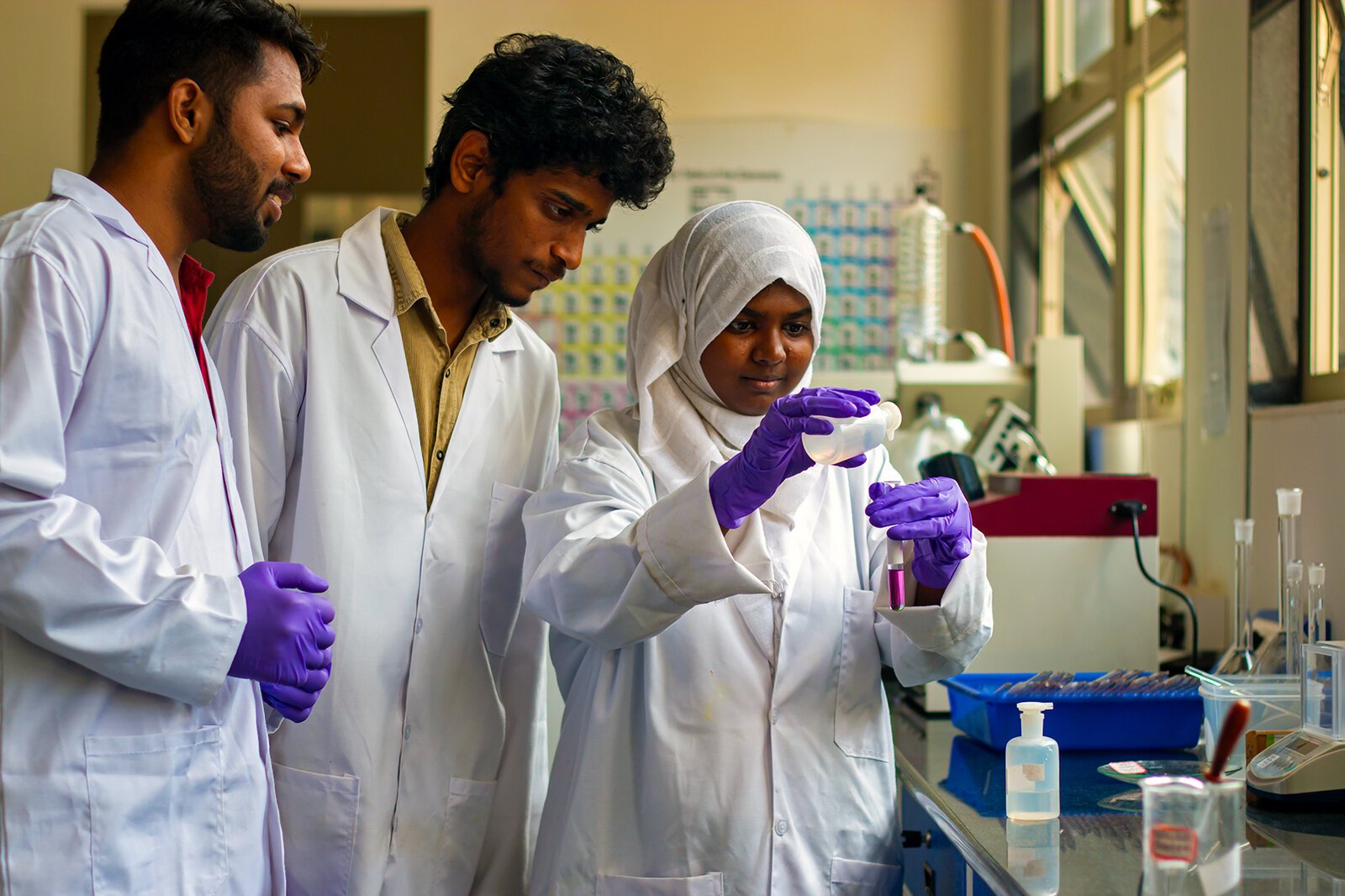
Our laboratories are dedicated to advancing the frontiers of learning chemistry through rigorous inquiry, exploration and experimentation. With a focus on basic research, we explore the underlying principles that govern matter, reactions, and molecular interactions. Our work lays the groundwork for scientific breakthroughs, providing insights that impact diverse fields.
Equipped with state-of-the-art instruments and guided by expert faculty, the labs offer students an environment that fosters curiosity, precision, and creativity. We encourage interdisciplinary collaboration and cultivate a culture where questions are welcomed and ideas are refined. Here, every experiment is an opportunity to deepen understanding and every discovery brings us closer to solving complex scientific challenges.
Join us as we explore the building blocks of nature and contribute to shaping the future of chemistry.
Highlights of the labs
Students begin by watching demonstrations to understand how the instruments work,and subsequently use them on their own with guidance. To encourage the spirit of research, the students start working on simple projects from the first chemistry course and move on to work on projects of their choice. All the instruments are at their disposal for the analysis/ data collection/ methodology during their experimental work.
In addition to all the standard apparatus and equipment commonly found in undergraduate labs, our labs are equipped with the following,
- FTIR spectrophotometer
- UV-vis spectrophotometer
- Rotary evaporator
- High speed centrifuge
- High speed micro centrifuge
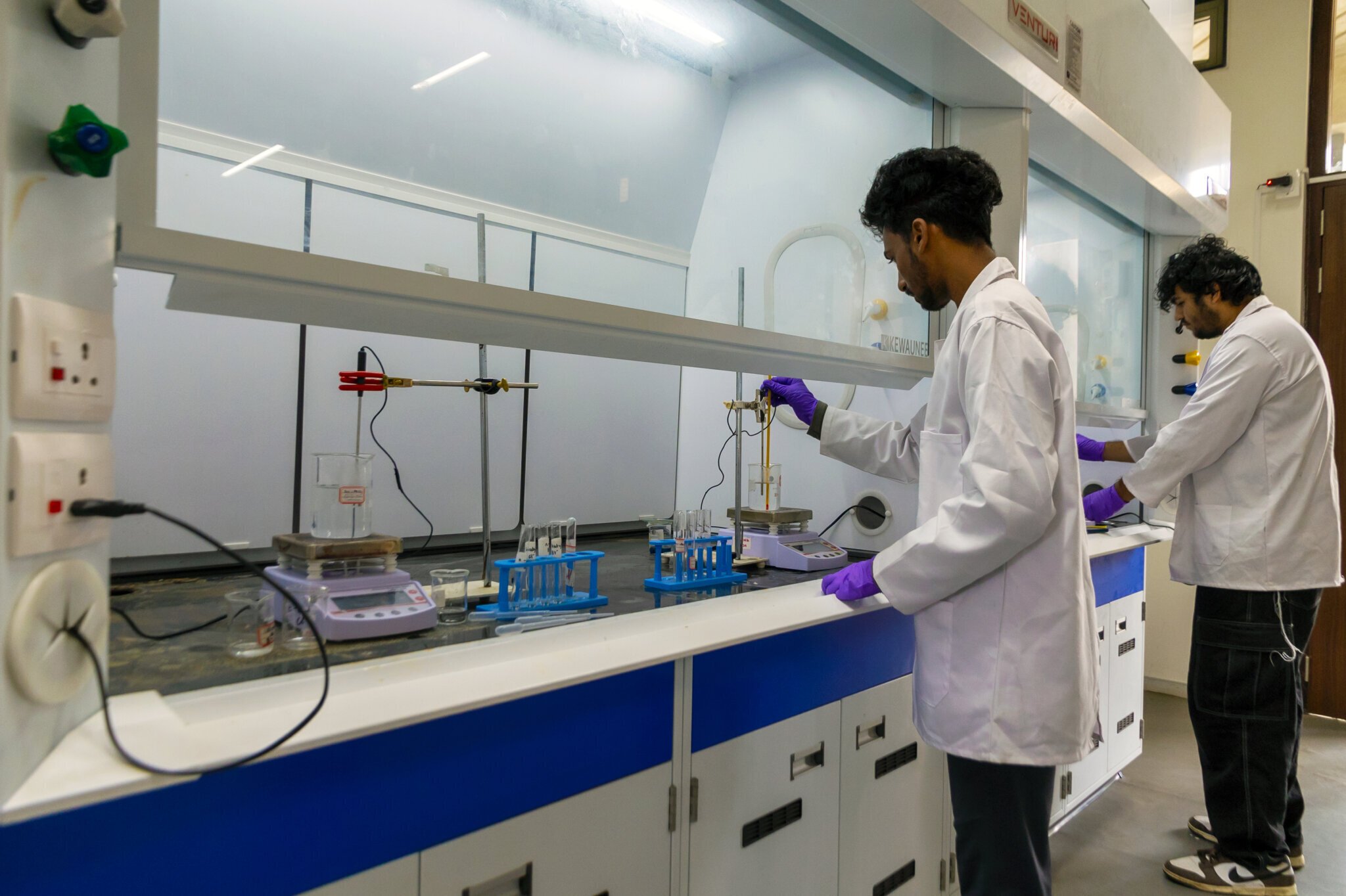
- Designated fumehoods
- Emergency shower and eye wash stations
All the waste produced during the labs, are either diluted, neutralised before being disposed of or are segregated and collected to hand over to chemical vendors. All flammable solvents are stored under special inflammable cabinets under the fumehood. All acids are stored separately under lock.
Other features
Commonly used equipment
The three teaching labs are equipped with ample pH meters, melting point apparatus, vacuum filtration assembly, weighing balance. In addition to the common glassware and materials, it also houses a bit more sophisticated glassware and materials like separating funnels, double neck round bottom flasks, micropipettes, electric hotplate stirrers, magnetic stirrers, condensers and so on.
Safety measures
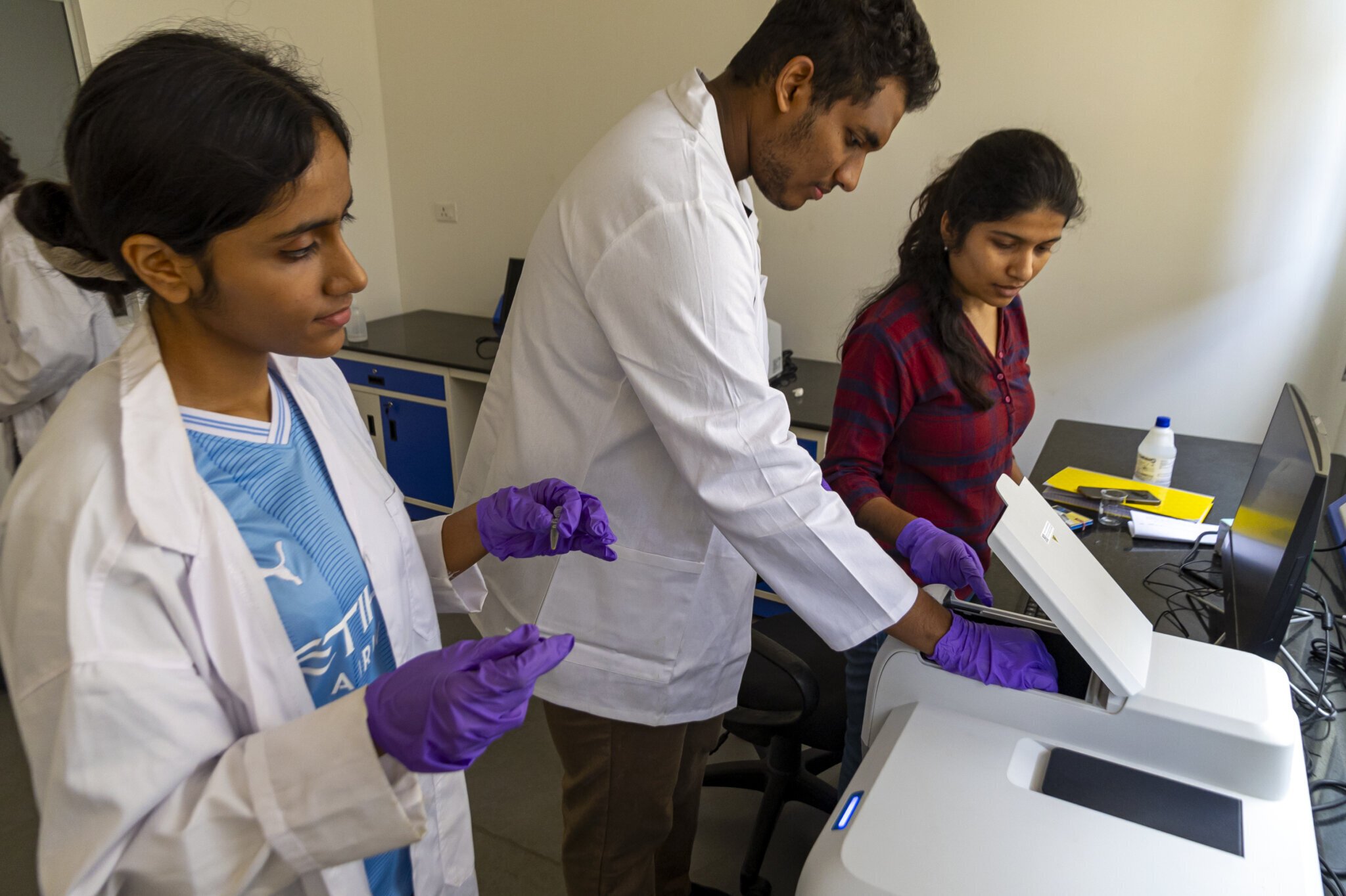
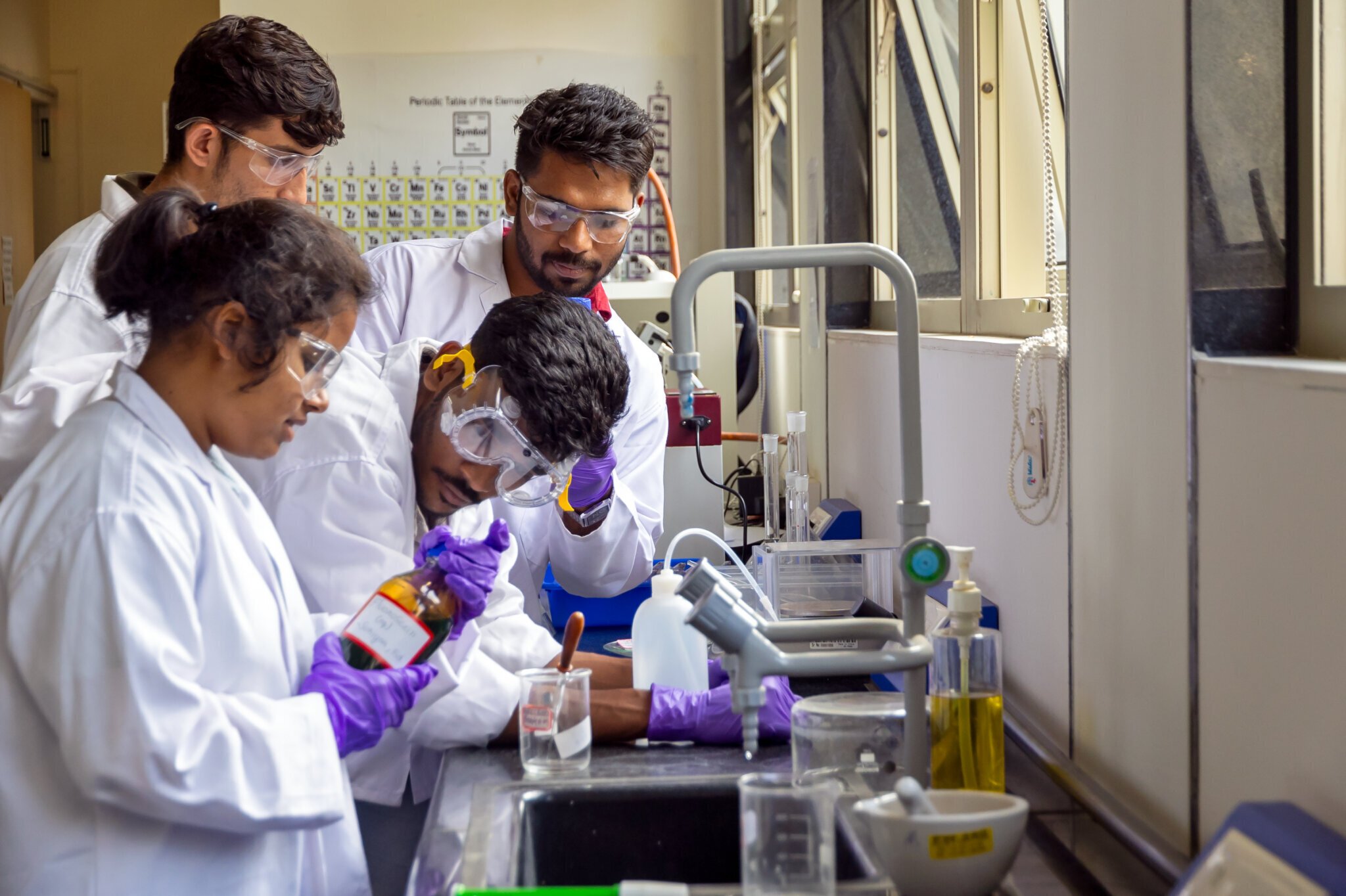
All students working in the lab are expected to wear full sleeves labcoats, protective googles and gloves at all times. More in detailed description is here
Efficiency & accuracy in experiments
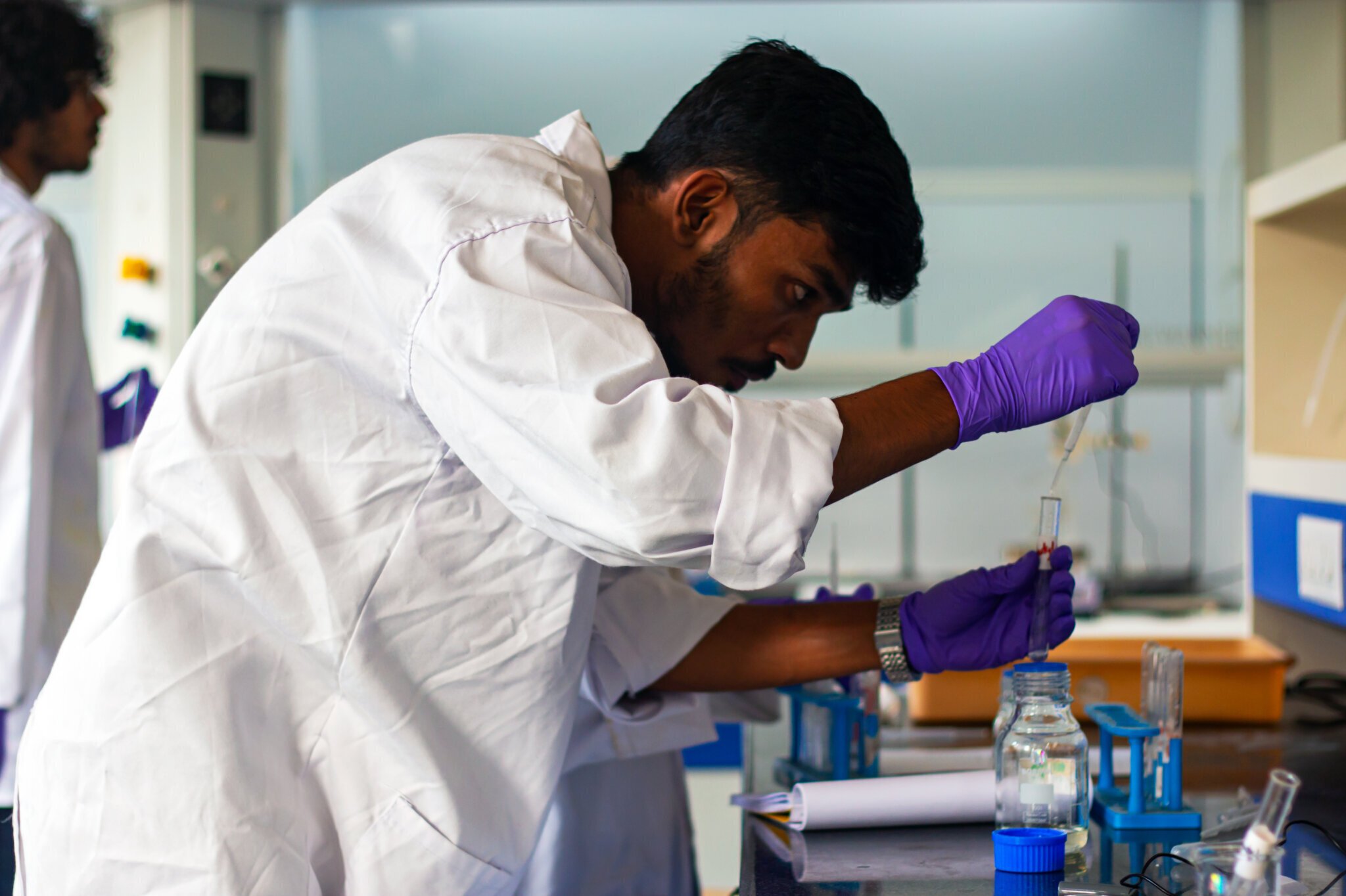
For better accuracy during lab sessions, students make use of high precision weighing balance which has a three decimal point accuracy, this is especially used during synthesis experiments. They are encouraged to use micropipettes wherever required for accurate measurements which range from 2microL to 1000microL.
The magnetic stirrers (a magnetic stir bar is added to the glassware and it spins as it interacts with the magnetic field below in the instrument) saves students time and energy, as it has high speed rpm which helps make homogeneous solutions, or prepare solutions in bulk with lesser effort. We also have electric hotplate stirrers instead of the regular bunsen flames – this helps with heating and stirring simultaneously that helps us carry out a wider range of experiments.
Exploration, testing & analysis Tools
We have around 7 table top spectrophotometers. It is simple to use the software, students can connect it to their laptops or mobile phones and analyse their compounds, the software gives them a graph of Absorbance/ Transmittance vs wavelength. Further, they can analyse the concentration at a particular wavelength against time. Since it is simple to use, it helps students get a step closer to research based experiments as it is not as intimidating as the regular spectrophotometers which are a bit more sophisticated.